





Why Is Saturn the Star of the Show?
Throughout July, Saturn is becoming progressively easier to see from India. Each night, it rises a little earlier and climbs higher, moving towards its 'opposition' in early October. Opposition is when Earth passes directly between the Sun and Saturn,
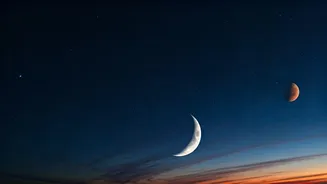
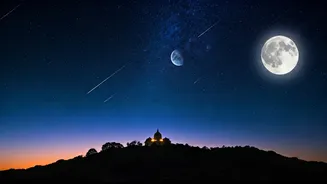
making the planet appear at its biggest and brightest for the year. July is the prelude to this main event. The planet will be visible in the predawn sky, appearing as a bright, steady, golden-hued point of light that doesn't twinkle like stars do. On the mornings of July 7th and 8th, the Moon will pass close to Saturn, creating a beautiful pairing and making the planet exceptionally easy to locate for first-time observers. This steady improvement in visibility throughout the month is why it's generating so much buzz.
A Unique View of the Famous Rings
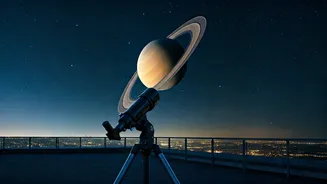
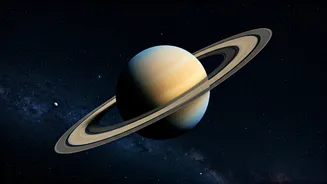
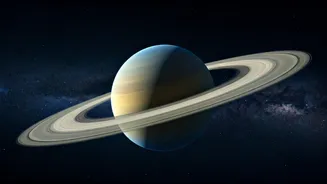
This year's viewing is particularly special because of Saturn's rings. Due to the planet's 29.5-year orbit and its axial tilt, our perspective of the rings changes over time. In March 2025, the rings were aligned perfectly edge-on with Earth, making them seem to disappear for a while. Now, in July 2026, they are beginning to tilt back towards us. They will still appear as an incredibly thin line, a unique view compared to the wide-open presentation of previous years. This offers a rare chance to appreciate just how slender these magnificent structures are — despite stretching hundreds of thousands of kilometres across, they can be as thin as a few dozen metres in places. By late July, as Saturn climbs higher in the sky, telescopic views will become clearer, offering a sharper look at this fascinating sight.
Your Guide to Spotting Saturn
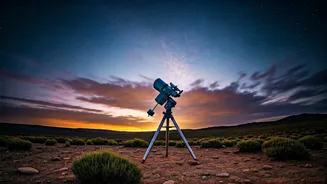
Finding Saturn is simpler than you might think. In early July, you'll need to look towards the east-southeast in the hours after midnight, before dawn. The planet will be in the constellation Pisces for most of the month. As mentioned, the Moon is your guide on July 7th and 8th. If you miss that, don't worry. Just look for a bright 'star' that shines with a constant, yellowish light. Stars twinkle, but planets usually don't. While it’s visible to the naked eye, even a basic pair of binoculars can enhance the view, possibly revealing Saturn's slightly oval shape — a hint of the rings you can't quite resolve. To truly see the rings as separate from the planet, you'll need a small telescope with about 50x magnification or more. The best views will be late in the month when Saturn is higher above the horizon, away from the atmospheric haze that can blur details.
Shani Dev: The Planet's Cultural Significance
Beyond the astronomical excitement, Saturn holds a deep cultural and astrological significance in India. In Vedic astrology, Saturn is known as Shani, a powerful deity who governs karma, discipline, and justice. Depicted as the son of Surya (the Sun God) and Chaya (the Shadow), Shani is often seen as a stern teacher, presenting challenges that lead to growth and resilience. His slow movement across the sky — taking about 2.5 years to transit each zodiac sign — is reflected in his Sanskrit name, 'Sanischara', meaning 'slow mover'. So, as you gaze upon that distant golden light, you are also looking at a figure deeply woven into the fabric of Indian mythology and belief, a cosmic force representing structure and reality.