
A Lunar Cake with Three Layers
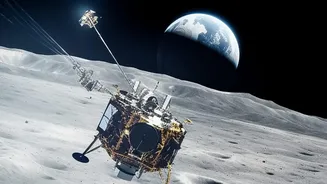
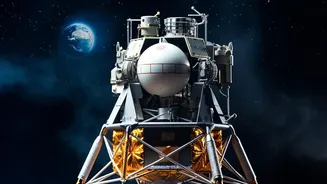
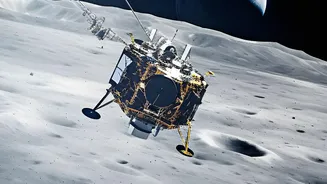
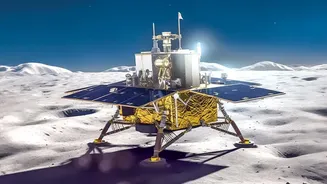
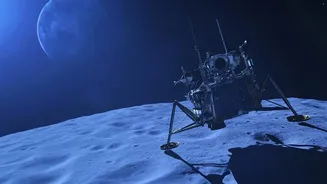
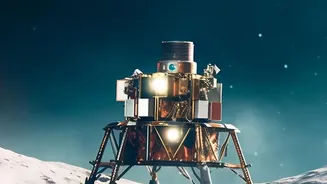
Imagine the lunar surface as a simple, uniform blanket of dust. For decades, that was the general assumption. However, data from the Chandra’s Surface Thermophysical Experiment (ChaSTE) on the Vikram lander has turned that idea on its head. An analysis
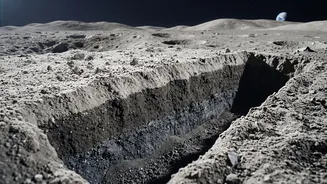
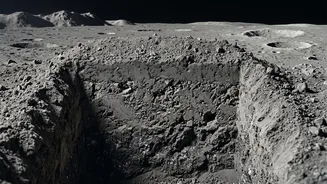
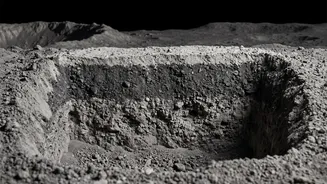
published in November 2026 reveals that the top 10 centimetres of the lunar regolith—the proper term for the Moon's broken rock and dust—is structured like a cake with three distinct layers, each with its own physical and thermal properties. This complex, fine-scale layering was neither observed nor expected before, providing a far more detailed picture of the Moon’s surface environment at its south pole. This discovery was made possible by ChaSTE's probe, which penetrated the soil and measured temperature variations at different depths.
Unpacking the Lunar Soil
The first layer, extending from the surface down to about 3 centimetres, is a highly porous, fluffy material. It has a very low density, estimated to be around 600 kilograms per cubic metre, and a porosity of about 80%. This is the loose dust that we typically imagine. Beneath this, from 3 to 6 centimetres, lies a middle layer with a key difference: it has a higher thermal conductivity, meaning it transfers heat more effectively than the layer above it. The third and bottom layer, from 6 to 10 centimetres, is significantly denser and more compact. Here, the density rises to about 1,500 kilograms per cubic metre. The soil also becomes much more cohesive, or 'grippy', with depth, behaving less like dry flour and more like firm clay.
Why This Layered Structure Matters
This discovery has profound implications for both science and future exploration. The different thermal properties of each layer affect how the Moon absorbs and radiates solar heat. Scientists observed a staggering temperature difference of about 73 degrees across just these 10 centimetres at lunar noon. The loose topsoil acts as a powerful insulator, causing temperatures to drop sharply just below the surface. This is critical information for designing future lunar habitats and equipment, as burying them just a few centimetres could protect them from the extreme temperature swings on the surface. Furthermore, the porosity and structure of these layers could determine whether water ice, believed to exist in the polar regions, can be trapped and preserved in the subsurface or is lost to space.
A Chemically Diverse Hotspot
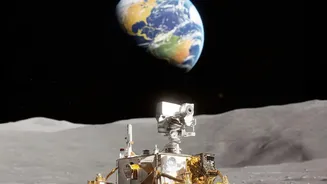
The physical layering is just one part of the story unfolding at Shiv Shakti Point. Other instruments on the mission, particularly the Alpha Particle X-ray Spectrometer (APXS) on the Pragyan rover, have revealed a unique chemical makeup. The soil is rich in iron and magnesium but relatively poor in aluminium. Fascinatingly, its composition closely matches that of a lunar meteorite named ALHA 81005, which was discovered in Antarctica in 1982. This does not mean the meteorite came from that exact spot, but it suggests both originated from a similar type of ancient, magnesium-rich lunar crust. This indicates that the landing site is a geologically diverse area, containing a mixture of materials from different parts of the Moon's crust, some possibly excavated from deep below by ancient impacts.
Building a New Lunar Legacy
Together, the findings from the ChaSTE and APXS instruments paint the most detailed profile yet of the lunar south pole's surface. From its unexpected physical layers to its distinct chemical signature, Shiv Shakti Point is proving to be a scientific treasure trove. These ground-truth measurements are invaluable, providing a vital reference point for interpreting remote sensing data from orbiters and for planning future missions, including robotic and human landings. For India, every new dataset returned by Chandrayaan-3 reinforces its status as a leading space-faring nation, contributing fundamental knowledge that will guide the next chapter of humanity’s journey back to the Moon and beyond. The mission has not just landed on the Moon; it is actively shaping our understanding of it.