



As winter approaches, Delhi is bracing for its annual battle with air pollution. Starting November 1, 2026, a new set of traffic directives will come into effect, restricting certain vehicles from entering the city's limits. Here is what you need to know.
The Primary Directive: A Ban on Non-Compliant Vehicles
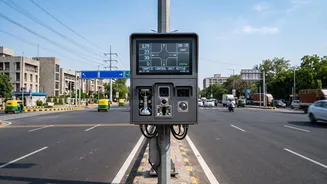
To combat the deteriorating air quality during the winter months, the Delhi government is implementing stringent measures under its Winter Action Plan. The most significant of these is a ban on certain vehicles entering the capital from November 1, 2026, to January 31, 2027. The rule specifically targets older petrol and diesel vehicles registered outside of Delhi that do not meet the Bharat Stage VI (BS-VI) emission standards. This move is designed to curb vehicular emissions, a major contributor to the city's thick winter smog. Authorities will be setting up checks at border points, using technologies like Automatic Number Plate Recognition (ANPR) cameras to identify and stop non-compliant vehicles.
Which Vehicles Are Banned?
The restrictions are primarily aimed at vehicles registered outside Delhi. If your car, truck, or bus is not registered in Delhi and falls into the following categories, it will be denied entry: all vehicles that do not comply with BS-VI emission norms. This includes passenger and commercial vehicles running on petrol or diesel that are rated BS-IV, BS-III, or older. Specifically, the ban covers all non-Delhi registered commercial goods vehicles and buses with BS-IV or older standards. This directive will impact a significant number of commuters and commercial operators from neighbouring NCR cities like Gurugram, Noida, Faridabad, and Ghaziabad, where estimates suggest over ten lakh vehicles fall below the BS-VI standard.
Which Vehicles Are Permitted?
Not all vehicles are barred. The primary goal is to limit polluting vehicles, not to halt all traffic. The following vehicles will be permitted to enter and operate within Delhi's municipal limits: all vehicles that are compliant with BS-VI emission standards, regardless of fuel type. All electric vehicles (EVs) are exempt from the ban and are encouraged as a clean alternative. Vehicles that run on Compressed Natural Gas (CNG) are also permitted to enter the city. It is important to note that vehicles registered in Delhi are not subject to this specific entry ban, although they must still comply with other existing pollution norms, such as age limits and having a valid PUC certificate.
Exemptions for Essential Services
The government has made provisions to ensure that essential services are not disrupted by the new traffic rules. A number of vehicle categories are officially exempt from the November 1 entry ban. These include emergency service vehicles such as ambulances and fire tenders. Vehicles used for government and official duties are also on the exemption list. While commercial buses with All India Tourist Permits that are BS-IV or older are banned, buses registered in Delhi are currently exempt from this particular restriction, ensuring public transport within the city remains largely unaffected.
Penalties and Other Related Rules
Violating these new directives will result in significant penalties. Driving a banned vehicle in restricted zones can attract a hefty fine of ₹20,000 under the Motor Vehicles Act. In addition to the vehicle entry ban, the government is also reinforcing the 'No PUC, No Fuel' rule. This means that all vehicles, including those permitted to enter Delhi, must have a valid Pollution Under Control (PUC) certificate to be able to refuel at any petrol pump, CNG, or LPG station in the city. Motorists caught without a valid PUC certificate can be fined ₹10,000. These measures, though strict, are deemed necessary to protect public health as the city's Air Quality Index (AQI) enters the 'Severe' category.