




The Case for Aerobics: Structured and Accessible
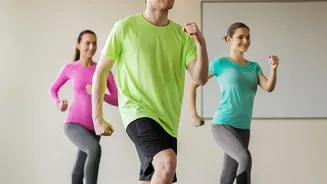
Aerobics, in its many forms like step, dance, or traditional high/low impact classes, is a cornerstone of cardiovascular fitness. Its biggest strengths are its accessibility and structured nature. You can do it almost anywhere with minimal equipment,
and classes provide a guided, motivating environment. Aerobics is excellent for improving heart health, building endurance, and burning calories. The movements are often straightforward and can be modified to increase or decrease intensity, making it suitable for various fitness levels. It’s a reliable, time-tested method for getting your heart rate up and sustaining it, which is the fundamental goal of any cardio workout.
The Case for Trampolining: Fun and Low-Impact
Trampolining, or rebounding, has surged in popularity as a joyful and joint-friendly exercise. Its main appeal is that it feels less like a workout and more like play. The bouncy surface of a mini-trampoline absorbs a significant amount of the impact, with some studies suggesting it reduces stress on the joints by up to 80% compared to running on a hard surface. This makes it an excellent choice for people with joint pain or those looking for a sustainable, long-term cardio option. The fun factor is also a major benefit, as enjoyment often leads to greater consistency.
Comparison: Calorie Burn and Intensity
When it comes to burning calories, the intensity of your workout is key. High-intensity aerobics can burn a significant number of calories, often ranging from 300 to 600 in 30 minutes, depending on the activity and your body weight. Trampolining also provides a great calorie burn, with estimates around 200 to 400 calories in the same timeframe. While high-impact running might burn more calories per minute, some research, including a notable 1980 NASA study, found that rebounding can be more oxygen-efficient. This study suggested that 10 minutes of bouncing could offer cardiovascular benefits comparable to a 30-minute run. Ultimately, for pure calorie burning, high-intensity aerobics may have a slight edge, but trampolining's efficiency is a strong counterpoint.
Comparison: Impact on Joints
This is where the two forms of exercise diverge the most. High-impact aerobics, by its nature, involves jumping and running motions that can place significant stress on your ankles, knees, and hips. While these impact forces can help build bone density, they also carry a higher risk of injury for some individuals. Trampolining is the clear winner for those prioritizing joint health. The rebounder's surface absorbs most of the shock, providing a low-impact workout that's gentle on the body. This reduction in strain allows for more frequent or longer sessions without the associated wear and tear.
Comparison: Muscle Engagement and Other Benefits
Aerobics primarily targets large muscle groups in the legs and can be adapted to work the upper body and core. Trampolining, however, offers a unique full-body workout. The unstable surface forces you to constantly engage your core and stabilizer muscles to maintain balance. Research suggests rebounding activates over 400 muscles in a session. Additionally, trampolining is widely praised for its ability to stimulate the lymphatic system. The rhythmic bouncing helps circulate lymph fluid, which is crucial for removing toxins and supporting immune function, a benefit not typically associated with traditional aerobics.
The Verdict: Which Is Better for You?
There is no single 'best' cardio exercise for everyone. The ideal choice depends entirely on your personal goals, physical condition, and what you genuinely enjoy. If you thrive on high-energy, structured classes and are looking to maximize calorie burn in a short amount of time, traditional aerobics is an excellent option. However, if you have joint concerns, are looking for a workout that feels fun and less repetitive, or are interested in the ancillary benefits like lymphatic drainage and full-body stabilization, trampolining is a superior choice. Many people find a combination of both provides a well-rounded fitness routine.