



High-Tech Tracking with GPS Collars
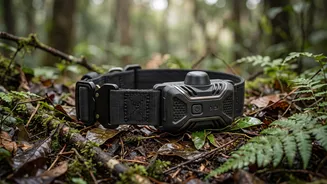
One of the most critical tools in a conservationist's toolkit is the GPS collar. Before release, a reintroduced tiger is safely tranquilized and fitted with a lightweight, durable collar equipped with a GPS transmitter. This device allows scientists to remotely
monitor the tiger's movements in near real-time. The collar transmits precise location data via satellite, creating a detailed map of the animal's journey. This information is invaluable for understanding how far the tiger travels, its activity patterns (such as when it hunts or rests), and most importantly, the boundaries of its emerging home range. By analyzing this movement data over weeks and months, researchers can determine if the tiger is successfully establishing a territory, avoiding human-dominated areas, and finding the resources it needs to survive.
The Forest's Unblinking Eyes: Camera Traps
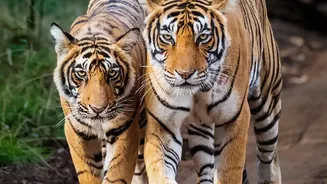
While GPS collars track a tiger's location, camera traps reveal its secret life. These motion-activated cameras are strategically placed along forest trails, water sources, and other paths animals are likely to use. When a tiger passes, the camera's heat and motion sensors trigger it to capture a photo or short video without disturbing the animal. This technology is revolutionary because every tiger has a unique stripe pattern, much like a human fingerprint. By comparing the images to a database, scientists can identify individual tigers, confirm their presence in a specific area, and monitor their physical condition. Camera traps also provide insight into territorial behaviour by revealing how different tigers use and potentially share or avoid the same spaces.
Reading the Signs: Traditional Field Skills
Technology is powerful, but it's often combined with age-old tracking skills. Field biologists and forest guards still rely on interpreting physical signs left by tigers. The most common is the 'pugmark', or footprint. An experienced tracker can deduce a tiger's size, sex, and even its walking pace from its pugmarks. While not as precise for identifying individuals as camera traps, pugmarks are excellent for confirming a tiger's presence in an area. Other crucial signs include scratch marks on trees and scent markings (urine spray and scat), which are clear territorial signals that tigers use to communicate with and ward off rivals. A fresh scent mark, which can smell like boiled basmati rice to a trained nose, indicates a tiger has passed by recently.
Non-Invasive Clues from Scat and DNA
What a tiger leaves behind can be just as informative as its movements. Scat (fecal) analysis is a powerful, non-invasive method for gathering a wealth of biological data. By collecting and analyzing scat, scientists can determine the tiger's diet, identifying which prey species it's hunting. More advanced analysis can reveal the tiger's genetic identity, helping to build a family tree of the local population and monitor genetic diversity. Furthermore, fecal samples contain hormone metabolites, which can be measured to assess a tiger's stress levels (glucocorticoids) and reproductive status. This allows scientists to understand how a reintroduced animal is coping with the challenges of its new environment, such as competition or human disturbance.
Putting It All Together
Studying a reintroduced tiger’s territorial behaviour is not about a single method, but the integration of many. Data from GPS collars shows where the tiger goes. Camera traps confirm which tiger it is and what it’s doing. Pugmarks and other signs provide on-the-ground evidence of its path. Finally, genetic and hormonal analysis offers a deep dive into its health and well-being. In India, platforms like M-STrIPES (Monitoring System for Tigers: Intensive Protection and Ecological Status) help consolidate this data, using mobile apps and GPS to allow for more accurate and efficient monitoring by forest staff. This comprehensive approach allows conservation scientists to move beyond simply tracking an animal to truly understanding its journey back into the wild.