






The Heat Shield: Surviving Re-entry
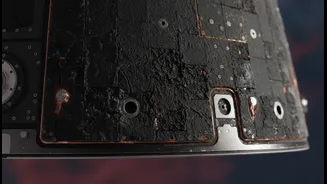
The first and most scrutinised component is Orion's heat shield. After enduring temperatures nearing 2,800 degrees Celsius during its fiery plunge through the atmosphere, every inch of its surface tells a story. Engineers will be looking for patterns
of charring and material erosion, comparing the real-world performance against computer models. This is especially important as unexpected erosion was noted after the uncrewed Artemis I flight. For India, this data is invaluable. ISRO's own work on re-entry vehicles for missions like Gaganyaan relies on mastering thermal protection. Understanding how Orion's shield performed provides crucial reference points for India's indigenous development, ensuring the safety of future Indian astronauts.
Life Support and Crew Systems: The Human Element
Artemis II was the first true test of Orion’s life support systems with humans in deep space. Post-flight checks will involve a thorough inspection of the Environmental Control and Life Support System (ECLSS). This includes everything from the CO2 scrubbers and oxygen supply to water recycling and waste management systems. Just as important is the data from the astronauts themselves. Blood, saliva, and urine samples taken before, during, and after the flight will provide a treasure trove of information on how deep space radiation and microgravity affect human health. This biological data is critical for planning long-duration missions to the Moon and Mars, and directly informs the protocols ISRO is developing for its Gaganyaan astronauts.
Avionics and Flight Data: The Digital Debrief
Inside Orion lies the spacecraft's 'black box'—a series of data recorders holding terabytes of information on every aspect of the 10-day flight. Once the spacecraft is at Kennedy Space Center, technicians will carefully extract the internal avionics boxes and data recorders. This data covers thousands of parameters: the performance of the navigation systems, the firing of every thruster, radiation levels inside the cabin, and the functioning of the solar arrays. This high-level data serves as a vital blueprint for long-duration human safety, offering a tested model for ISRO to validate its own systems for Gaganyaan, from flight control software to communication protocols.
Structural Integrity: A Deep Space Check-up
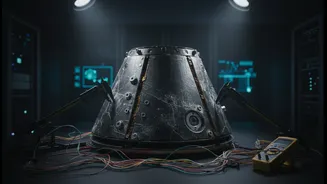
After travelling nearly a million miles, the Orion capsule's physical structure needs a comprehensive check-up. Engineers will inspect the capsule's back shell and windows for any signs of micrometeoroid impacts or damage from space debris. They will also look for signs of stress or fatigue in the primary structure after being subjected to the vacuum of space and the intense forces of launch and re-entry. Understanding the spacecraft's resilience is fundamental to making future vessels reusable and more robust. For a nation like India, known for its cost-effective engineering, these insights into material durability and structural performance are key to designing the next generation of affordable and reliable spacecraft.
Recovery Systems: The Final, Crucial Step
A successful mission only ends with a successful recovery. The performance of Orion's parachute system and the splashdown procedures are scrutinised. The system, which includes multiple drogue and main parachutes, must work flawlessly to slow the capsule from orbital speeds to a gentle splashdown. The post-splashdown systems, like the crew module uprighting bags that ensure the capsule floats correctly, are also checked. ISRO is conducting similar rigorous tests on its own parachute and recovery systems for Gaganyaan in the Bay of Bengal, making NASA's operational data and procedures from this real-world lunar return an invaluable learning opportunity.