




The Antibiotic Pipeline is Running Dry
For decades, antibiotics have been a cornerstone of modern medicine, turning life-threatening infections into manageable conditions and making procedures like surgery and chemotherapy safe. However, the overuse and misuse of these miracle drugs have allowed
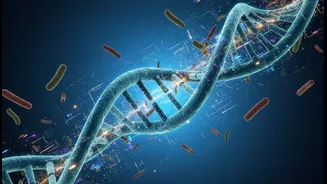
bacteria to evolve, developing resistance to our most reliable treatments. This growing crisis, known as antimicrobial resistance (AMR), is responsible for over a million deaths globally each year and threatens to make routine medical procedures incredibly risky. The pipeline for new antibiotics has slowed to a trickle. The traditional method of drug discovery is notoriously slow, expensive, and often results in failure. Scientists manually screen thousands, or even millions, of chemical compounds in a painstaking process that can take years, with no guarantee of success. As a result, no truly new class of antibiotics for certain types of tough bacteria has been successfully brought to market in decades.
A New Digital Ally: Artificial Intelligence
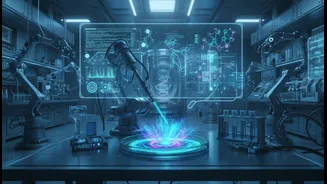
Enter artificial intelligence. Researchers are now deploying sophisticated AI, particularly deep learning models, to supercharge the search for new antibacterial drugs. Instead of blindly testing compounds in a lab, AI can analyze massive datasets of molecular structures and predict their antibacterial properties with remarkable accuracy. This allows scientists to computationally screen billions of potential candidates in a matter of days or weeks, a task that would be physically impossible through conventional means. The AI acts like a highly intelligent filter, sifting through vast digital libraries of chemicals to identify molecules that not only are likely to kill harmful bacteria but also possess novel structures, making it less probable that bacteria are already resistant to them.
How AI Learns to Hunt Bacteria
The process begins by training the AI model. Scientists feed it enormous amounts of data, showing it the chemical structures of tens of thousands of compounds and telling the model which ones were effective against bacteria and which were not. The AI learns to recognize the specific molecular features and patterns associated with antibiotic activity. Once trained, the model can be unleashed on new, unexplored chemical databases. It assesses each virtual molecule and assigns it a score based on its predicted antibacterial potency. This narrows down a search field of millions or billions of compounds to a manageable list of the most promising candidates for physical testing in the lab. This 'lab in a loop' approach, where AI predictions are tested and the results are fed back into the model to make it smarter, is dramatically accelerating the pace of discovery.
From Digital Prediction to Lab Reality
This AI-driven approach is already yielding tangible results. Researchers at MIT used deep learning to discover Halicin, a powerful antibiotic candidate that was structurally different from existing drugs. More recently, AI models have helped identify new classes of compounds effective against notoriously difficult superbugs like methicillin-resistant Staphylococcus aureus (MRSA) and Acinetobacter baumannii. In some studies, AI has proven to be vastly more effective at identifying useful compounds compared to traditional screening alone. One recent project used machine learning to scan global databases of microbial genomes, identifying nearly one million potential antibiotic peptides, the vast majority of which were entirely new to science. Dozens of these digitally-discovered compounds showed promising activity against disease-causing bacteria in initial lab tests.
The Road Ahead: Challenges and Promise
Despite its immense promise, AI-assisted drug discovery is not a silver bullet. A major challenge is the quality and availability of data; AI models are only as good as the information they are trained on, and pharmaceutical data can be fragmented, inconsistent, or siloed within different organizations. There is also a shortage of experts with skills in both data science and biology. Furthermore, a promising compound identified by AI is still just the first step on a long and arduous path. These candidates must undergo rigorous laboratory testing and multiple phases of clinical trials to prove they are both effective and safe for human use, a process that AI can accelerate but not replace entirely. However, by making the initial discovery phase dramatically more efficient, AI is poised to refill a dangerously empty antibiotic pipeline and give humanity a crucial new tool in the escalating war against drug-resistant bacteria.