






Know the Rules Before You Book
Understanding the rules of Indian Railways can help you make safer choices before your journey even begins. While booking, you have the option to set preferences. Indian Railways has a provision to automatically allot lower berths to senior citizens (males
over 60, females over 58) and women over 45, subject to availability. If securing a lower berth is non-negotiable due to age, mobility issues, or travelling with small children, you can select the option to only book a ticket if a lower berth is confirmed. While this might mean not getting a ticket on a crowded train, it guarantees you won't be faced with an impossible climb. For solo travellers and younger passengers who plan to sleep through most of the journey, the upper berth is often a preferred choice as it keeps you away from the daytime foot traffic and seating arrangements on the lower berth.
Assess Your Berth and Its Surroundings
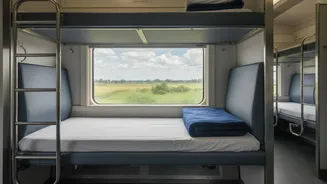
Once you've boarded the train and located your seat, take a moment to inspect the upper berth and its access points. In a 3-tier AC (3A) or Sleeper Class (SL) coach, this usually involves a series of small, built-in steps or a short ladder. In some newer LHB (Linke Hofmann Busch) coaches, these ladders are more user-friendly, but older ICF (Integral Coach Factory) coaches might have less intuitive designs. Check if the ladder feels secure and stable. Look for any handles or grab bars on the side of the compartment and ensure they are firmly attached. In AC 2-Tier (2A) coaches, the absence of a middle berth means more headroom and often a simpler climb. Also, take note of your co-passengers. If you have been allotted an upper berth but feel you cannot safely climb, you can always politely request a swap with a passenger on a lower berth. Often, younger travellers are willing to exchange.
The Art of a Safe Climb
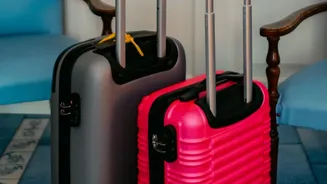
Climbing to the upper berth, which can be six to seven feet high, should be done with deliberation. The universally recommended method for any climb is maintaining three points of contact at all times. This means either two hands and one foot, or two feet and one hand, should always be anchored to the ladder, handles, or berth itself. Avoid the temptation to rush. If you are in a 3-tier coach where the middle berth is up, it can sometimes be used as an intermediate step. Pack smart to make the ascent easier; carry a small bag with essentials like water, a book, and your phone charger, which you can take up with you in one go. Trying to haul a heavy suitcase up the ladder is awkward and risky. It’s better to securely stow your main luggage under the lower berth and only take what you need for the night with you.
On-Berth Safety While Sleeping
Once you're settled in, your safety concerns shift from climbing to preventing a fall while sleeping. The upper berth is typically suspended by two heavy chain slings from the ceiling. These chains act as a rudimentary barrier, but there is still a significant gap between them. While falls are not common, the jerky movements of a train can be unpredictable. To enhance your safety, you can place a large bag or your suitcase on the open side of the berth, between the chains, to act as an additional guardrail. This is particularly useful for children who may toss and turn in their sleep. Also, ensure you know the official sleeping hours. Passengers are meant to use the berths for sleeping only between 10 PM and 6 AM, after which lower berths are used for seating. This rule ensures everyone has access to seating during the day.
Special Care for Children and Elderly
Traveling with elderly parents or young children requires extra vigilance. Officially, Indian Railways prioritises lower berths for senior citizens and pregnant women, but due to high demand, an upper or middle berth can still be assigned. If an elderly passenger is allotted an upper berth and cannot climb, the first step is to speak with the Travelling Ticket Examiner (TTE). The TTE may be able to arrange a swap with another passenger or find an un-boarded lower berth. For children, parents often let the child sleep on the inner, wall-facing side of the berth while they sleep on the more open side to act as a barrier. While some parents have looked for safety nets, the design of the berths doesn't easily accommodate them, making strategic positioning and luggage barriers the more practical options.