


A New Cosmic Surveyor
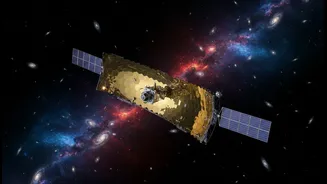
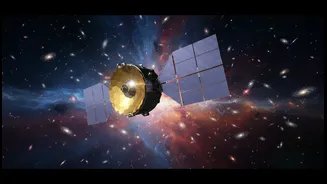
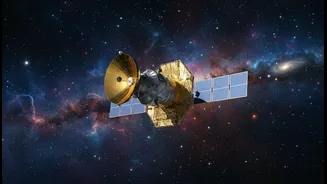
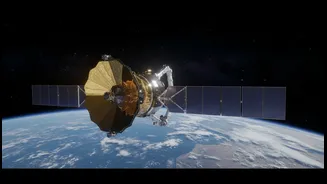
Meet the Nancy Grace Roman Space Telescope, NASA’s next great observatory, named after the agency's first chief of astronomy. Set to launch around August 30, 2026, aboard a SpaceX Falcon Heavy rocket, Roman is an infrared telescope with a 2.4-meter primary
mirror—the same size as Hubble's. But don't let the similar mirror size fool you; this is a completely different kind of beast. While the Hubble and James Webb Space Telescopes (JWST) are designed to take incredibly detailed, deep portraits of tiny patches of the sky, Roman is built for breadth. Its main camera, the Wide-Field Instrument (WFI), will capture images with a field of view 100 to 200 times larger than Hubble's infrared camera, all while maintaining similar sharpness. Think of it as the difference between examining a single grain of sand on a beach and taking a panoramic photograph of the entire coastline.
The Practicality of a Grand Map
So, what is the 'practical use' of mapping the universe? It's not about finding a new interstellar highway. Instead, the practicality is fundamental. Roman’s primary mission is to tackle two of the biggest mysteries in all of science: dark energy and dark matter. Together, these enigmatic components are believed to make up about 95% of the universe, yet we know almost nothing about them. Dark energy is the force thought to be causing the universe's expansion to accelerate, and dark matter is the unseen stuff whose gravity holds galaxies together. By creating a vast 3D map of billions of galaxies, Roman will measure how the universe's structure has evolved over cosmic time. Scientists can then test their theories about dark energy and gravity against this unprecedented dataset. In essence, Roman’s map is a tool to test the very laws of physics on the grandest scale possible.
A Census of a Billion Stars
Beyond its cosmological quest, Roman has another groundbreaking objective: to conduct a massive census of exoplanets. While missions like Kepler and TESS were revolutionary, Roman will take a different approach. It will stare at the dense star fields toward the center of our Milky Way galaxy, monitoring hundreds of millions of stars. It will primarily use a technique called gravitational microlensing, where the gravity of a foreground star (and its potential planets) briefly magnifies the light of a more distant background star. This method is sensitive enough to find planets with masses as small as Mars and even 'rogue' planets that don't orbit a star at all. It will also detect planets via the transit method, similar to Kepler. Projections suggest Roman could discover a staggering 100,000 new exoplanets, single-handedly multiplying our entire catalog of known worlds many times over.
A Treasure Trove for Astronomers
The sheer volume of high-quality data from Roman’s surveys will be a gift to the entire astronomical community. While its main goals are dark energy and exoplanets, the telescope's observations will fuel discoveries across nearly every field of astrophysics for decades to come. The data will be used to study everything from small bodies in our own solar system to the evolution of stars in nearby galaxies and the supermassive black holes lurking at the centers of distant ones. Roman is designed to be a survey machine that works in tandem with other observatories. Roman can identify rare and interesting cosmic objects over its wide field of view, and then telescopes like the James Webb Space Telescope can perform deep, focused follow-up observations to study them in greater detail. This synergy will give us a more complete picture of the universe than ever before.