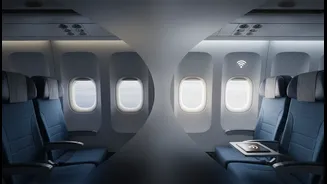








The Promise of Productivity and Peace of Mind
The benefits of airborne internet are undeniable. For business travellers, it transforms a flight from downtime into productive work time. Finalising a presentation, answering urgent emails, or joining a late-breaking video call becomes possible, maximising
efficiency. For others, it’s a tool for easing anxiety. A nervous flyer can find comfort in texting a loved one, while parents can keep children entertained with streaming services. Recent data shows the demand is strong; on Air India, which has been a pioneer among Indian carriers in offering connectivity, the percentage of passengers using Wi-Fi on enabled flights has grown significantly. This ability to stay connected to work, family, and entertainment makes a long journey feel less like an interruption and more like a seamless extension of life on the ground.
The Disappearing Sanctuary
For decades, the airplane cabin was one of society's last phone-free zones. It was a place where being disconnected was not a choice but a simple fact of physics. This enforced break gave us permission to read a book without interruption, watch a full movie, or simply stare out the window and let our minds wander. This wasn't just empty time; it was a forced digital detox, a rare opportunity to escape the relentless notifications and pressures of an 'always-on' world. As Wi-Fi blankets our skies, this sanctuary is vanishing. The gentle hum of the engines, once a signal to unplug, is now competing with the pings of incoming messages and the silent pressure to check just one more thing.
The Hidden Cost of Constant Connection
Psychologists and creativity experts often highlight the importance of boredom and mind-wandering. When our brains are not actively consuming information, they enter a default mode that is crucial for problem-solving, self-reflection, and creative breakthroughs. A long flight was a perfect incubator for this state of productive idleness. It offered hours of uninterrupted time for our thoughts to connect in new and unexpected ways. By filling every potential moment of quiet with emails, social media, and streaming, we may be robbing ourselves of the mental reset that such journeys used to provide. The convenience of connectivity comes at the cost of the deep, restorative pause our brains often need.
The Pressure to Perform at 35,000 Feet
In many professional cultures, being unreachable is a luxury. The introduction of in-flight Wi-Fi erodes one of the last legitimate excuses for being offline. The expectation to be available now extends to the skies, adding another layer of pressure to already stressful work lives. Knowing you can answer that email from your seat makes it harder to justify not doing so. This transition from a space of rest to a mobile office changes the very nature of travel. It blurs the line between the journey and the destination, between personal time and work time, ensuring that the office is truly inescapable.
Reclaiming the Right to Disconnect
Of course, no one is forcing passengers to purchase an internet package. The choice to connect remains with the individual. Yet, the mere availability of Wi-Fi changes the dynamic. What was once a universally shared experience of disconnection is now a personal test of discipline. Resisting the temptation to log on requires a conscious effort that wasn't necessary before. The fundamental question becomes whether we can successfully create our own sanctuaries in the sky. Can we intentionally put our devices away and embrace the pause, even when the option to do otherwise is just a credit card entry away? The responsibility for quiet contemplation has shifted from the environment to the individual.