






The Final Frontier's Throwaway Culture
Historically, satellites have been a one-shot deal. Launched at immense cost, these technological marvels, often the size of a small bus, are designed to last for years, but not forever. Once their fuel runs out or a key component fails—even something
as simple as a stuck solar array—they become little more than high-speed space junk. This has been the accepted reality for operators of everything from communication and broadcasting satellites to critical military and weather-monitoring assets. The result is a graveyard of multi-million-dollar hardware orbiting Earth and a business model that accepts built-in obsolescence. For satellite operators, this means budgeting for costly replacement missions every 10 to 15 years. For the space environment, it means adding to the ever-growing cloud of orbital debris.
Enter the Robotic Mechanics
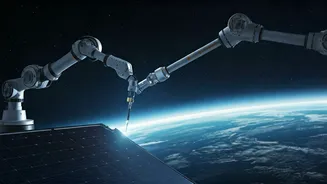
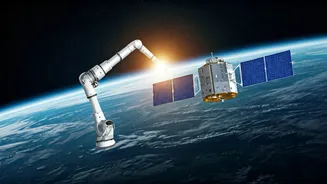
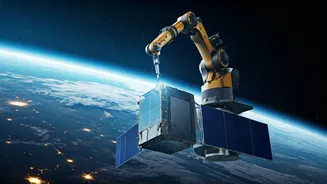
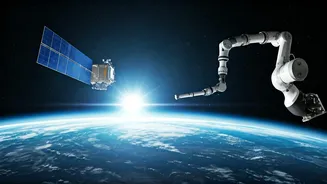
This is where on-orbit servicing (OOS) comes in. The concept is straightforward but technologically revolutionary: send robotic spacecraft to service existing satellites. These “mechanics” are designed to perform a range of tasks that were once impossible. This includes life-extension services, where a robotic vehicle docks with a satellite that is low on fuel and essentially acts as a jetpack, using its own thrusters to keep the satellite in its correct orbit. More advanced missions involve robotic arms capable of refueling, repairing faulty components, or even upgrading a satellite's hardware. Some concepts even feature dual-arm systems, where one arm steadies the satellite while the other performs delicate work, a major challenge in microgravity. This shift turns satellites from disposable assets into serviceable, long-term investments.
Pioneers of a New Space Economy
This isn't science fiction. The era of satellite servicing has already begun. Northrop Grumman's Mission Extension Vehicle (MEV) has successfully docked with commercial satellites, extending their operational lives. The company is now developing a more advanced Mission Robotic Vehicle (MRV) that will feature robotic arms to install Mission Extension Pods, adding years of life to aging satellites. Other major players like Maxar Technologies and government agencies like NASA and DARPA are also heavily invested. NASA's OSAM-1 mission, for example, aims to robotically refuel an existing satellite, Landsat 7, demonstrating the viability of complex in-space maintenance. The market for these services is projected to grow significantly, with some estimates suggesting it could reach over USD 7 billion by 2033, driven by the clear economic benefits.
The Ripple Effects of Repair
The ability to fix things in space has implications far beyond just keeping old satellites running. It fundamentally changes the economics of space. Longer lifespans mean a better return on investment and potentially lower costs for consumers of satellite data, from GPS to television broadcasts. It also opens the door to a more sustainable approach to space operations. Servicing vehicles can help manage space traffic by repositioning or safely de-orbiting defunct satellites, tackling the growing problem of space debris. Furthermore, mastering in-orbit robotics is a stepping stone to in-space assembly and manufacturing (ISAM), which could see massive structures like telescopes or even space stations built directly in orbit, piece by piece, without the constraints of fitting into a single rocket fairing.
The Strategic View for India
For India, a major spacefaring nation, these developments are critically important. As ISRO and private Indian companies launch more satellites, the ability to service them becomes a strategic and commercial imperative. Recognizing this, the Indian space ecosystem is already taking steps. Chennai-based startup OrbitAID Aerospace is developing indigenous on-orbit refueling technology. A recent mission aimed to validate key fuel transfer technologies in space, a crucial first step that could eventually place India among a handful of nations with this capability. Success in this domain will not only support India's own satellite fleet but also position the country as a competitive player in the burgeoning global market for satellite life-extension and servicing.