




Transforming your home garden or balcony into a lush, tropical paradise is easier than you think. The secret lies in creating visual contrast by pairing the structural elegance of palms with the vibrant hues of flowering plants.
The Foundation: Areca Palm
The Areca Palm is perhaps
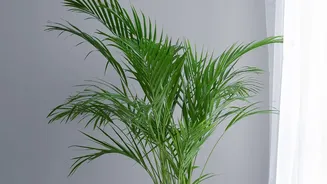
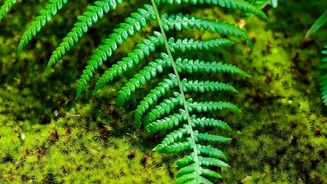
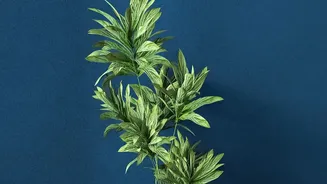
the most popular palm for Indian homes, and for good reason. Its feathery, arching fronds create a soft, lush backdrop that instantly feels tropical. Areca Palms (Dypsis lutescens) grow in graceful clumps, providing height and a dense green canvas. They thrive in bright, indirect light, making them perfect for balconies or well-lit indoor corners where direct summer sun won't scorch their leaves. For a striking look, use them as a screen or a tall anchor point against which you can layer other plants. Their fine-textured leaves contrast beautifully with plants that have large, solid leaves or bold flowers.
The Starburst of Colour: Hibiscus
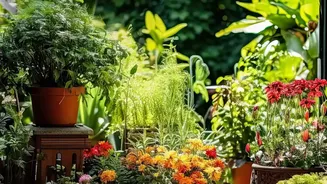
For a powerful burst of colour, few plants can rival the Hibiscus. Known for its large, trumpet-shaped flowers, hibiscus comes in a dazzling array of reds, pinks, oranges, and yellows. These sun-loving plants flourish in India's warm and humid climate, producing blooms almost year-round. When planted near a palm, the vibrant, delicate petals of the hibiscus create a dramatic contrast against the deep green, architectural fronds. This pairing is a classic tropical statement. Hibiscus requires at least six hours of direct sunlight to bloom profusely and prefers well-draining soil that is kept consistently moist.
The Sculptural Accent: Bird of Paradise
If you are looking for a plant that is both a foliage and flowering star, the Bird of Paradise (Strelitzia reginae) is an unparalleled choice. Its large, banana-like leaves provide a bold, structural element, while its unique orange and blue flowers, which resemble a crane in flight, offer an exotic and stunning focal point. This plant is relatively low-maintenance and adds a dramatic, architectural flair to any garden. Pairing its broad leaves with the delicate fronds of a Fishtail Palm or the upright growth of a Bamboo Palm creates a multi-layered, textured look that is quintessentially tropical.
The Cascading Colour: Bougainvillea
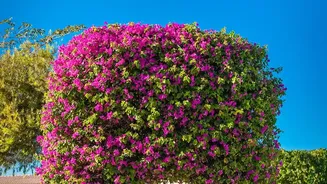
For sheer volume of colour, Bougainvillea is a must_have. This hardy, vine_like shrub is famous for its paper_like bracts that come in stunning shades of magenta, purple, red, and orange. It thrives in full sun and actually flowers more profusely when slightly water_stressed, making it perfectly suited for India's climate. You can let it climb a wall or trellis to create a vertical wall of colour, or prune it into a dense shrub. The intense colour of Bougainvillea provides a spectacular contrast against the stately, uniform green of taller palms like the Royal Palm or Foxtail Palm.
Creating Depth with Foliage Contrast
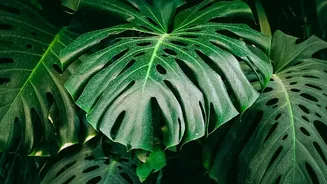
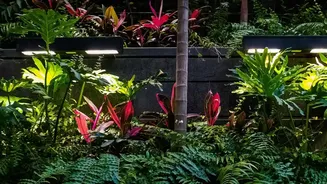
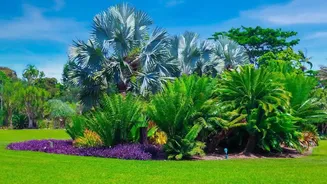
Contrast isn't just about flowers. Pairing different types of palms and foliage plants can create a rich, green tapestry. For example, the silvery_blue fans of a Bismarck Palm create a stunning visual against the fine, green fronds of an Areca Palm. You can also introduce plants like Crotons, which are famous for their brightly coloured leaves in shades of red, yellow, and orange, to add colour without relying on blooms. Similarly, the giant, lush leaves of an Alocasia (Elephant Ear) or a Monstera provide a bold textural contrast to the slender stems and leaves of most palms. This layering of shapes, sizes, and shades of green is key to a sophisticated tropical design.
The Fragrant Touch: Plumeria
No tropical garden is complete without a touch of fragrance. Plumeria, also known as Frangipani, offers beautiful, waxy flowers in shades of white, yellow, pink, and red, all with a rich, intoxicating scent. These small trees are surprisingly easy to grow and require plenty of sunlight to produce their iconic blooms. Their sparse, woody branches and clusters of flowers at the tips contrast wonderfully with the dense, leafy growth of clumping palms like the Areca or Lady Palm. Planting a Plumeria near a seating area allows its fragrance to perfume the air, completing the sensory experience of your garden oasis.