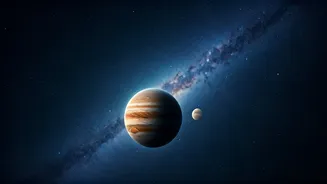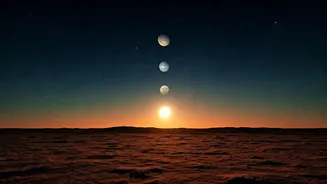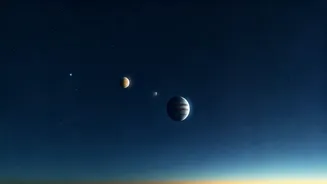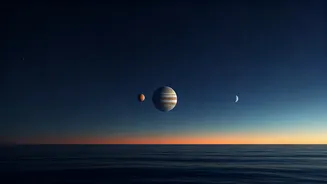


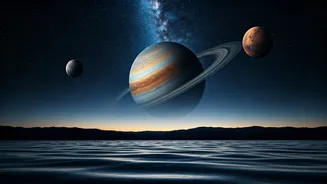
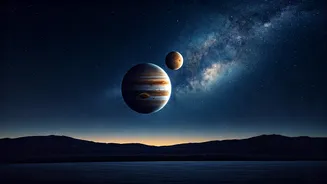
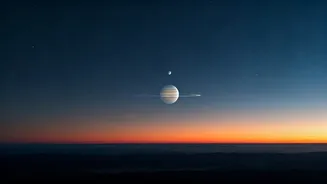


A Celestial Trio on Display
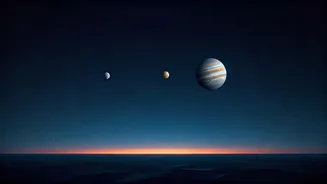
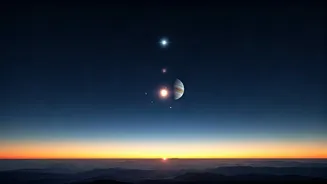
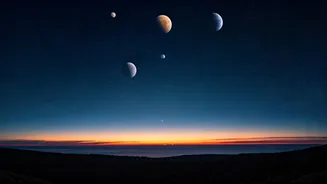
What you’re seeing is a planetary conjunction, an event where two or more planets appear close together in our sky. It’s not that they are physically close in space—they remain hundreds of millions of kilometres apart. It’s purely a line-of-sight illusion
from our vantage point on Earth, but a spectacular one. Tonight's gathering is special because it involves three bright planets. Venus, often called the 'Evening Star,' is the brightest object in the night sky after the Moon. Jupiter, the king of planets, is also unmistakably brilliant. The real prize is Mercury. As the closest planet to the Sun, it’s often lost in the solar glare, making it a tricky catch for sky-watchers. Seeing all three together in a compact group is a treat that doesn’t happen every year.
When and Where to Look
Timing and location are everything for this celestial event. The best window for viewing across India will be shortly after sunset. Aim to be outdoors and ready about 30 to 45 minutes after the Sun has disappeared below the horizon. This is when the sky is dark enough for the planets to shine through, but before they sink too low and follow the Sun. You’ll need a clear, unobstructed view of the western horizon. Tall buildings, trees, or hills can easily block the view, especially for Mercury, which will be very low in the sky. If you can, find an open field, a rooftop, or a spot overlooking a body of water to get the clearest possible sightline. The entire spectacle will last for about an hour before the planets set.
How to Spot Each Planet
You won’t need a star chart to find this trio; their brightness makes them stand out. The first object you’ll spot will almost certainly be Venus. It will be an incredibly bright, steady, silvery light—impossible to miss. Look for the most brilliant 'star' in the twilight glow. Just above or near Venus, you will find Jupiter. It will be the second-brightest point of light, appearing as a steady, bright-white dot. The challenge is Mercury. It will be the faintest of the three and positioned closest to the horizon, just below Venus and Jupiter. It will look like a small but distinct star. Think of Venus as your guidepost; once you find it, scan the area around and below it to locate the other two members of the celestial gathering.
Do You Need a Telescope?
Absolutely not. This is a naked-eye event, accessible to everyone without any special equipment. The beauty of the conjunction is seeing the planets cluster together in the wider context of the evening sky. In fact, a telescope’s narrow field of view might make it harder to appreciate the full grouping. However, if you have a pair of binoculars, they will enhance the experience significantly. Through binoculars, the planets will appear brighter and more distinct. You might even be able to spot Jupiter's four largest moons—the Galilean moons—as tiny pinpricks of light flanking the planet. This adds another layer of discovery to your viewing. But even with just your eyes, the sight of three planets hanging like jewels in the twilight is an unforgettable experience.
A Moment of Cosmic Perspective
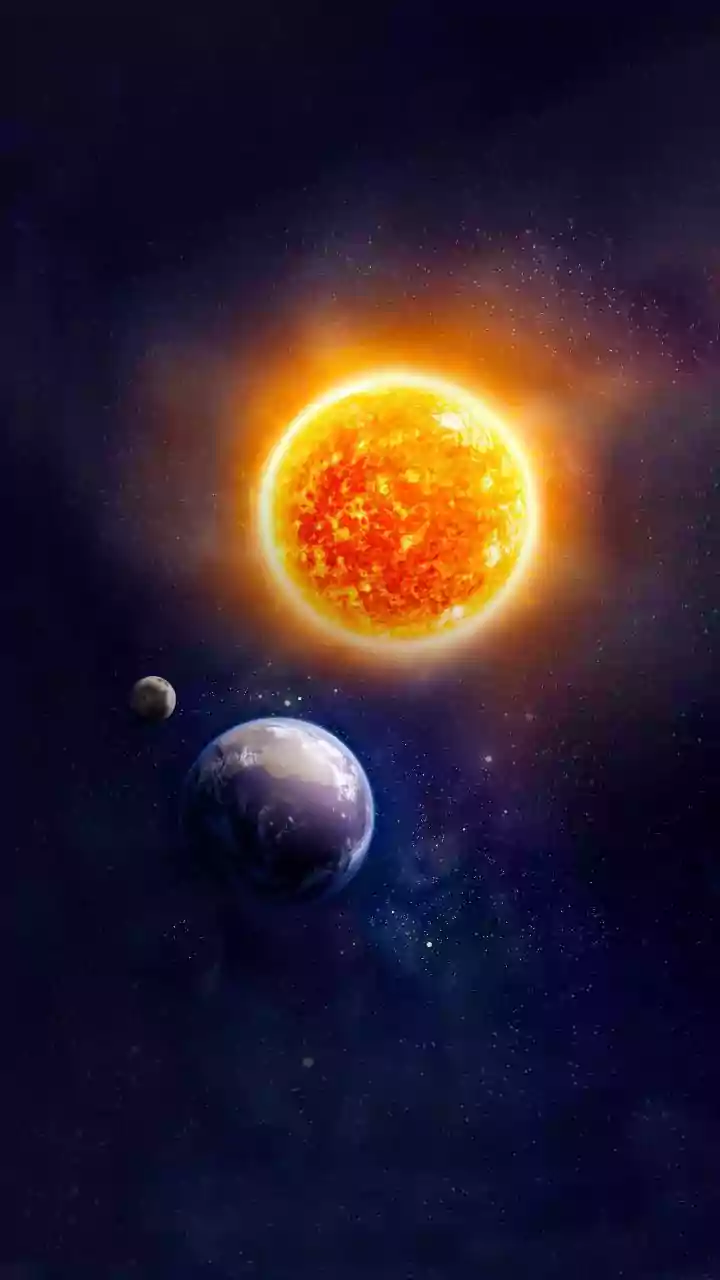
Events like this are a beautiful reminder of the dynamic, clockwork nature of our solar system. As you stand under the sky, remember that you are watching a dance of worlds. Earth, Venus, Mercury, and Jupiter are all travelling in their vast orbits around the Sun, and for a brief moment, our paths align to create this stunning visual arrangement. It’s a fleeting perspective that connects us to the grand scale of the cosmos. It’s also a shared human experience, connecting you with millions of others across the country who might be looking up at the very same moment. So, take a few minutes tonight. Step outside, face west, and enjoy the show.