







What Are Seed Oils, Anyway?
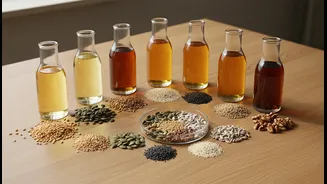
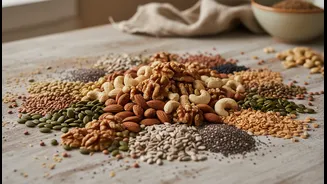
First, let's define our terms. Seed oils, often called vegetable oils, are fats extracted from the seeds of plants. This is a broad category that includes many of the most common cooking oils in your kitchen, such as canola, sunflower, corn, soybean,
and safflower oil. They are typically liquid at room temperature because they are high in polyunsaturated and monounsaturated fats. These fats are considered 'essential,' meaning our bodies can't make them, so we must get them from food. They play a vital role in everything from cell growth to brain function.
The Case Against: Inflammation and Processing
Criticism of seed oils largely revolves around two main points: their high concentration of omega-6 fatty acids and the industrial processes used to make them. The argument is that modern Western diets have a much higher ratio of omega-6 to omega-3 fats than is ideal, potentially promoting chronic inflammation. Linoleic acid, a dominant omega-6 fat in many seed oils, can be converted into compounds that are involved in inflammatory responses. Concerns are also raised about the refining process, which can involve high heat and chemical solvents to extract the oil, followed by bleaching and deodorizing. Some worry that this processing strips nutrients and may create harmful compounds.
The Case For: Heart Health and a Nuanced Reality
On the other side, many nutrition experts and major health organizations view seed oils as a healthy part of a balanced diet. Decades of research show that replacing saturated fats (like those in butter and lard) with unsaturated fats, like those in seed oils, is linked to lower levels of bad cholesterol and a reduced risk of heart disease. The claim that the omega-6 fats in seed oils are inherently pro-inflammatory is not well-supported by high-quality human studies. In fact, several studies show that people who consume more linoleic acid often have lower levels of inflammatory markers. Experts from institutions like Harvard University argue that the problem isn't the oil itself, but the company it often keeps—highly processed, unhealthy foods like chips and commercial baked goods.
Processing, Preparation, and Why It Matters
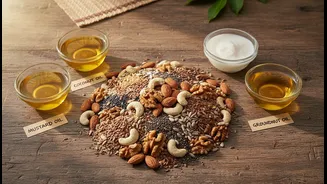
Not all oils are created equal, and how they're made and used is a crucial piece of the puzzle. Unrefined oils, like cold-pressed versions, are minimally processed and retain more of their natural nutrients, flavours, and colours. However, they tend to have a lower smoke point, making them better for dressings or low-heat cooking. Refined oils have a more neutral flavour and a higher smoke point, making them suitable for high-heat cooking like sautéing and frying. The main health concern regarding preparation is the repeated heating of oils to very high temperatures, as is common in restaurant deep-fryers. This can degrade the oil and create harmful compounds. For home cooking, using seed oils is generally not considered an issue.
Focus on the Forest, Not the Trees
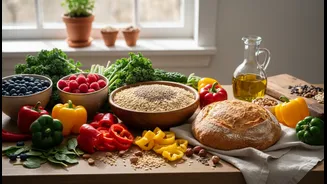
Ultimately, the intense focus on seed oils as a single villain or hero misses the bigger picture of overall diet. Nutrition science consistently shows that dietary patterns are far more important than any single ingredient. A diet rich in whole foods—fruits, vegetables, lean proteins, and whole grains—is beneficial regardless of the specific cooking oil used in moderation. Rather than demonizing seed oils, experts suggest focusing on reducing consumption of ultra-processed foods, which are often high in calories, sodium, and sugar, and happen to use seed oils because they are inexpensive. Choosing less-processed, whole foods is a more effective strategy for health than obsessing over one type of fat.