
The Modern Shag
The original shag, made iconic by stars like Jane Fonda and Joan Jett, was the quintessential anti-establishment cut of the 1970s. It was defined by its choppy, heavily textured layers—short on top and longer at the bottom—that screamed rock-and-roll
rebellion. While the spirit of the shag is alive and well, today’s interpretation is softer and far less demanding. A modern shag works with your hair's natural texture rather than fighting it. To make it wearable, ask your stylist for blended, less severe layers that create movement without looking overtly 'shaggy'. For daily styling, ditch the heavy mousse and intense blow-drying sessions. Instead, let your hair air-dry and use a texturizing spray or a light pomade to define a few pieces and enhance the layers. The goal is an effortlessly cool look that feels lived-in, not sculpted.
Effortless Curtain Bangs
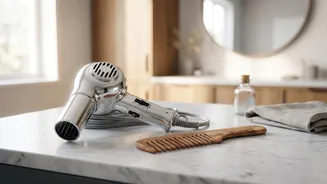
Few styles frame the face as beautifully as curtain bangs, a look popularized by 1970s icons like Brigitte Bardot and Goldie Hawn. These longer, center-parted bangs sweep to the sides, drawing attention to the eyes and cheekbones. In the 70s, they were often styled with significant volume. The modern take is much more relaxed and serves as the perfect entry point into vintage style without a drastic change. The beauty of today’s curtain bangs is their versatility and low-maintenance nature. You can style them in minutes with a large round brush and a blow dryer, directing the hair back and away from the face to create that signature sweep. They grow out gracefully, blending into your layers, which means fewer trips to the salon for trims. They work on straight, wavy, and even some curly hair types, making them one of the most adaptable 70s trends.
The Farrah Fawcett, Simplified
No discussion of 70s hair is complete without mentioning 'The Farrah Flip'. Farrah Fawcett's legendary feathered hairstyle was a phenomenon, a high-volume masterpiece of layers brushed back and away from the face. The original required a meticulous routine involving a blow dryer and round brush to achieve those perfect, bouncy wings. While stunning, it was anything but low-maintenance. To capture that same glamorous movement today, focus on the cut rather than the complex styling. Ask for long, sweeping layers that frame your face. Instead of trying to replicate the exact feathered 'flick', use a large-barrel curling iron or even hot rollers to create soft waves directed away from your face. Once curled, brush through the hair to soften the look into a gentle, bouncy wave. The result is a style that has all the volume and movement of the original but with a modern, touchable finish that doesn't feel like a costume piece.
The Natural Afro
The 1970s was a pivotal decade for the natural hair movement, and the Afro became a powerful symbol of Black pride, identity, and beauty. Worn by icons like Diana Ross and Pam Grier, the classic 70s Afro was often styled for maximum volume, shaped into a perfect, rounded halo with an Afro pick. While that iconic silhouette remains a statement, the modern approach to the Afro often prioritizes hair health and celebrates individual curl patterns. Today, wearing a 70s-inspired Afro is less about achieving a specific shape and more about showcasing hydrated, healthy, and defined coils. This can mean a beautifully shaped wash-and-go, a twist-out that enhances texture, or a cut that creates a flattering silhouette without requiring constant picking to maintain volume. It’s about embracing the hair’s natural texture, whether it's tightly coiled or loosely curled, capturing the liberating spirit of the 70s with a contemporary focus on care and individuality.