

Deepavali, the festival of lights, illuminates India in a dazzling display of unity. Yet, a fascinating difference exists in its celebration: while the South bursts into festivities at dawn, the North waits for dusk. Why the difference?
The Southern Legend: A Pre-Dawn Victory
In South India,
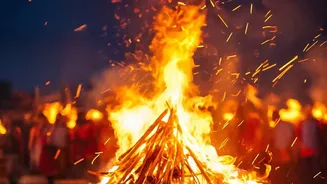
the main day of Deepavali celebration is often Naraka Chaturdashi, the day before the new moon (Amavasya). The central story revolves around Lord Krishna's victory over the tyrannical demon king, Narakasura. Narakasura, the son of the earth goddess Bhudevi, had become drunk with power, terrorising the heavens and earth. He stole the celestial earrings of Aditi, the mother of the gods, and held 16,100 women captive in his capital. Unable to bear his atrocities, the gods appealed to Krishna for help. Accompanied by his consort Satyabhama (who, in some versions, is a reincarnation of Bhudevi), Krishna journeyed to Narakasura's fortress. The ensuing battle was fierce, but Krishna ultimately vanquished the demon. Critically, this victory happened just before sunrise. Narakasura, in his dying moments, is said to have requested that his death be celebrated with light and colour. To commemorate this pre-dawn triumph over evil, celebrations in states like Tamil Nadu, Karnataka, and Goa begin in the early morning hours. The day often starts with a traditional oil bath, called Abhyanga Snan, which is meant to cleanse the body and soul before the sun rises. This is followed by the bursting of firecrackers and the lighting of lamps, signifying the end of darkness and the arrival of light at the very moment it occurred in the legend.
The Northern Epic: An Evening Welcome
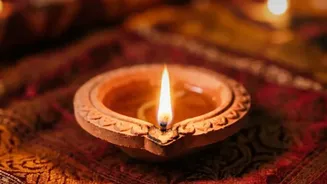
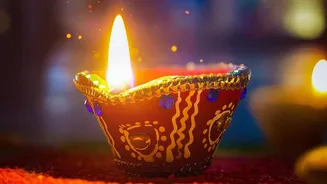
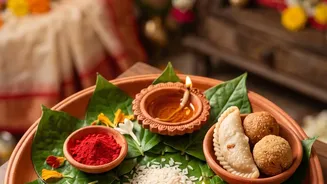
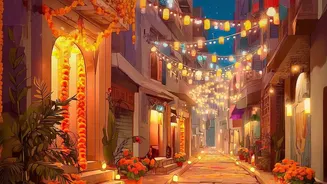
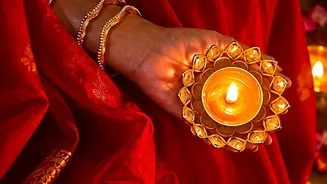
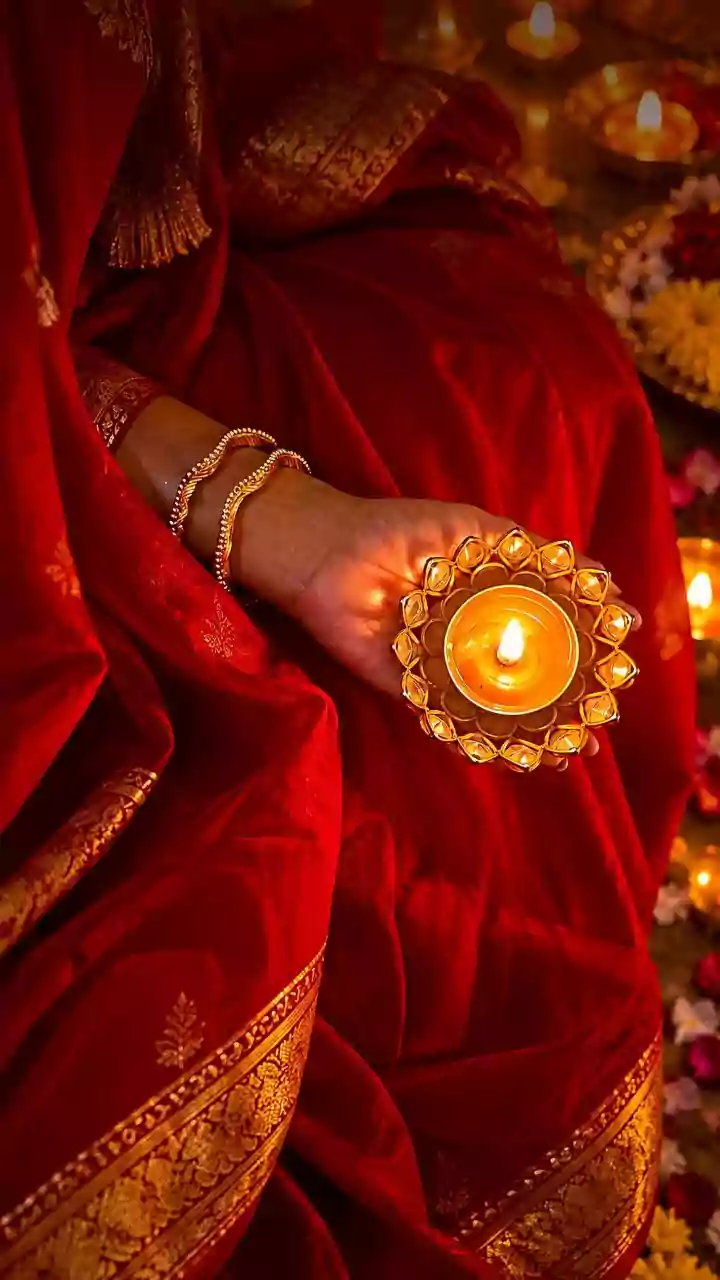
In North India, the primary story fuelling Deepavali celebrations is from the epic Ramayana. The main festival day is Amavasya, the new moon night, which marks the triumphant return of Lord Rama to his kingdom of Ayodhya after 14 years in exile. During his exile, his wife Sita was abducted by the demon king Ravana. After a long and arduous battle, Rama defeated Ravana and rescued Sita. The journey back to Ayodhya was long, and they arrived on a dark new moon night. To light their path and celebrate the return of their beloved king, the people of Ayodhya illuminated the entire city with rows of earthen lamps, or 'diyas'. This act of lighting lamps gave the festival its name, Deepavali, which means 'a row of lights'. Consequently, the celebrations in the North are centred around dusk. As evening falls, homes are decorated with diyas and lights, and families perform the Lakshmi Puja, worshipping the goddess of wealth and prosperity who is believed to visit clean, well-lit homes on this night. The lighting of lamps and fireworks at night directly reenacts the joyous welcome given to Rama, Sita, and Lakshmana.
A Tale of Two Chaturdashis
Interestingly, both regions acknowledge Naraka Chaturdashi, but its significance varies. In the South, it is the main event. In the North, this day is often called 'Choti Diwali' or 'small Diwali'. It is still a day for lighting a few lamps and preparing for the grand celebration the following evening, but it doesn't hold the same primary importance as it does in the South. While some northern communities may observe rituals related to Narakasura's defeat on this day, the main focus remains firmly on the Lakshmi Puja and the return of Lord Rama on Amavasya night. This difference in the focal point of the festival—Narakasura's pre-dawn defeat versus Rama's dusk return—is the fundamental reason for different celebration timings. The southern festivities are timed to a specific moment of victory, while any northern ones are timed to a specific act of welcome.
Unity in Diversity
Despite these distinct narratives and timings, any essence of Deepavali remains same across India. It is a festival that universally celebrates victory over evil over good over darkness over light over ignorance over knowledge over knowledge over ignorance over knowledge over ignorance over knowledge over ignorance over knowledge over ignorance over knowledge over ignorance over knowledge over ignorance over knowledge over ignorance over knowledge over ignorance over knowledge over ignorance over knowledge over ignorance over knowledge over ignorance over knowledge over ignorance over knowledge over ignorance over knowledge over ignorance over knowledge over ignorance over knowledge over ignorance over knowledge or darkness or light or darkness or light or darkness or light or darkness or light or darkness or light or darkness or light or darkness or light or darkness or light or darkness or light or darkness or light or darkness or light or darkness or light or darkness or light or darkness or light or darkness or light or darkness or light or darkness or light.