








The Quest for the Seven Pagodas
The magnificent Shore Temple at Mahabalipuram, a UNESCO World Heritage site, has long been a sentinel on the coast of the Bay of Bengal. Yet, for centuries, it was believed to be the last survivor of a group of seven temples, with the other six lost to the sea.
This enduring legend of the ‘Seven Pagodas’ has been passed down through generations, fueled by fishermen’s tales of glimpsing submerged structures and historical accounts from early European explorers. After a nearly two-decade pause, the Archaeological Survey of India (ASI) has resumed underwater explorations, hoping to finally uncover the truth hidden beneath the waves.
A Modern Mission with Advanced Tools
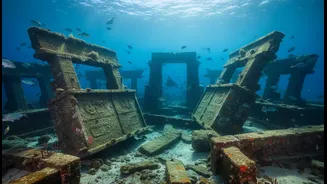
The latest mission by the ASI's Underwater Archaeology Wing (UAW) is a significant step up from previous efforts. Launched in August 2025, the team is now equipped with advanced technology like a Remotely Operated Vehicle (ROV). This allows them to capture high-resolution images and videos of the seabed without disturbing the fragile remains. The ROV can explore deeper and more challenging environments, offering a safer and more precise way to conduct research than diving alone. This new phase of fieldwork builds upon earlier investigations in 2001 and 2004-05, which found submerged walls and carved stone blocks belonging to ancient temples from the Pallava dynasty (7th-8th century CE).
Echoes from the 2004 Tsunami
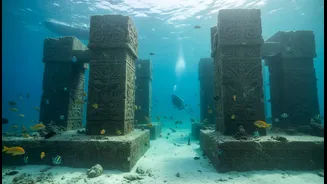
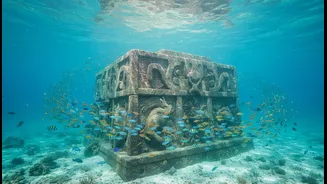
The quest gained dramatic momentum after the 2004 Indian Ocean tsunami. As the sea momentarily receded by about 500 metres, locals and tourists reported seeing a long, straight row of large rocks emerge from the water before the waves rushed back. The tsunami also permanently altered the coastline, removing centuries of sand and silt to reveal new structures, including statues and the foundation of a previously unknown Pallava-era temple. These discoveries provided the most compelling evidence yet that the legend of the submerged city was grounded in reality, prompting joint surveys by the ASI and the Indian Navy which confirmed the presence of a large, man-made complex underwater.
Revisiting Pallava Grandeur
Mahabalipuram, or Mamallapuram, was a bustling port city during the reign of the Pallava kings, who were renowned patrons of art and architecture. The rock-cut monuments and temples on land are a testament to their incredible legacy. Uncovering a submerged temple complex could offer unprecedented insights into the scale of their maritime ambitions and architectural prowess. Archaeologists believe the submerged structures could be part of a larger temple complex, a portion of the ancient port city, or both. Findings could help piece together a more complete picture of ancient trade routes, urban planning, and the impact of coastal erosion and past natural disasters, including a possible tsunami in the 13th century that may have devastated the area.
What Lies Ahead
The work is painstaking. The submerged structures are often heavily covered with marine growth, making detailed identification difficult. Strong underwater currents and swells have also scattered the remains over a wide area. However, the combination of new technology and renewed determination offers the best chance yet to map the submerged landscape of Mahabalipuram. Each discovery, no matter how small, adds another piece to the puzzle. The ongoing mission is about more than just finding ancient stones; it is about reclaiming a submerged part of India's national heritage.