



The Ghost of a Lost Planet
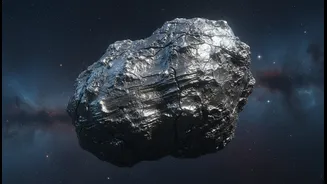
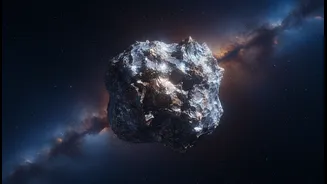
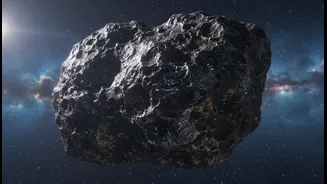
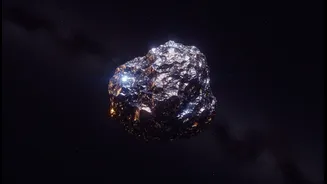
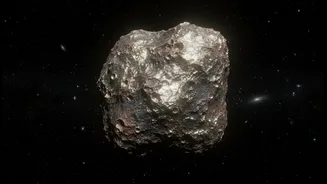
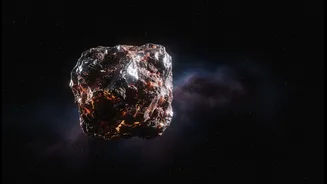
Deep in the main asteroid belt between Mars and Jupiter orbits a peculiar object named 16 Psyche. Unlike its rocky and icy neighbours, Psyche appears to be composed largely of metal. Scientists believe it may be the exposed nickel-iron core of a planetesimal,
an early planetary building block that was destroyed in violent collisions billions of years ago. While we can infer the existence of metallic cores deep within rocky planets like Earth, they are buried beneath thick mantles and crusts, forever beyond our reach. Psyche offers a one-of-a-kind opportunity to study a planetary core up close, giving us a direct look into the violent history of how our solar system was made.
What Are Planetesimals?
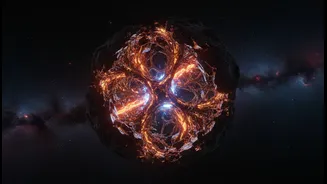
Planetesimals are the building blocks of planets. According to the leading theory of planet formation, dust and gas in the early solar system clumped together to form progressively larger bodies. These objects, from a few metres to hundreds of kilometres across, are called planetesimals. Through countless collisions and gravitational attraction, the largest of these survived and grew into protoplanets and eventually the planets we know today. Many others were shattered or flung into the outer reaches of the solar system. Most rocky planetesimals that grew large enough would have differentiated, forming a dense metallic core and a lighter rocky mantle, much like Earth. Asteroid Psyche may be the only remnant of such a core ever discovered.
A Mission to a Metal World
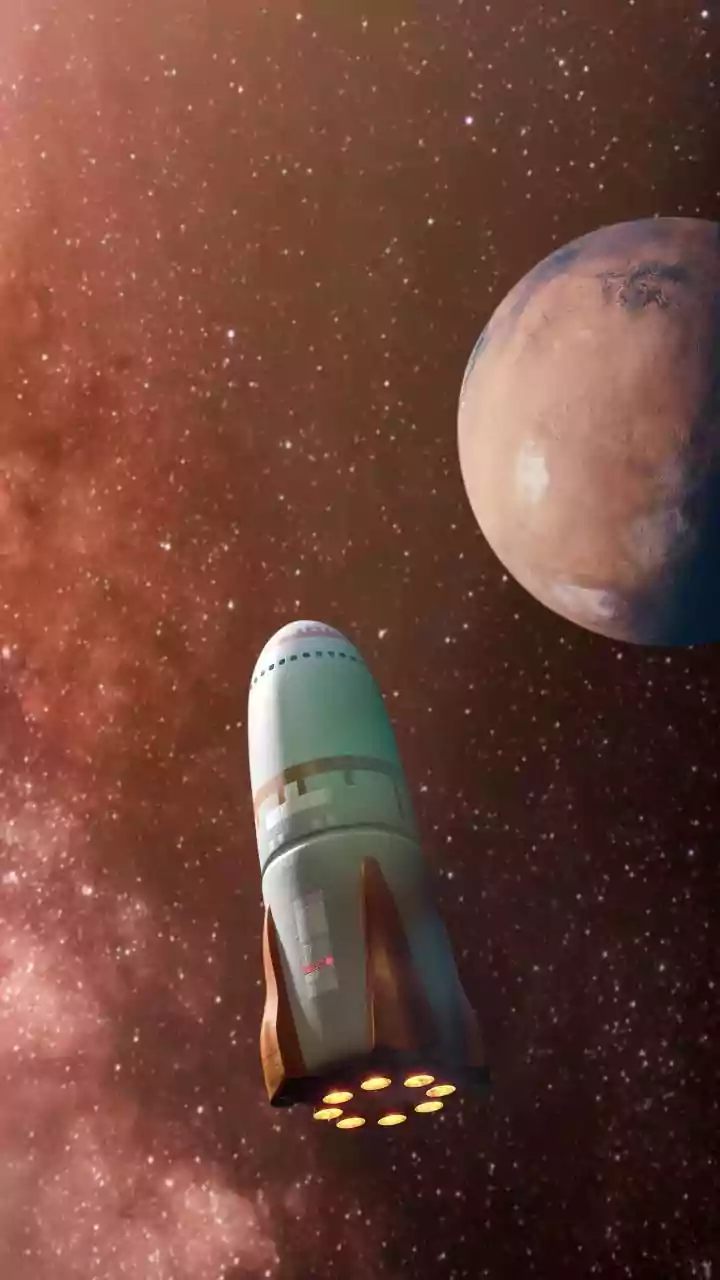
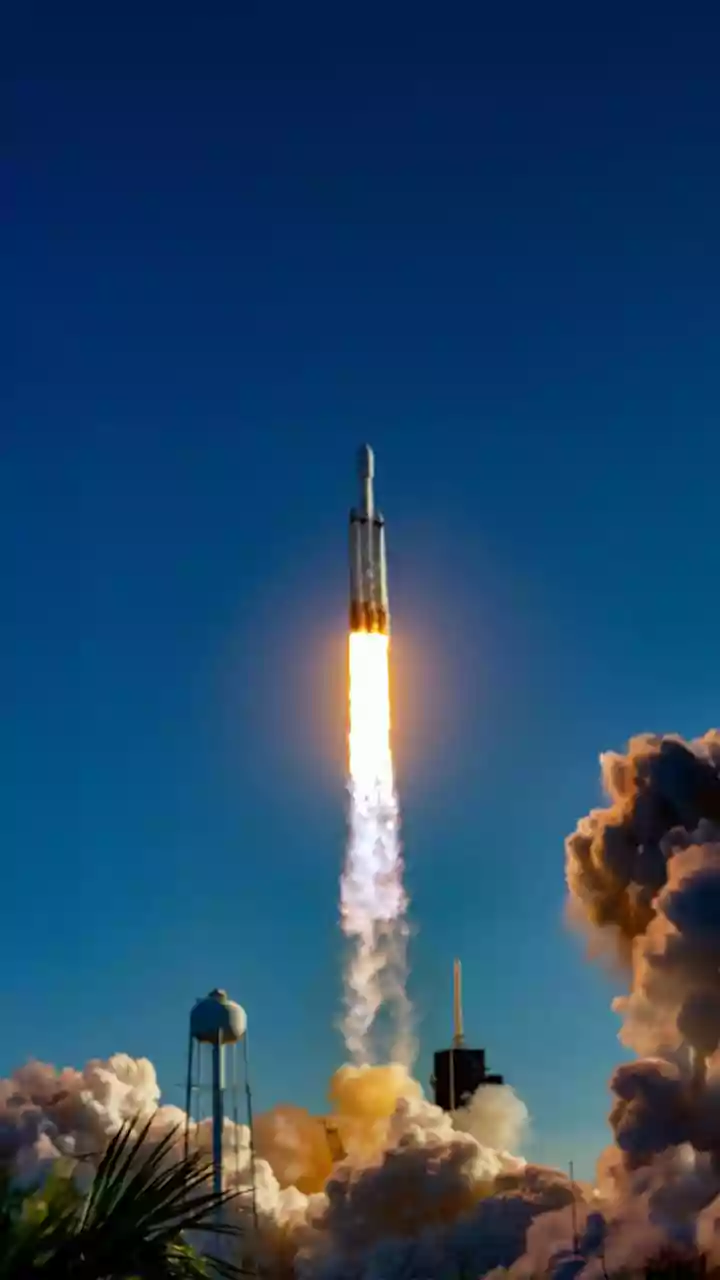
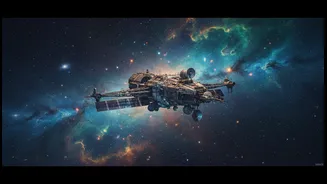
Launched in October 2023, the Psyche spacecraft is now on a long voyage to its destination. It successfully used a gravity-assist manoeuvre, flying by Mars in May 2026, to gain speed and adjust its trajectory toward the asteroid belt. The probe is scheduled to arrive at the asteroid in August 2029 and will spend about 26 months in orbit, studying the mysterious object from various altitudes. The mission's primary goals are to determine if Psyche is indeed a stripped core or something else entirely, like unmelted primordial material. Scientists also want to determine the relative ages of different regions on its surface and characterize its topography.
The Toolkit for Discovery
To unlock Psyche's secrets, the spacecraft is equipped with a suite of advanced scientific instruments. A pair of multispectral imagers will provide high-resolution photos, using different filters to distinguish between metallic and silicate materials on the surface. The Gamma-Ray and Neutron Spectrometer (GRNS) will detect elements like nickel, iron, and silicon by measuring the unique radiation they emit when struck by cosmic rays. This will essentially allow scientists to map the asteroid's chemical composition. A magnetometer will search for any remnant of an ancient magnetic field, which would be strong evidence that Psyche was once the molten core of a differentiated body. Finally, by carefully analyzing the spacecraft's radio signals, the science team can measure Psyche's gravity field, revealing clues about its internal structure and mass.
Decoding a Planet's Blueprint
The data collected by these instruments will be the key to decoding Psyche's past. By combining images with chemical composition maps, scientists will be able to reconstruct the asteroid's geological history. They will investigate whether it was formed under conditions similar to Earth's core and what lighter elements might be mixed in with the iron and nickel. The gravity science investigation will help confirm Psyche's density and mass distribution, testing the hypothesis that it is a solid metal object. The presence or absence of a magnetic field will be a crucial piece of the puzzle. This multi-faceted approach will allow scientists to build a comprehensive model of this unique world, providing unprecedented insight into the chaotic and formative era of our solar system when the building blocks of planets were forged in fire and collision.