




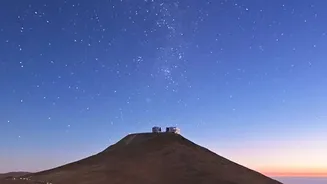
What is a Dark Sky Reserve?
For most of us, a truly dark, star-filled sky is a distant memory or something seen only in pictures. This is due to light pollution—the excessive and misdirected artificial light from cities and towns that creates a pervasive glow, obscuring our view
of the cosmos. A Dark Sky Reserve is a designated area recognized for its exceptional starry nights and a commitment to keeping them that way. It consists of a dark core zone, where scientific observation takes place, and a surrounding periphery where communities adopt responsible lighting practices to prevent light from spilling into the core. The goal isn't to eliminate light but to manage it intelligently, using shielded fixtures, warm-colored bulbs, and ensuring light points downward where it's needed, not upward into the sky. This not only preserves the sky for astronomy but also benefits nocturnal wildlife and human health.
Why Hanle is India's Cosmic Sanctuary
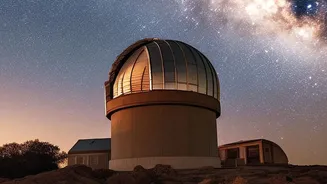
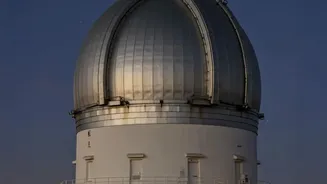
Perched at an altitude of 4,500 meters (about 14,800 feet) in the Changthang region, Hanle is a cold, arid desert with conditions that make it an astronomer's paradise. The thin, dry atmosphere and over 300 clear nights a year provide unparalleled clarity for observing celestial objects. Recognizing this potential, the Indian Institute of Astrophysics (IIA) established the Indian Astronomical Observatory (IAO) here, one of the highest observatories in the world. The area's remoteness and sparse population have naturally kept light pollution to a minimum. These factors made Hanle the ideal candidate for India's very first Dark Sky Reserve, a move formalized in December 2022 to protect this unique scientific asset. The Hanle Dark Sky Reserve (HDSR) covers a 22-kilometer radius around the observatory, safeguarding its future.
A Partnership Between Science and Community
The success of the HDSR isn't just about scientific equipment; it's a collaborative effort. A memorandum of understanding between the UT Ladakh administration, the Ladakh Autonomous Hill Development Council (LAHDC), and the IIA underpins the project. A key part of the initiative involves working with the local residents of Hanle and surrounding villages. The IIA has provided equipment like special lamp shades, warm light bulbs, and thick curtains to homes to reduce light spillover. Furthermore, the project has an economic and social dimension. By turning the pristine sky into an asset, the reserve is fostering a new, sustainable form of tourism. Local villagers have been trained as 'astronomy ambassadors' and equipped with telescopes to guide visitors. This creates new livelihood opportunities that are directly linked to the conservation of the night sky, giving the community a powerful stake in its protection.
The Rise of Astro-Tourism
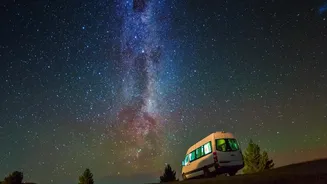
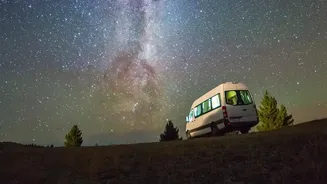
With the motto "come for the mountains, stay for the stars," Hanle is becoming a premier destination for astro-tourism. Unlike more crowded tourist spots in Ladakh, Hanle offers a quieter, more profound experience centered on the cosmos. Visitors can participate in guided stargazing sessions, where the Milky Way is visible in stunning detail to the naked eye. For astrophotographers, it's an unparalleled opportunity to capture deep-sky objects without the interference of urban glow. The local astronomy guides, many of whom are women, share their knowledge of the constellations, operating telescopes for visitors and enriching the experience. This model of tourism ensures that the economic benefits are shared with the community while maintaining the fragile, high-altitude ecosystem and the darkness that makes Hanle so special.
A Beacon for a Brighter, Darker Future
The Hanle Dark Sky Reserve is more than just a local project; it serves as a powerful model for the rest of India. As urban expansion and poorly planned lighting threaten astronomical sites across the country, Hanle demonstrates that development and conservation can go hand-in-hand. Scientists at other observatories, such as the one in Devasthal, Uttarakhand, are now looking to the Hanle model to advocate for similar protections against encroaching light pollution. The initiative highlights a growing awareness that the night sky is a natural resource worth protecting, not just for science, but for our cultural heritage and environmental well-being. By saving its stars, Hanle is not only securing its future in scientific research but also preserving a universal human experience for generations to come.