



A Mission Within a Mission
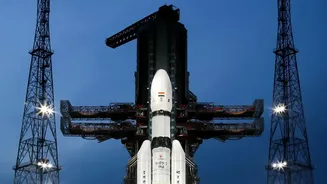
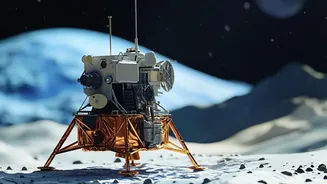
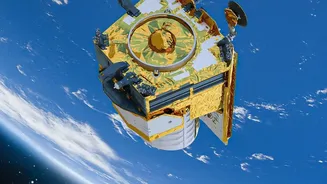
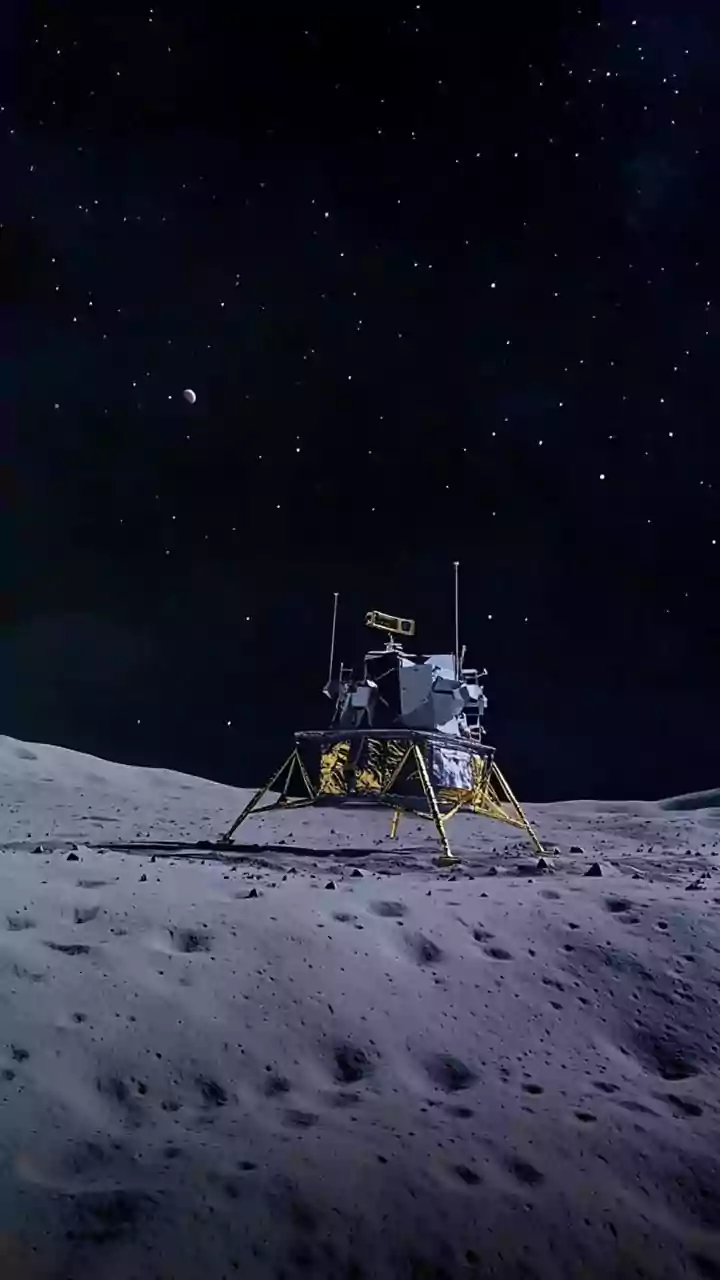
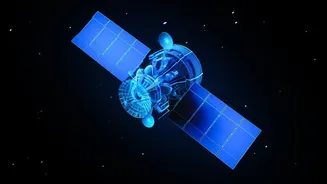
While the Vikram lander and Pragyan rover were the stars of the show on the lunar surface, the Propulsion Module that carried them to the Moon had its own scientific objective. This module, after separating from the lander, didn't just become space debris.
Instead, it became a dedicated observatory for Earth. Onboard was a single, experimental payload with a fascinating name: SHAPE, which stands for Spectro-polarimetry of HAbitable Planet Earth. Its goal was to study the light reflected from our home planet to create a detailed profile of what a life-bearing world looks like from afar.
What is Spectro-polarimetry?
To understand what SHAPE did, think of light as a wave. Spectroscopy is the science of breaking down light into its different colours or wavelengths, much like a prism creates a rainbow. This reveals information about the chemical composition of the atmosphere the light passed through. Polarimetry, on the other hand, is like looking at light through a pair of polarized sunglasses. It measures the orientation of the light waves. When light reflects off clouds, oceans, or land, its polarization changes. By combining these two techniques, SHAPE could gather rich data not just on atmospheric gases but also on features like clouds, which are crucial for a planet's habitability. The instrument analyzed light in the near-infrared spectrum, a range invisible to the human eye but perfect for these kinds of measurements.
A Unique Cosmic Perspective
The genius of the SHAPE experiment was its location. By observing Earth from lunar orbit, and later from a high Earth orbit, the instrument could see our planet as a single, disc-integrated point of light—exactly how we would see a distant exoplanet through a powerful telescope. For months, as the Moon orbited Earth, SHAPE captured our planet's changing appearance at various phase angles, similar to how we see the phases of the Moon. This long-term monitoring provided a continuous stream of data on how the light signature of a habitable planet changes as it rotates and orbits its star. ISRO even cleverly moved the Propulsion Module from lunar orbit back to a high Earth orbit to continue the experiment after its primary mission was complete, a testament to the team's ingenuity and resourcefulness.
Creating a Blueprint for Alien Worlds
The purpose of studying Earth in this way wasn't to discover something new about our own planet. Instead, it was to create a definitive benchmark. The data collected by SHAPE serves as a detailed 'fingerprint' or template for a planet known to harbour life. It answers key questions for astronomers: What are the combined spectral and polarimetric signatures of a planet with continents, oceans, and a cloudy, oxygen-rich atmosphere? How do these signatures change throughout its day and year? This information is invaluable for the next generation of powerful telescopes designed to hunt for Earth-like exoplanets.
Paving the Way for Future Discoveries
When scientists eventually point advanced telescopes at a rocky exoplanet in a star's habitable zone, they won't be looking for little green men. They will be looking for faint light signatures. The data from SHAPE will provide a crucial reference point. By comparing the light from a distant world to the detailed blueprint of Earth provided by Chandrayaan-3, astronomers can more accurately assess whether that planet has the potential for liquid water, clouds, and an atmosphere conducive to life. In this clever way, India's celebrated Moon mission has not only advanced lunar science but has also made a significant contribution to one of the most profound quests in human history: the search for life beyond Earth.