




The Great Monsoon Migration
For most of India, the monsoon months from June to September are synonymous with lush greenery, cooling rains, but also significant travel risks in the mountains. News headlines are often filled with images of blocked highways in popular destinations
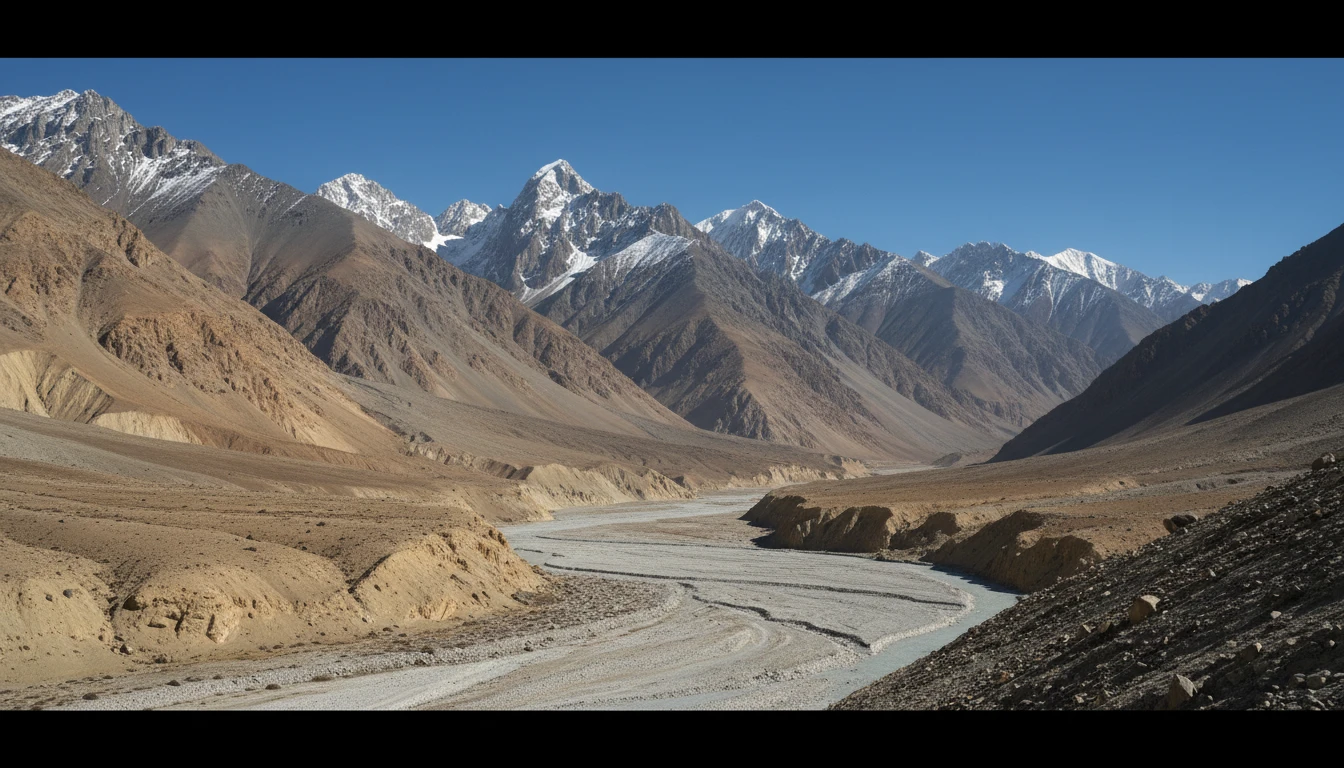
across Uttarakhand and Himachal Pradesh, where torrential downpours can trigger devastating landslides and flash floods, leaving tourists stranded. This annual disruption has led urban holidaymakers to rethink their monsoon plans. Instead of avoiding the hills altogether, they are simply looking higher and further, towards the trans-Himalayan regions of Ladakh and Spiti Valley. This is where the monsoon travel paradox comes into play: while one part of the Himalayas becomes treacherous, another opens up into its most accessible and beautiful season.
Geography's Gift: The Rain Shadow Effect
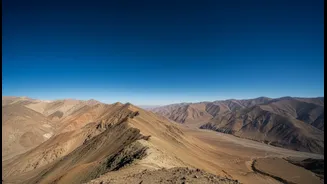
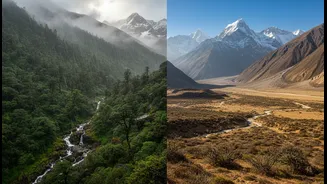
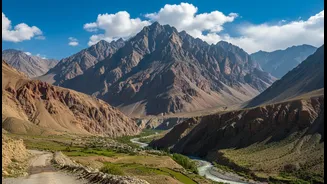
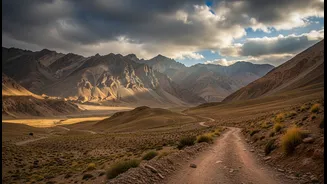
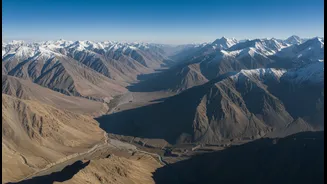
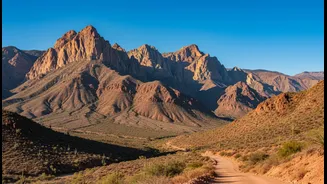
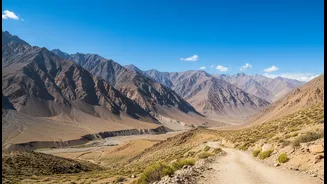
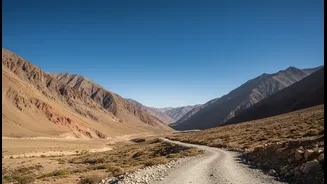
The secret to Ladakh and Spiti’s monsoon appeal lies in a simple geographical phenomenon: the rain shadow effect. Both regions are located on the leeward side of the great Himalayan range. As the moisture-laden monsoon clouds travel up from the Indian subcontinent, they are blocked by these towering peaks, which can rise to over 6,000 meters. Forced to ascend, the clouds cool and release all their rain and snow on the southern, windward slopes—the areas like Kullu, Manali, and most of Uttarakhand that experience heavy monsoons. By the time the clouds cross over the Himalayas to reach Ladakh and Spiti, they are devoid of moisture, resulting in an arid, cold desert climate that receives minimal rainfall, even during peak monsoon.
From Risky Roads to Reliable Routes
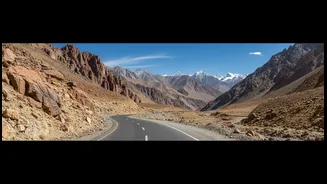
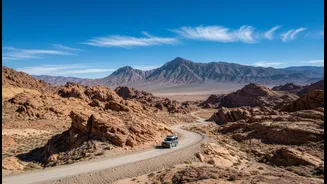
This lack of rain translates directly into safer and more predictable travel. While no mountain region is ever entirely free of risk, the chances of rain-induced landslides within Spiti and Ladakh during monsoon are drastically lower than in other Himalayan states. This means clearer roads, less chance of getting stranded, and the ability to follow an itinerary without constant disruption. The summer months of July and August are, in fact, the peak season here. The winter snow has melted, opening up high mountain passes like Khardung La in Ladakh and Kunzum Pass connecting Spiti, making the entire region accessible for road trips and exploration. This reliability is a huge draw for travellers who want adventure without the anxiety that now accompanies monsoon trips to other hill stations.
More Than Just Safe Travel
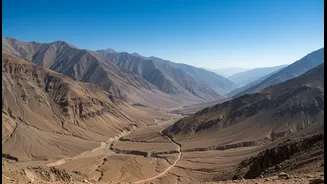
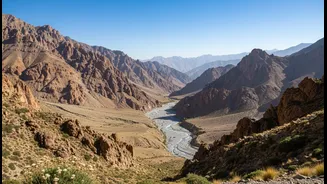
Travellers aren't just choosing Ladakh and Spiti for what they lack (the rain), but for what they uniquely offer during this period. The gentle summer sun melts the glaciers, feeding the Indus and Spiti rivers and turning parts of the stark, brown valleys into patches of vibrant green, often dotted with wildflowers. The weather is pleasant, with comfortable daytime temperatures perfect for sightseeing, monastery visits, and trekking. The skies are often a brilliant, clear blue, offering stunning photography opportunities and breathtaking views of the Milky Way at night. Furthermore, this period hosts several important cultural and monastic festivals, giving visitors a chance to experience the rich local heritage in a lively atmosphere.
A Necessary Word of Caution
While Ladakh and Spiti themselves are relatively dry, getting there is another story. The approach roads, particularly the Manali-Leh Highway and the road from Manali to Kaza, pass through areas that do receive heavy monsoon rains. These stretches are still vulnerable to landslides and roadblocks. Travellers must build buffer days into their itineraries and stay updated on road conditions. The alternative route to Spiti via Shimla is generally considered more stable but is also a much longer journey. Furthermore, the high altitude of both regions (with main towns around 3,500 metres) poses a significant risk of Acute Mountain Sickness (AMS), which requires slow acclimatisation and cannot be ignored.