

Why August is Prime Time for Saturn
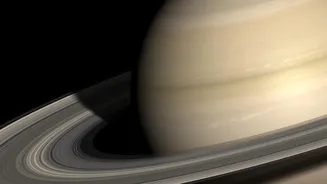
While Saturn will officially reach opposition—the point where Earth passes directly between it and the Sun—on October 4, 2026, the weeks leading up to it are fantastic for viewing. Throughout August, the planet will rise in the east in the late evening,
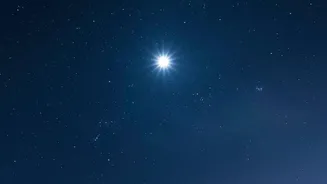
appearing as a bright, steady, yellowish point of light. By mid-month, it will be visible for most of the night, reaching a high position in the southern sky before dawn. This extended viewing window makes it easier than ever to spot. The planet is also getting progressively brighter as it nears its closest approach to Earth for the year. This proximity means that through a telescope, it will appear larger and more detailed than at other times.
How to Find the Ringed Planet
You don't need to be an expert astronomer to locate Saturn. This month, it will be journeying through a rather quiet patch of the sky near the border of the constellations Cetus and Pisces. To the naked eye, it will look like a bright, unwavering star with a golden hue. On the evenings of August 3rd and 4th, a waning gibbous Moon will be a helpful guide, appearing near the planet. Later in the month, on August 30th and 31st, the Moon will once again make a close approach to Saturn, making it easy to identify. For precise positioning, stargazing apps on your smartphone can point you in the exact right direction based on your location and the time of night.
Naked Eye, Binoculars, or Telescope?
Saturn is the most distant planet easily visible to the naked eye, but your viewing experience will change dramatically with optical aid.
With just your eyes, Saturn appears as a bright, star-like object. It won’t twinkle as much as actual stars, which can help you distinguish it.
Through a good pair of binoculars, its golden colour becomes more apparent. While you won't see the rings as a distinct structure, you might notice the planet appears slightly oval, like it has tiny "ears"—a hint of the famous rings.
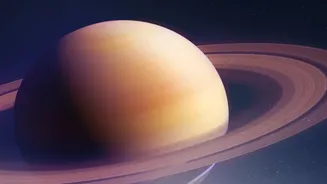
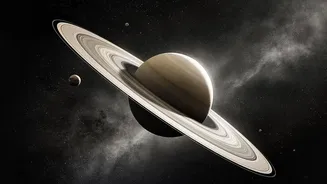
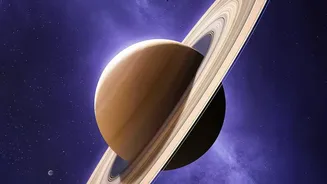
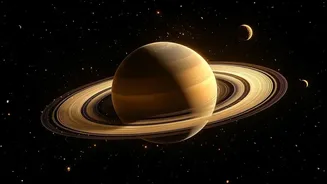
With a small telescope, the magic happens. Even a modest instrument will reveal the iconic rings, clearly separated from the planet's disk. In August 2026, the rings are tilted at a favorable angle for viewing, offering a spectacular sight. With a more powerful telescope, you might even spot Saturn's largest moon, Titan, which looks like a tiny star right next to the planet.
Don't Miss: The Perseid Meteor Shower
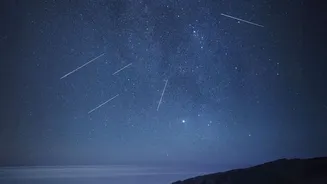
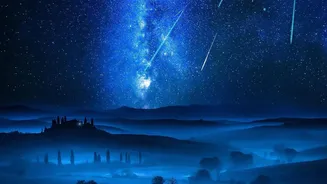
As if Saturn weren't enough, August also hosts one of the best meteor showers of the year: the Perseids. This year's shower is set for near-perfect viewing conditions, as the peak activity occurs around the new moon. This means no bright moonlight will wash out the fainter meteors. The shower will be active from mid-July to late August, but the best time to watch is during its peak on the nights of August 12th and 13th. In a dark location, far from city lights, you could see between 50 and 75 meteors per hour. The show is typically best after midnight and before dawn. Find a comfortable spot, lie back, and simply look up. No special equipment is needed.
Tips for the Best Skywatching Night
To make the most of your August skywatching, a little preparation goes a long way. First, try to get away from city light pollution. The darker your location, the more you will see, from the faint glow of the Milky Way to a higher count of meteors. Give your eyes at least 15-20 minutes to fully adapt to the darkness. Avoid looking at your bright phone screen, and if you need a flashlight, use one with a red light setting to preserve your night vision. Finally, be patient. The universe doesn't operate on a fixed schedule. Take your time, get comfortable, and enjoy the celestial display unfolding above you.