




In the quest for a cardio workout that doesn't just burn calories but also keeps you engaged, two powerful yet distinct options emerge: rowing and ballet. One is a rhythmic, full-body machine workout; the other is an art form of controlled grace.
The Cardio Experience: Rhythmic Power vs. Dynamic Grace
The cardiovascular
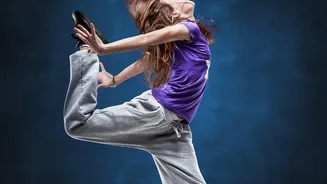
challenge offered by rowing and ballet is fundamentally different. Rowing is often a game of steady-state endurance or high-intensity intervals. It’s a rhythmic, cyclical motion: drive, finish, recover, repeat. This makes it excellent for building a strong aerobic base and allows you to either settle into a meditative pace or push your limits with powerful sprints. The feedback is immediate, measured in pace, watts, or meters, appealing to those who love data. Ballet, on the other hand, provides a more variable cardio experience. A class ebbs and flows, moving from slower, strength-focused barre exercises to faster, more dynamic sequences in the centre, including jumps and leaps (allegro). This challenges your heart in a different way, demanding adaptability as your heart rate rises and falls with the choreography, enhancing muscular endurance and coordination.
Muscle Engagement: Full-Body Pull vs. Total-Body Control
Rowing is renowned for being a true full-body workout. A single stroke engages over 85% of your body's muscles, with research showing that the legs and glutes generate about 60% of the power, while the core and upper body handle the rest. It builds functional strength by coordinating the quadriceps, hamstrings, glutes, core, back, and arms in one fluid movement. Ballet also engages the whole body, but with a focus on stabilising muscles, core strength, and muscular endurance. Instead of a powerful pull, ballet requires immense control to hold positions, execute precise movements, and maintain posture. It heavily targets the glutes, thighs, calves, and deep core muscles, sculpting long, lean muscle through controlled, bodyweight resistance.
Impact and Injury: Low-Impact vs. Mostly Low-Impact
Both activities are generally considered easier on the joints than exercises like running. Rowing is a genuinely low-impact activity; since you are seated, there's no jarring force on your ankles, knees, or hips. This makes it a sustainable option for many people, including those with joint sensitivity, provided proper form is maintained to protect the lower back. Ballet is also largely low-impact, particularly the foundational work at the barre. However, it does incorporate jumping (petit allegro and grand allegro), which involves impact upon landing. While these movements build bone density and power, they require proper technique to perform safely and can be challenging for those with significant joint issues. Many adult ballet fitness classes, however, keep the jumping to a minimum or offer modifications.
Calorie Burn and Accessibility
When it comes to burning calories, intensity is key. Due to its ability to engage large muscle groups in a high_intensity fashion , rowing often comes out on top . A vigorous 30_minute rowing session can burn over 300 calories , with some estimates putting an hour of intense rowing at 600_1000 calories . A ballet class of the same duration might burn around 200_250 calories , though this varies greatly with intensity . In terms of accessibility , a rowing machine requires an initial investment or a gym membership , but it can be used anytime . Ballet can be practised with minimal space at home through online classes , but joining a studio provides expert guidance and a sense of community , which can be highly motivating .
The Mental Workout : Focus vs . Artistry
The mental engagement of each discipline is also a key differentiator . Rowing can be a meditative experience , where the repetitive rhythm allows you to get into a state of flow . Alternatively , it can be a highly focused , data_driven effort to hit specific targets for pace or distance . Ballet is a mental workout of a different kind . It demands intense focus on technique , coordination , musicality , and memorising combinations . This connection between mind and body is a core part of the practice , offering a form of mental escape that is both challenging and expressive . It's less about the numbers and more about the quality of movement and artistry .