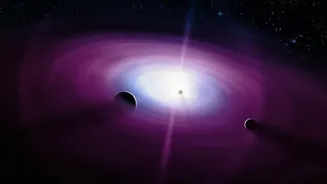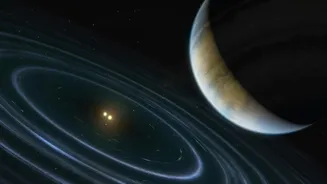


Our solar system can feel like a perfectly stable cosmic clock, but the long-term dance of the planets is surprisingly chaotic. A powerful new simulation has peered deep into our cosmic future to see if our luck holds out, and the findings are reassuring.
The Unpredictable Dance of Planets
On human timescales, the planets move with comforting predictability. We can forecast eclipses centuries from now and know exactly where Mars will be for a future mission. But over millions and billions of years, the story changes. The solar system is a chaotic system, meaning tiny, almost immeasurable variations in the planets' starting positions and gravitational nudges can lead to wildly different outcomes in the distant future. It’s a concept that has fascinated and concerned astronomers since Isaac Newton. He worried that the gravitational pulls between the planets would eventually unravel the whole system. While we’ve known for a while that things are generally stable, scientists are constantly running more powerful simulations to refine our understanding of the very, very long term. The key question is whether these small gravitational nudges could one day cause a planet's orbit to become dangerously unstable, potentially leading to a collision or the ejection of a planet from the solar system entirely.
A Digital Solar System in Unprecedented Detail
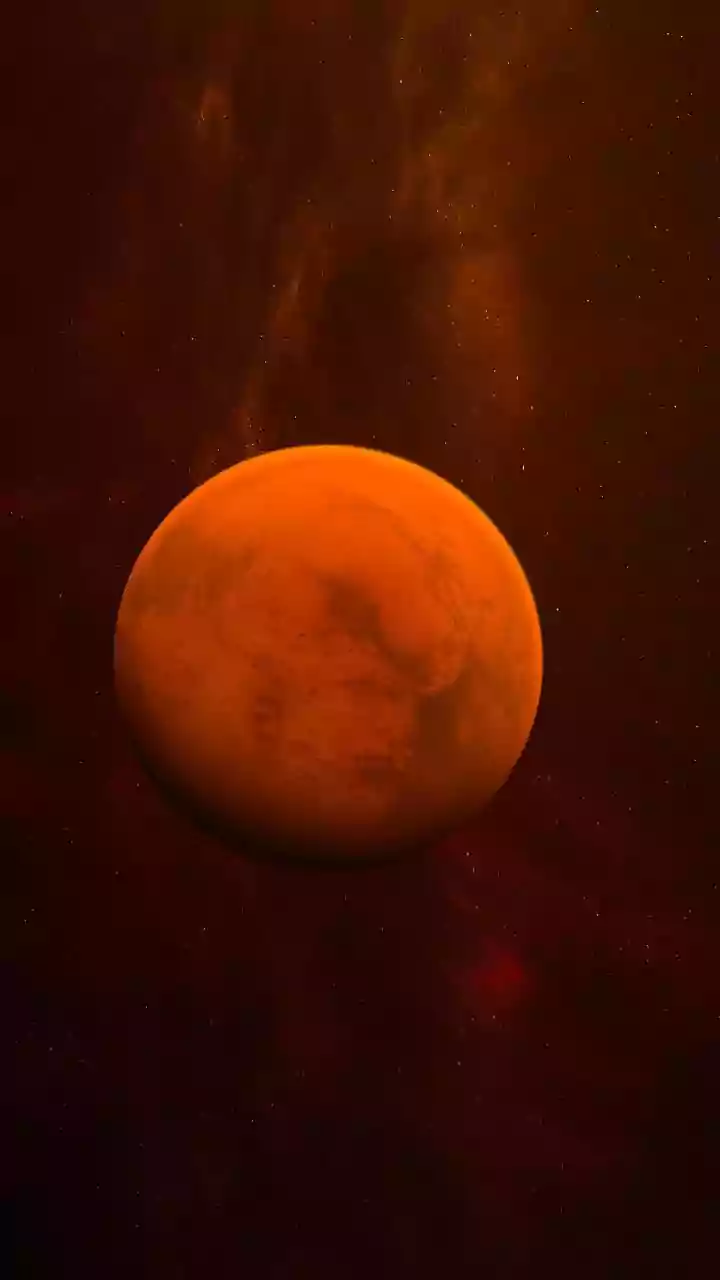
To get a clearer picture, scientists have employed the latest in computational power to create highly detailed simulations of our solar system's future. One recent and extensive study ran 1,600 parallel simulations, each with slightly different initial conditions to account for the inherent uncertainty in our measurements. These weren't simple models; they included the full equations of motion for all eight planets and even factored in the subtle but important effects of Einstein's theory of general relativity. By running so many scenarios, researchers can build a statistical forecast, moving from 'what will happen?' to 'what is most likely to happen?'. The main concern in many of these long-range forecasts is the orbit of Mercury. As the smallest and innermost planet, its orbit is most susceptible to being tugged into a highly eccentric, or elongated, shape. Previous studies had estimated a small, roughly 1% chance that Mercury's orbit could destabilize enough to threaten a collision with Venus or even Earth over the next five billion years.
A Forecast of Stability for Earth
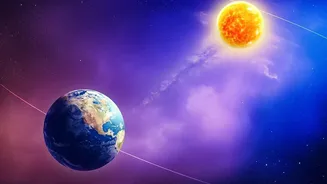
The good news from this new generation of simulations is that the future of Earth’s orbit looks more secure than ever. The headline result is that in none of the 1,600 high-precision simulations did Earth’s orbit become unstable or result in a close encounter with another planet. The researchers concluded that our planet's path around the sun is 'dynamically highly stable' for billions of years to come. While the simulations did show some wild outcomes for Mercury in a couple of runs—including it eventually crashing into Venus or the Sun—these events were rarer than previously estimated and, crucially, did not pose a threat to Earth. The term 'imminent' in the headline is key; in astronomical terms, this refers to events that might happen within the next few billion years, not next Tuesday. For all intents and purposes relevant to humanity's future, our planet's orbit is a safe and stable place to be.
The Billion-Year Question Mark
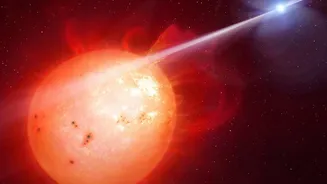
This stability, however, doesn't last forever. The aformentioned simulations model the gravitational dance of the planets as they are now. Other recent research has focused on a different kind of threat: the death of our Sun. In about five billion years, the Sun will swell into a red giant, a phase that will almost certainly vaporize Mercury and Venus and make Earth uninhabitable, if not swallow it whole. Afterwards, the Sun will shrink into a white dwarf. It was once thought that the outer planets like Jupiter and Saturn would survive this process and settle into wider, stable orbits for perhaps a hundred billion years. But newer models suggest the Sun will lose mass in violent, uneven bursts, which could send 'kicks' through the solar system. These kicks could destabilize the remaining giant planets, causing them to be ejected or switch places, within a mere billion years of the Sun becoming a white dwarf—a lifespan a billion times shorter than once predicted. This violent end, however, is slated for a future so distant it is almost unimaginable, long after Earth has ceased to be habitable.