








The Monsoon's Fury in the Mountains
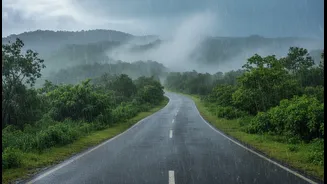
For most of the Indian Himalayas, the monsoon season (June to September) is a period of intense rainfall. While this transforms valleys into lush green paradises, it also brings significant risks. The combination of steep, geologically young mountains
and torrential rain creates perfect conditions for landslides. Heavy downpours saturate the soil and rock, drastically increasing its weight and reducing friction. This is why regions like Uttarakhand, parts of Himachal Pradesh, and Jammu and Kashmir frequently experience road closures and hazards, as saturated slopes give way, sending mud, rocks, and debris tumbling down. These events are a primary safety concern for travellers and residents alike, often disrupting life and turning dream trips into logistical nightmares.
Understanding the Rain-Shadow Shield
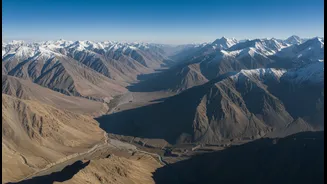
Nature, however, has a fascinating trick up its sleeve: the rain-shadow effect. This geographical phenomenon is the key to why Spiti and Ladakh are different. When moisture-laden monsoon winds from the Bay of Bengal and the Arabian Sea travel north, they eventually slam into the massive wall of the Himalayas. Forced to rise, the air cools and condenses, dumping its moisture as heavy rain on the southern, windward slopes of the mountain range. By the time these air masses cross the high peaks, they have lost almost all of their moisture. The land on the other side—the leeward side—receives very little rainfall, creating a dry, arid zone known as a rain shadow.
The Cold Deserts of Spiti and Ladakh
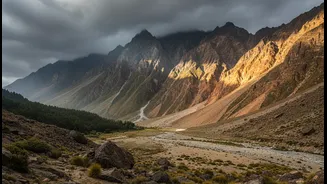
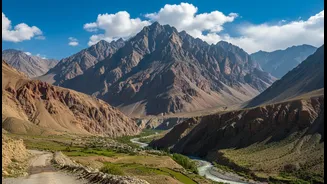
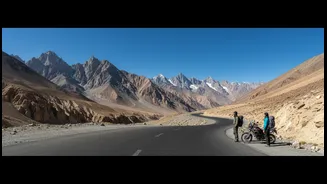
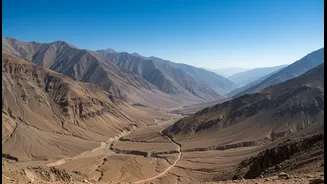
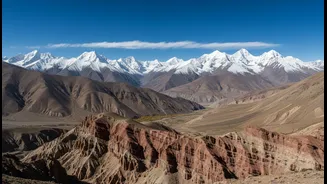
Spiti Valley and Ladakh are classic examples of rain-shadow regions. They are situated deep in the trans-Himalayan zone, sheltered by the main Pir Panjal and Great Himalayan ranges to the south. While places like Manali or Shimla, located on the windward side, get drenched during the monsoon, the clouds that reach Spiti and Ladakh are essentially empty. This lack of precipitation is so pronounced that both regions are classified as cold deserts, characterised by barren, moon-like landscapes, low vegetation, and stark, dramatic beauty. They receive only a fraction of the annual rainfall seen in other popular hill stations, making their climate profile fundamentally different.
Fewer Downpours, Lower Landslide Risk
The direct consequence of this arid climate is a significantly lower risk of the widespread, rain-induced landslides that plague other mountain regions during monsoon. With minimal rainfall, the soil on the slopes remains relatively stable and is not subjected to the constant saturation that acts as a primary landslide trigger. This is why, within Ladakh and Spiti proper, monsoon is often considered one of the best times to visit. The weather is generally sunny and dry, and all major internal attractions like Pangong Lake or Key Monastery remain accessible. The risk of being stranded due to a local, rain-triggered slide inside these valleys is much lower than elsewhere.
Safer, but Not Entirely Risk-Free
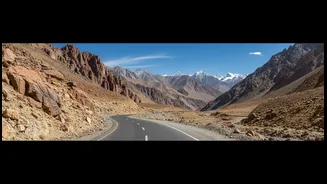
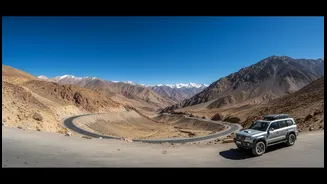
It is crucial, however, to understand that 'safer' does not mean 'zero risk'. The main danger when visiting Spiti and Ladakh during monsoon lies on the access highways. Roads like the Manali-Leh highway or the routes entering Spiti from Shimla or Manali pass through the very monsoon-hit regions that are prone to landslides. These approach routes can and do face blockages. Furthermore, climate change is introducing new uncertainties. The regions have witnessed an increase in sudden, intense events like cloudbursts or glacial lake outburst floods (GLOFs), which can cause localised flash floods and landslides even without sustained rainfall. Therefore, while the specific, persistent risk from monsoonal rain is low, all high-altitude travel demands vigilance, buffer days in the itinerary, and a close eye on weather advisories.