





The Classic Route: Kalka to Shimla
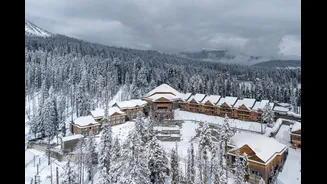
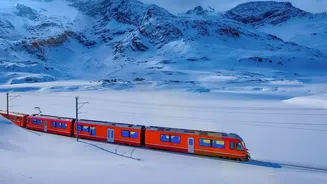
Arguably the most iconic winter train journey in India is the Kalka-Shimla Railway, a UNESCO World Heritage Site. During winter, this narrow-gauge 'toy train' route transforms into a fairy-tale landscape, with pine forests and rolling hills blanketed
in snow. The slow-paced journey, which takes about five to six hours to cover 96 kilometres, allows you to fully absorb the breathtaking scenery. The train winds through over 100 tunnels and across more than 800 bridges, offering spectacular views of the Himalayan foothills. Reaching Shimla by train is particularly convenient as it bypasses the stress of navigating icy or blocked roads. The journey begins in Kalka, which is well-connected to major cities like Delhi. From there, trains like the Shivalik Deluxe Express or the Himalayan Queen offer a comfortable and unforgettable climb to Shimla, the 'Queen of Hill Stations'. Once there, you are greeted by colonial architecture and a bustling Mall Road, all set against a snowy backdrop.
The Eastern Marvel: New Jalpaiguri to Darjeeling
Another celebrated UNESCO World Heritage Site, the Darjeeling Himalayan Railway, offers a different but equally enchanting winter experience. The 'toy train' journey from New Jalpaiguri (NJP) up to Darjeeling is famous for its misty mornings and stunning views of tea gardens often dusted with frost. While heavy snow in Darjeeling town itself is rare, the winter months provide the clearest skies for breathtaking views of the snow-capped Kanchenjunga peak. The train chugs slowly through dense forests and charming villages, with the highlight being the Batasia Loop, where the track spirals around a war memorial garden, offering a 360-degree view of Darjeeling and the Himalayas. Many travellers opt for the shorter 'joyride' from Darjeeling to Ghum, India's highest railway station, which covers this famous loop. This route is a perfect alternative to the winding, and sometimes foggy, road journey, making it a reliable way to ascend into the hills.
Gateway to Paradise: The Jammu-Srinagar Connection
For those dreaming of a Kashmiri winter, recent developments in the railway network have made train access a game-changer. While Kashmir does not yet have a direct train from Delhi, the journey has become significantly more convenient. Travellers can take a train to Jammu Tawi, the region's busiest station, which is well-connected to the rest of India. From Jammu Tawi, the Vande Bharat Express now provides a direct link to Srinagar, cutting through the mountains and offering a reliable alternative to the often-unpredictable Jammu-Srinagar highway (NH44), which is prone to closures from heavy snowfall. The train journey through the Kashmir Valley from Banihal to Baramulla is considered one of India's most dramatic winter routes, passing snow-covered fields, chinar trees, and the Jhelum River against the backdrop of the Pir Panjal range. This rail link has proven to be a lifeline, sometimes remaining operational even when both roads and flights were shut down due to severe weather.
Why The Train Is Smarter in Winter
Choosing the train for your winter trip to the mountains is not just about the scenic views; it's a practical decision. Winter conditions often make road travel in the Himalayas risky and unpredictable, with sudden snowfall leading to long traffic jams and closures. Trains, especially on these established mountain railways, offer a safer and more reliable mode of transport. The slow, gentle climb of the toy trains is perfect for acclimatisation, reducing the risk of altitude sickness. Furthermore, it eliminates the stress of driving on icy roads, allowing every member of the family to relax and enjoy the journey. With limited luggage space on some of the smaller trains, it encourages mindful packing, and the absence of Wi-Fi on many of these routes provides a welcome opportunity to disconnect from the digital world and connect with the stunning nature outside your window.