

What is Shokupan, Really?
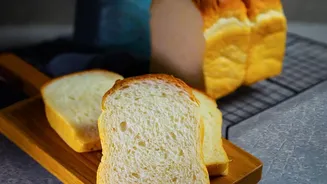
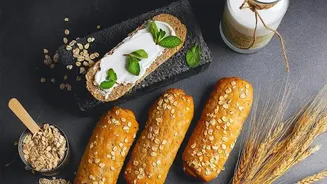
Shokupan is Japanese milk bread, a staple as common in Japan as sushi or ramen. The name itself gives a clue to its role; "shoku" means food and "pan" comes from the Portuguese word for bread, essentially branding it as 'eating bread'. Its defining characteristics
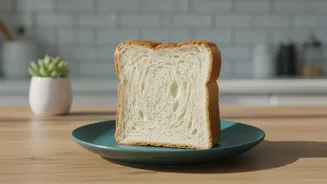
are a pillowy, feathery soft texture and a subtly sweet, milky flavour. Unlike the crusty, airy sourdoughs or dense whole-wheat loaves common in the West, shokupan has a very thin crust and a tight but incredibly tender crumb. This unique consistency makes it an ideal canvas for both sweet and savoury applications, but its magic doesn't come from just milk and sugar. The secret lies in a specific baking technique.
The Science of Softness: Tangzhong and Yudane
The incredible texture of shokupan is achieved through a method known as tangzhong or yudane. Both are essentially a water roux—a pre-cooked paste of flour and liquid (water or milk) that is cooled and then added to the main dough. This process gelatinises the starches in the flour, allowing them to absorb and hold onto significantly more moisture. This trapped water results in a dough that bakes into a softer, more tender loaf with a remarkably long shelf life, staying fresh for days without preservatives. While the Chinese tangzhong method involves cooking the flour and liquid into a slurry on a stovetop, the Japanese yudane method typically involves pouring boiling water over flour. The result is similar: a bread with a chewy, moist, and resilient crumb that gives shokupan its signature mouthfeel.
A Slice of Modern Japanese History
While bread first arrived in Japan with Portuguese traders in the 16th century, it wasn't a daily food. Shokupan's rise is more recent, tied to the post-World War II era. During this period, food rations from the United States included large amounts of wheat and powdered milk. Bread became a common feature in school lunches, introducing it to a whole generation. Japanese bakers adapted Western-style loaves to suit local tastes, which traditionally favour more subtle flavours and softer textures. The result was shokupan, a loaf that was less a foreign import and more a uniquely Japanese creation. It quickly became a staple for breakfast toast and lunchtime sandwiches, with household spending on bread eventually overtaking rice in the 2010s.
The Ultimate Canvas for the 'Sando'
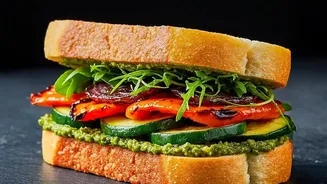
Shokupan's sturdiness, despite its softness, makes it the perfect vehicle for one of Japan’s most iconic culinary exports: the sando. Far from a simple sandwich, the sando is an exercise in precision and balance. The crusts are almost always meticulously trimmed to highlight the pillowy interior. The fillings are just as important. The Katsu Sando, for instance, features a crispy, deep-fried pork cutlet (tonkatsu) with tangy sauce and finely shredded cabbage, a textural contrast to the soft bread. On the sweeter side, the Fruit Sando is a work of art, with perfect seasonal fruits like strawberries or kiwi suspended in lightly sweetened whipped cream, creating a beautiful mosaic when sliced. Shokupan's ability to hold these fillings without becoming soggy or falling apart is key to the sando's success.
More Than a Trend, It's a Craft
So why has shokupan captivated the world now? Its popularity can be seen as a perfect storm of factors. Its photogenic nature makes it a star on platforms like Instagram. But beyond the visuals, the trend speaks to a growing global appreciation for comfort food and artisanal craft. In a world of mass production, a loaf of shokupan represents something made with technique and care. It’s a symbol of affordable luxury and gentle pleasure. Bakeries from Mumbai to New York are now offering their own versions, sometimes even creating high-end loaves that command premium prices. The appeal is simple: it is both novel and nostalgic, a taste of another culture that also feels deeply comforting and familiar. It’s a reminder that sometimes, the most satisfying things are deceptively simple, built on a foundation of technique and tradition.