





The Real Heavyweights of Trade
A close look at Pakistan's import statistics shows that its most significant trading relationships aren't with its immediate neighbours. Instead, the country's import landscape is dominated by a few key maritime partners. China stands out as the undisputed
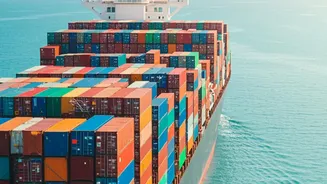
leader, accounting for nearly a third of Pakistan's total imports with a value exceeding $20 billion in recent fiscal years. Following China are the United Arab Emirates (UAE), Indonesia, and Saudi Arabia, which collectively supply a massive portion of the nation's essential goods. These countries form the true backbone of Pakistan’s import economy, connected by bustling sea lanes rather than direct land routes.
What's in the Shopping Cart?
The composition of these imports paints a clear picture of Pakistan's economic priorities: fuelling its industry and meeting energy demands. Mineral fuels, including crude and refined petroleum, consistently top the list, often accounting for over a quarter of the total import bill. The UAE and Saudi Arabia are the primary suppliers for these energy needs. From China, the inflow is predominantly industrial. The country is the main source for machinery, electronics like mobile phones, steel, and organic chemicals. These are not consumer frivolities but essential inputs needed to run Pakistan's factories, power its grid, and build its infrastructure. Edible oils, particularly palm oil from Indonesia, also represent a significant and necessary import.
The Quiet Borders
The striking part of this trade map is who is largely absent. Despite sharing long borders, trade with neighbours like India and Afghanistan is surprisingly low and often fraught with disruption. Political tensions have led to the suspension of most trade with India since 2019. Similarly, border closures and diplomatic strains have caused trade with Afghanistan to plummet, pushing Kabul to strengthen ties with Iran and other regional players. This has resulted in Pakistan being effectively cut off from significant land-based commerce on its eastern and western frontiers, forcing it to rely more heavily on its ports at Karachi and Gwadar for access to global markets.
Strategy, Not Just Geography
Pakistan's import patterns are not accidental; they are the result of deliberate long-term strategy and geopolitical alignments. The deep trade relationship with China is cemented by initiatives like the China-Pakistan Economic Corridor (CPEC) and a comprehensive free trade agreement, which facilitates the flow of industrial goods. Strong relationships with Gulf states ensure a stable supply of energy, often secured through deferred payment facilities that help manage economic pressures. This strategic focus on securing industrial inputs and energy from reliable sea-based partners demonstrates a clear prioritisation of economic needs over simple geographic proximity. It’s a calculated approach designed to support domestic production and energy security, even if it means bypassing the countries next door.