






The Challenge of a Crowded Sky
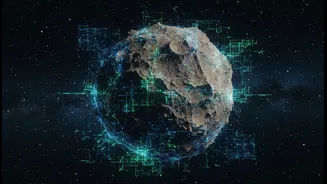
Planetary defense begins with a simple but monumental task: finding and tracking any Near-Earth Object (NEO) that could pose a threat. For decades, this effort has been a complex puzzle solved by observatories and agencies around the world. However, data
was often siloed, stored in different formats, and difficult to consolidate. This fragmentation created gaps in our understanding of the thousands of objects whizzing past our planet. The Minor Planet Center has long acted as the world's central clearinghouse for these observations, but getting all the different data sources to talk to each other efficiently has been an ongoing challenge. To accurately predict an asteroid's path and determine its risk, scientists need to combine observations from multiple telescopes over time. Without a unified, accessible system, valuable time can be lost, and the window to act—whether by issuing warnings or planning a deflection mission—shrinks.
ESA's Open Data Initiative
Recognizing that a global problem requires a global solution, the ESA has made a significant push towards open science. Through its Near-Earth Object Coordination Centre (NEOCC), the agency has developed a 'NEO Toolkit,' a set of freely available web-based applications that democratize access to complex asteroid data. This initiative moves critical information out of proprietary systems and into the hands of professional and amateur astronomers, researchers, and even the public. The goal is to create a unified ecosystem where anyone can access, visualize, and analyze data on asteroid orbits and potential flybys. This shift isn't just about sharing; it's about empowering a worldwide community to contribute to the planetary defense effort. By making its tools and data public, ESA is betting that more eyes on the sky will lead to a safer planet.
Inside the Digital Toolkit
The NEO Toolkit is comprised of several key components designed for specific tasks. The Orbit Visualisation Tool allows users to render 3D models of asteroid orbits, providing an intuitive grasp of where these objects are in our solar system. The Flyby Visualisation Tool simulates close approaches to Earth, helping to communicate risk and observation opportunities. For astronomers, the Observation Planning Tool and Sky Chart Display Tool are invaluable, helping them calculate when and where to point their telescopes for the best view of a particular asteroid. Behind the scenes, powerful software like 'Aegis' crunches the numbers, performing orbit determination and impact probability calculations. A recent upgrade to Aegis allows it to handle larger datasets from upcoming surveys and operate more efficiently on cloud infrastructure, ensuring it's ready for the next generation of asteroid data. This commitment extends to collaboration, with ESA contributing to international frameworks like the UN-mandated Space Mission Planning Advisory Group (SMPAG), ensuring everyone is working from the same page.
The Power of Global Collaboration
The move toward open-source tools is part of a larger trend in planetary defense. Organizations like the B612 Foundation are developing their own cloud-based platforms, such as the Asteroid Discovery, Analysis, and Mapping (ADAM) platform, which uses advanced algorithms to find asteroids in vast datasets. These platforms often complement each other. For example, some open-source toolkits include wrappers that can pull data directly from ESA's NEOCC, NASA's Jet Propulsion Laboratory, and other sources, creating a powerful, interconnected web of information. This collaborative environment has proven its worth. When a potentially hazardous asteroid is identified, multiple streams of data from different observatories allow scientists to rapidly refine its orbit and rule out—or confirm—an impact risk. Citizen scientists are also playing a growing role, using open data and affordable computing to make new discoveries and contribute valuable observations.