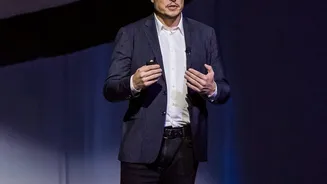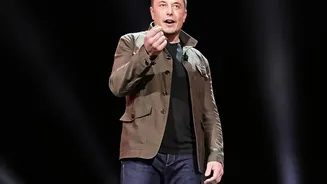








Recent reports of Elon Musk's staggering political spending in the United States have sparked a conversation closer to home. The sheer scale of his contributions raises a critical question: what if a figure like Musk decided to influence an Indian election?
Musk's Multi-Million Dollar Influence
Recent filings in the United States reveal that Elon Musk has donated over $445 million to political groups, primarily supporting Republican candidates in the midterm elections. This makes him one of the largest individual donors in the US, where laws often equate political spending with free speech. His spending is not on direct candidate contributions but flows into 'Super PACs'—committees that can raise and spend unlimited sums to support or oppose candidates, as long as they don't coordinate directly with them. While this is happening in an American context, it puts a global spotlight on the power of wealthy individuals to shape political discourse, prompting Indian observers to examine their own country's legal firewall.
India's Cap on Candidate Spending
India's approach to election finance is fundamentally different. The law focuses on capping what individual candidates can spend. Under Section 77 of the Representation of the People Act, 1951, and Rule 90 of the Conduct of Elections Rules, 1961, there are strict limits. For a Lok Sabha election, a candidate in a larger state cannot spend more than ₹95 lakh. For an Assembly election, the cap is ₹40 lakh. These limits were last revised in 2022 to account for inflation and the rising cost of digital campaigning. Every candidate must file a detailed statement of their expenses within 30 days of the election result, and exceeding the cap can be grounds for disqualification.
The Political Party Loophole
Here's the crucial distinction: while candidates are tightly controlled, there is no legal ceiling on how much a registered political party can spend on a campaign. Parties can spend vast sums on general propaganda, advertising, and logistics, which is not counted towards any single candidate's limit. This creates a significant gap between the official, modest spending declared by a candidate and the high-visibility, big-budget campaign run by their party. While parties must report their expenditure to the Election Commission of India (ECI), the absence of a cap means that 'money power' in Indian elections is still a formidable force, channelled through the party structure rather than individual candidates.
The Firm Ban on Foreign Funding
The most relevant firewall in the context of a foreign national like Musk is the Foreign Contribution (Regulation) Act, or FCRA. This law explicitly prohibits political parties, candidates for election, and even organisations of a 'political nature' from accepting any contribution from a 'foreign source'. The law's stated purpose is to ensure that India's democratic processes are not influenced by foreign money or interests. This ban is clear and strict, making a direct donation from a foreign billionaire to an Indian political party illegal. However, a 2016 amendment created a nuanced situation where contributions from Indian subsidiaries of foreign companies may be permissible, a point of ongoing debate.
The Grey Area of Indirect Influence
The real challenge in the digital age isn't direct donations; it's indirect influence. Global social media platforms, owned by figures like Musk, pose a novel regulatory problem. There is no law to prevent a platform from algorithmically boosting certain political content, or for a platform owner to use their personal global reach to comment on Indian politics. The ECI has a 'Voluntary Code of Ethics' with social media companies and requires candidates to report their social media spending, but these rules are still catching up. The line between personal expression and a coordinated influence campaign is blurry, creating a regulatory grey area that laws like the FCRA were not designed to address. This is the modern frontier where the next battle for electoral integrity will likely be fought.