


The World's Most Impossible Job
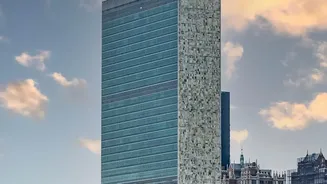
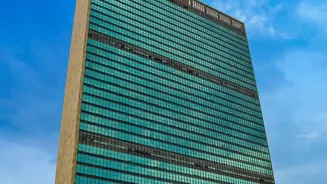
Before diving into how the Secretary-General is chosen, it’s worth understanding what they do. The UN Charter describes the role as the organization's 'chief administrative officer'. In reality, it's far more. The SG is a global moderator, a humanitarian
advocate, a peace broker, and the living symbol of the United Nations itself. They manage the Secretariat, oversee peacekeeping missions, and use their 'good offices' to mediate international disputes. Crucially, Article 99 of the Charter gives them the power to bring any matter to the Security Council's attention that they believe threatens international peace and security, a significant political tool. It is a job that demands immense diplomatic skill, moral authority, and political independence.
The Official Rulebook
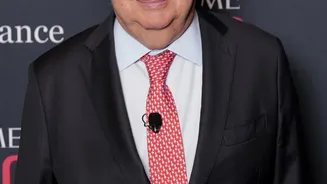
On paper, the process is deceptively simple. Article 97 of the UN Charter states that the Secretary-General 'shall be appointed by the General Assembly upon the recommendation of the Security Council'. This means the 15-member Security Council first selects and agrees on a single candidate. That name is then passed to the 193-member General Assembly for a final vote of appointment. The Assembly has never rejected a candidate recommended by the Council. While the Charter doesn't specify a term length, a five-year, once-renewable term has become the standard practice. Current Secretary-General António Guterres will complete his second term on December 31, 2026.
The Security Council's Decisive Role
The real contest happens behind the closed doors of the Security Council. Here, the 'Permanent Five' (P5) members—China, France, Russia, the United Kingdom, and the United States—hold ultimate power. To be recommended, a candidate needs at least nine 'yes' votes from the 15-member Council, but crucially, they must not receive a veto from any of the P5. This single rule transforms the selection from a simple vote into a complex geopolitical negotiation. The P5 effectively seek a candidate who will not challenge their core national interests. The Council uses a series of informal 'straw polls' to gauge support for candidates. In these secret ballots, members vote to 'encourage', 'discourage', or express 'no opinion' on each candidate. Later rounds use colour-coded ballots to distinguish votes from permanent members, revealing potential vetoes.
The Unwritten Rules of the Game
Beyond the Charter, a set of powerful but informal conventions guide the selection. The most prominent is the principle of regional rotation. Though not a formal rule, there is a general understanding that the top job should rotate among the UN's five regional groups: African, Asia-Pacific, Eastern European, Latin American and Caribbean (GRULAC), and Western European and Others. With the current SG from the Western European group, many believe it is the turn of Latin America and the Caribbean. There has also never been a Secretary-General from the Eastern European group. Another unwritten rule is that nationals of P5 countries are not considered for the role. In recent years, there has also been a strong push from member states and civil society for the UN to finally appoint its first female Secretary-General.
A More Open, Modern Race
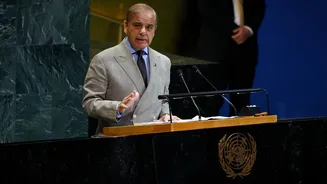
Historically, the selection process was shrouded in secrecy. However, reforms adopted in 2015 have made the process significantly more transparent and inclusive. The race now begins with a joint letter from the Presidents of the General Assembly and Security Council inviting member states to nominate candidates. These candidates submit vision statements and participate in live-streamed 'informal dialogues' with the General Assembly, where they answer questions from member states and civil society. This public-facing element, a major departure from the backroom deals of the past, allows candidates to outline their vision for the organization on a global stage. The 2026 selection process officially began in late 2025 and has already seen candidates engage in these dialogues.