




The Fabled Harbinger: Pied Cuckoo
Long before weather apps, the arrival of the Pied Cuckoo, or 'Chatak', was seen as the true herald of the monsoon. This sleek black-and-white bird, with its distinctive crest, is the subject of folklore and poetry, said to drink only rainwater. While
that is a myth, its timing is impeccable. Many Pied Cuckoos migrate from Africa, riding the same monsoon winds that bring rain to northern and central India. Their arrival isn't a prediction but a shared journey with the season itself, timed perfectly for the explosion of insects like caterpillars and grasshoppers that the rains bring—a feast for them and their young. As a brood parasite, the cuckoo lays its eggs in the nests of other birds, so arriving when host species are breeding is crucial for its survival.
The Courtship Dance: Indian Peafowl
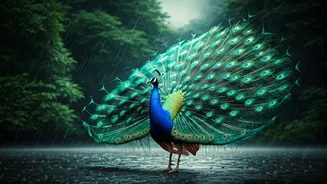
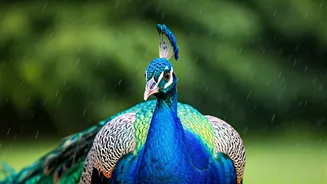
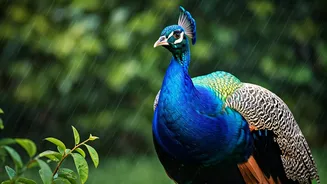
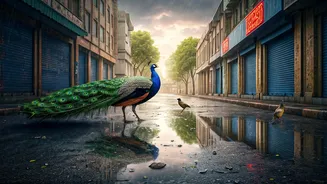
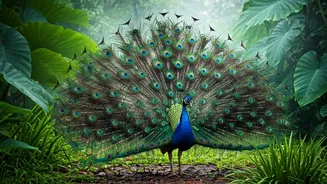
The image of a peacock dancing with its magnificent tail fanned out is synonymous with the monsoon. But it's not the rain itself that makes them dance; it's romance. The monsoon is the breeding season for the Indian Peafowl, and the dance is an elaborate courtship ritual to attract a peahen. The male lifts his train, a stunning fan of about 150 iridescent feathers, and shimmies, creating a rustling sound as his feathers vibrate. This breathtaking display is a test of fitness and artistry. While the calls of peafowl become more frequent with the rumbling thunder, their famous dance is all about ensuring the next generation, making the monsoon a season of spectacular shows in fields and forests.
The Master Architect: Baya Weaver
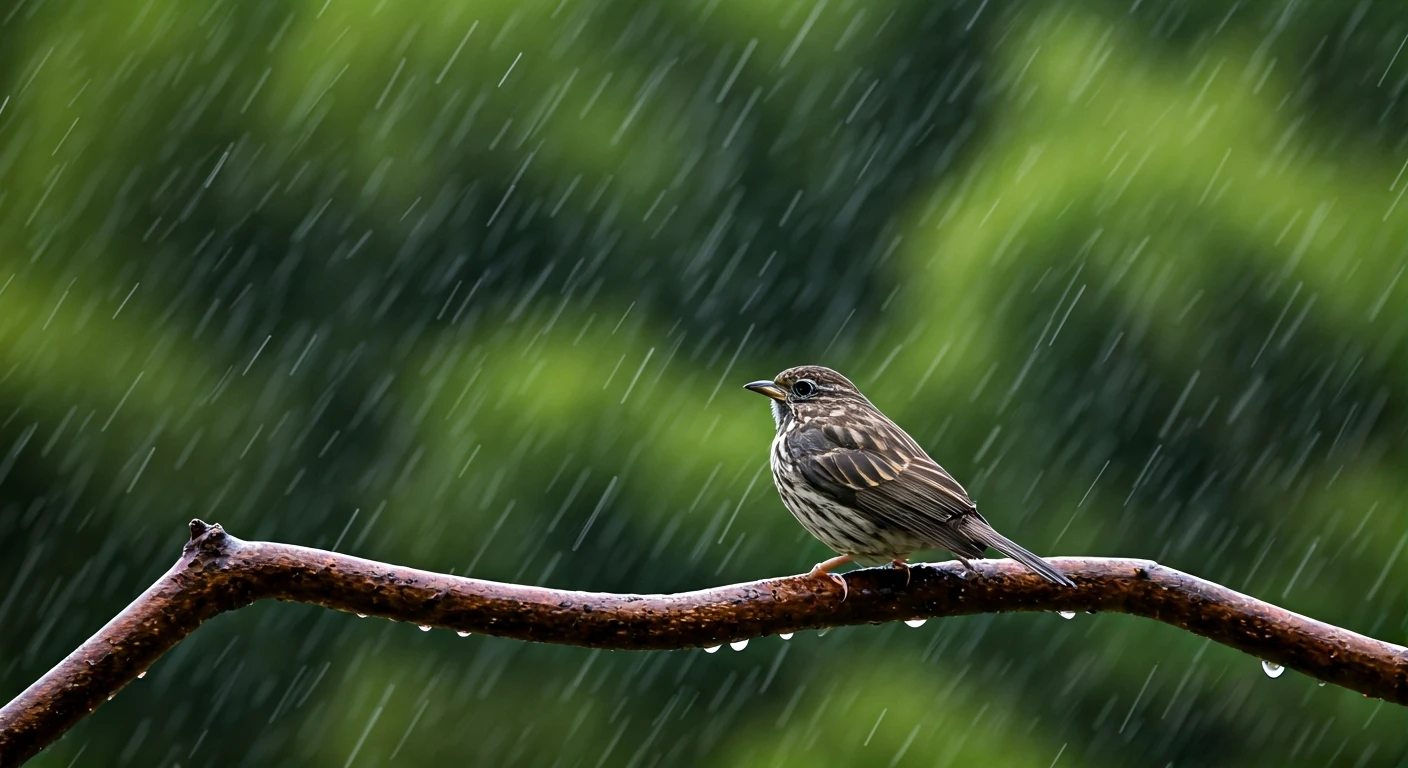
The monsoon is a busy time for the Baya Weaver, a small, sparrow-sized bird with an outsized talent for construction. As the rains soften the landscape, male weavers go into a flurry of activity, tearing strips from paddy leaves and grasses to build their incredible hanging nests. These retort-shaped nests, often suspended over water from palm fronds or thorny trees to deter predators, are architectural marvels. A single male might build multiple partial nests, flapping his wings and calling to attract a female. She inspects the quality of his work before giving her approval, after which he completes the nest by adding a long entrance tunnel. This whole process happens during the monsoon when building materials are pliable and insects, essential for feeding chicks, are abundant.
The Forest Jewel: Indian Pitta
Though shy and often hidden in the undergrowth, the Indian Pitta makes its presence known during the monsoon. Known as 'Navrang' for its nine colours, this jewel-toned bird becomes much more vocal during its breeding season, which aligns perfectly with the rains from June to August. Its distinctive two-note whistle, often heard at dawn and dusk, echoes through the moist forests. While it typically forages for insects on the forest floor, the increased activity and need to establish territory make it more conspicuous during this time. The monsoon transforms its habitat, and the Pitta responds in kind, filling the rain-washed air with its sharp, clear calls and offering lucky observers a flash of its vibrant green, blue, and red plumage.
The Seasonal Singers: A Chorus of Calls
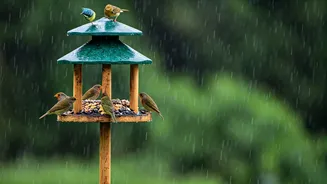
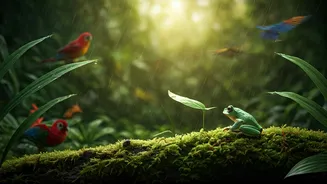
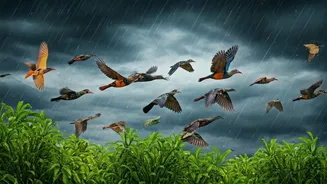
Beyond these headline acts, the entire landscape comes alive with birdsong. The monsoon is the breeding season for many resident species, making them more active and vocal as they establish territories and attract mates. Birds that are quiet for much of the year, like the Painted Francolin and Grey-bellied Cuckoo, become prominent voices in the monsoon chorus. You might hear the mournful 'pi-tuho' of the cuckoo or the grating calls of the francolin from a nearby grassland. Species like the Indian Paradise Flycatcher are seen in their full glory, with males trailing long, elegant tail streamers. The world is greener, food is plentiful, and the birds are dressed in their finest breeding plumage, making it the most dramatic and rewarding season for birdwatching.