




An Alliance Forged in the Stars
The foundation of India-US space cooperation is decades old, built on landmark projects between their respective government agencies. This partnership began with support for India's first rocket launches in the 1960s and has since blossomed into highly
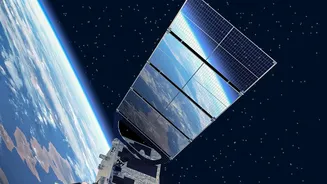
sophisticated joint ventures. A recent pinnacle of this collaboration is the NASA-ISRO Synthetic Aperture Radar (NISAR) satellite. Launched in 2025, this advanced Earth-observation mission is designed to monitor climate change, disaster events, and changes to our planet's surface with unprecedented detail, using dual-frequency radar systems developed by both nations. The success of missions like NISAR has solidified trust and demonstrated the power of combining Indian ingenuity with American technological prowess, setting the stage for even more ambitious undertakings.
New Frameworks for Deeper Collaboration
Two key developments have recently accelerated the partnership: India's signing of the Artemis Accords and the establishment of the Initiative on Critical and Emerging Technology (iCET). By joining the Artemis Accords, India aligned itself with a US-led group of nations committed to a common set of principles for peaceful and sustainable lunar exploration. This move prevents technological isolation and ensures that Indian systems are interoperable with global standards for future moon missions. The iCET framework, later enhanced as the TRUST (Transforming the Relationship Utilizing Strategic Technology) initiative, further cements this bond by identifying space as a critical area for strategic cooperation, alongside AI, defence, and semiconductors. These policy frameworks are not just diplomatic statements; they create a clear pathway for joint human spaceflight, shared scientific data, and commercial partnerships.
Beyond ISRO: The Private Frontier
Perhaps the most significant shift in the relationship is the growing involvement of the private sector. India's space economy, projected to reach $44 billion by 2033, is buzzing with over 400 startups. Recognizing this, frameworks like the India-U.S. Defense Acceleration Ecosystem (INDUS-X) have been created to connect Indian startups with the US defence and space market. In early 2025, seven Indian startups, including KaleidEO and EtherealX, were selected for a program to work directly with US agencies and industry giants like Lockheed Martin and Northrop Grumman. This opens up access to mentorship, funding, and a massive market, potentially generating hundreds of millions of dollars in annual revenue for these firms. The collaboration is moving beyond government-to-government projects to foster a vibrant ecosystem where private companies from both nations can jointly develop launch vehicles, satellite technologies, and space-based services.
Strategic and Commercial Payoffs
The expanding partnership offers immense mutual benefits. For India, it provides access to cutting-edge technology, capital, and a global platform for its burgeoning space industry. A landmark agreement will see Indian astronauts receive advanced training at NASA's Johnson Space Center for a joint mission to the International Space Station (ISS). This is a significant step, as India traditionally relied on Russia for astronaut training. For the United States, India offers a reliable, democratic, and cost-effective partner in the strategically vital Indo-Pacific region. This collaboration is also seen as a way to build a coalition of like-minded nations in space, balancing the ambitions of other major spacefaring countries. By integrating their private sectors, both countries can drive innovation, create resilient supply chains, and secure a stronger foothold in the rapidly growing global space economy.
The Road Ahead: Hurdles and Opportunities
While the trajectory is promising, the path forward is not without challenges. Aligning different regulatory environments, navigating complex technology transfer laws, and addressing intellectual property concerns will require sustained dialogue and commitment. The U.S.-India Strategic Trade Dialogue was initiated in part to tackle these long-standing barriers and smooth the way for greater commercial collaboration. Despite these hurdles, the opportunities are vast. NASA has invited ISRO to join its Moon Base program, building on the Artemis Accords partnership. There is also potential for Indian private companies to participate in NASA programs that acquire data from commercial satellites. The focus remains on deepening interoperability, from joint human spaceflight safety standards to collaborative Earth science applications, ensuring this partnership continues to reach for new horizons.