






The Unforgiving Lunar Night
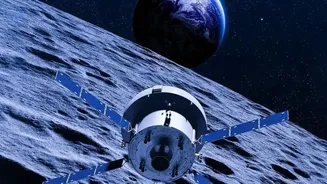
Establishing a sustained human presence on the Moon under the Artemis program presents a host of challenges, but few are as fundamental as the problem of power. The lunar cycle includes a night that lasts for 14 Earth days, plunging vast regions into
total darkness and causing temperatures at the South Pole to plummet to -200°C or even lower. For conventional lithium-ion batteries, like those in our phones and electric cars, this is a death sentence. Their liquid electrolytes—the medium that allows electrical charge to flow—freeze solid, stopping the chemical reactions that produce power and potentially causing permanent damage. To date, the only solution has been to equip lunar hardware with bulky and power-hungry heating systems that constantly warm the batteries, consuming a significant portion of the very energy they are supposed to be storing. This is highly inefficient and limits the scope and duration of missions, a major hurdle for NASA's long-term lunar ambitions.
A Solid Solution to a Splashy Problem
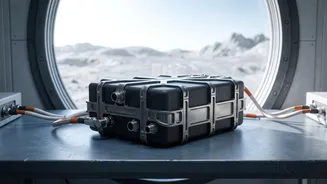
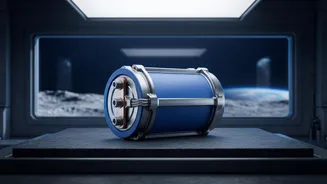
Instead of fighting the cold, NASA is designing batteries that can endure it. The project, called Solid Power for Extreme Environment Adaptability and Resilience in Space (SPEARS), is developing a new class of solid-state batteries. The key innovation is replacing the volatile liquid electrolyte found in typical batteries with a solid, ceramic- or polymer-based material. This change fundamentally alters how the battery behaves in extreme environments. Because the electrolyte is already a solid, it cannot freeze. While the battery itself won't operate at the lowest possible lunar temperatures, it can survive them without sustaining physical damage, which is a critical breakthrough. This resilience means the batteries don't need to be kept warm continuously throughout the long, cold lunar night, solving one of the biggest energy-drain problems for lunar hardware.
How the New Batteries Work
The SPEARS batteries are designed for survival first and operation second. Recent thermal vacuum tests at NASA's Langley Research Center demonstrated that prototype cells could withstand temperatures ranging from 100°C all the way down to -170°C without being damaged. When it's time to power up a rover or scientific instrument after a period of deep cold, small, efficient heaters would simply warm the batteries to their operational temperature. Testing shows the batteries function well between -60°C and 80°C, and can still perform with slightly reduced capacity at temperatures as low as -80°C. By only requiring heat on demand rather than constantly, this system could dramatically reduce the overall power consumption and weight of thermal management systems. Lighter equipment means lower launch costs and the ability to pack more scientific instruments or supplies for astronauts.
Powering the Future of Artemis
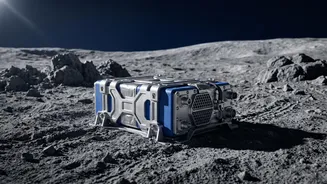
This technology is more than just an incremental improvement; it's an enabling technology for the entire Artemis campaign. NASA's goal is to establish a sustainable 'outpost' at the Moon's South Pole, which requires systems that can operate continuously for months or even years. Reliable, long-duration power is essential for everything from rovers exploring permanently shadowed craters to the life support systems in astronaut habitats and emergency kits. By creating batteries that can weather the extreme lunar environment, NASA is laying the groundwork for a permanent power grid on the Moon. The SPEARS project, led by NASA's Glenn Research Center, is a crucial step toward making the vision of a long-term lunar base a practical reality, powering the next generation of human exploration and discovery.