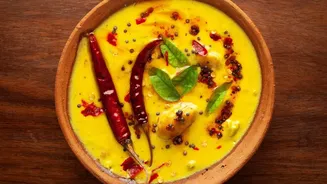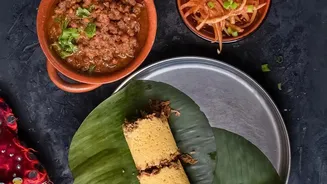



Beerakaya Thokku Pachadi (Ridge Gourd Peel Chutney)
Hailing from Andhra Pradesh, this rustic chutney gives a second life to the sharp, fibrous peels of ridge gourd (turai). Instead of being binned, the peels are sautéed with lentils (dal), red chillies, tamarind, and spices until tender. Once cooled, the mixture
is ground into a coarse, flavour-packed pachadi. It’s a spicy, tangy condiment that pairs perfectly with hot rice and a dollop of ghee, showcasing how a humble peel can become the star of a meal.
Lauki ke Chilke ki Sabzi (Bottle Gourd Peel Stir-fry)
The thick skin of a bottle gourd (lauki) is often seen as waste, but in many North Indian homes, it's the hero of a simple and delicious sabzi. The peels are finely chopped and stir-fried with aromatics like cumin seeds, turmeric, and sometimes besan (gram flour) for a nutty texture. This dish is a testament to the frugal and flavourful cooking philosophy where nothing is discarded, turning a tough peel into a tender, spiced side dish perfect with rotis.
Vazhaithandu Poriyal (Banana Stem Stir-fry)
The banana plant is celebrated for its versatility, and its fibrous inner stem (vazhaithandu) is a prime example. Often overlooked, the stem is meticulously cleaned, chopped, and cooked into a wholesome poriyal or curry, especially in South India. Rich in fibre, the banana stem is typically stir-fried with mustard seeds, lentils, curry leaves, and grated coconut. The result is a crunchy, mildly spiced, and incredibly nutritious dish that highlights the 'root-to-flower' utility of this plant.
Chakkakuru Thoran (Jackfruit Seed Stir-fry)
After enjoying sweet, ripe jackfruit, the seeds (chakkakuru) are often left behind. In Kerala, these protein-rich seeds are transformed into a delectable thoran. The seeds are boiled until tender, peeled, and then gently sautéed with classic South Indian ingredients: crushed garlic, mustard seeds, curry leaves, and a generous amount of grated coconut. This simple preparation turns what many consider waste into a hearty and flavourful side dish with a unique, nutty texture.
Watermelon Rind Dosa
Come summer, watermelons are everywhere, and so are their discarded rinds. In the coastal regions of Karnataka, the white part of the rind finds its way into a soft, spongy dosa. The green skin is peeled off, and the white rind is ground with soaked rice and sometimes coconut to make a fermented batter. The resulting dosas are incredibly soft and have a subtle, unique flavour. It’s an ingenious way to reduce food waste while creating a delicious breakfast.
Gobhi Danthal ki Sabzi (Cauliflower Stem Curry)
The thick, sturdy stems of a cauliflower, known as 'danthal', are often chopped off and thrown away. However, in regions like Punjab and Jammu, these stems are the main ingredient in a tangy and savoury sabzi. The stems are chopped into bite-sized pieces and cooked with spices, often with a sweet and sour flavour profile from tamarind and jaggery. This dish gives the tough stems a tender, succulent texture, proving that even the most fibrous parts of a vegetable can be made delicious.
Aloo Khosha Bhaja (Crispy Potato Peel Fry)
This Bengali specialty turns humble potato peels into a crispy, addictive snack or side dish. Instead of being discarded, the peels are washed thoroughly, sliced thinly, and stir-fried in mustard oil with spices like nigella seeds (kalonji) and dried red chillies until golden and crunchy. It's a simple, zero-waste recipe that has been a part of Bengali households for generations, celebrating the idea that flavour can be found in the most unexpected places. Variations include adding poppy seeds for a nuttier taste.
Macher Kata Chorchori (Fish Head & Bone Mishmash)
A true nose-to-tail classic from Bengal, this dish uses fish heads and bones (kata), parts that are often discarded after the fillets are removed. The fish head is fried and then broken up into a medley of vegetables and, fittingly, vegetable peels and stems like potato skin and pumpkin peel. Cooked with a pungent mustard paste, it’s a dry, rustic curry where every element, from fish bones to vegetable scraps, contributes to a deeply complex flavour. It’s the ultimate example of Bengali resourcefulness.