
A New Atlas for a New Era
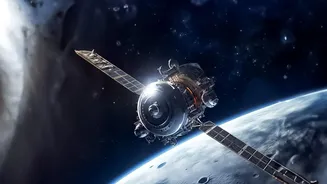
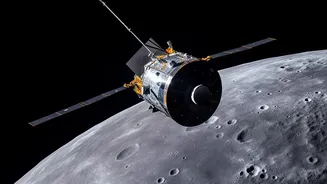
For decades, scientists suspected water existed on the Moon, but its exact nature and location were a mystery. Recent missions and advanced analysis have changed everything. Data from orbiters like NASA's Lunar Reconnaissance Orbiter and India's Chandrayaan
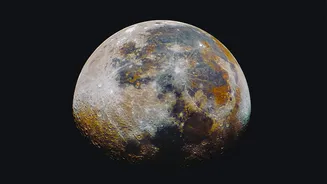
missions have been used to create the most detailed maps of lunar water to date. These maps don't just show that water exists; they reveal its distribution, often as ice mixed in with lunar soil, especially in the permanently shadowed craters near the poles where temperatures are incredibly low. These frigid traps have preserved water ice for potentially billions of years, creating what many now see as a goldmine for future astronauts. Some studies even indicate that water is more widespread than previously thought, potentially existing in tiny amounts within minerals even in sunlit areas.
Water Is Life, and also Fuel
The excitement isn't just about finding water for astronauts to drink. The real game-changer is the concept of 'in-situ resource utilization' (ISRU), a fancy term for living off the land. Water is critical for life support, providing drinking water and oxygen for breathing. But its true value lies in its chemical components: hydrogen and oxygen. By splitting water molecules using a process called electrolysis, powered by solar panels, missions can produce both breathable oxygen and hydrogen, a powerful rocket propellant. This turns patches of lunar ice into potential refueling stations. Instead of launching everything from Earth at enormous cost, future missions could refuel on the Moon for journeys to Mars and beyond, completely revolutionizing the economics of space travel.
From Ice to Ignition
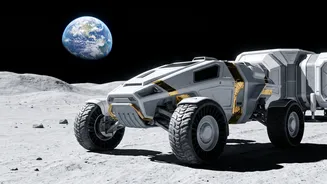
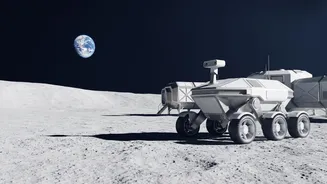
The process of turning lunar ice into rocket fuel is a multi-step engineering challenge. First, robotic rovers would need to enter the extremely cold, dark craters to mine the ice-rich soil, or regolith. This material would then be heated in a container to cause the ice to sublimate—turn directly from a solid into a gas. This water vapor would be captured and then purified, as it's likely mixed with other volatile compounds. Once purified, the water is fed into an electrolyzer. This device passes an electric current through the water, separating it into hydrogen and oxygen gases. These gases are then cooled and condensed into liquid form, ready to be pumped into the tanks of a lunar lander or a deep-space vehicle. Several companies and space agencies are already developing and testing these technologies on Earth.
Powering the Artemis Generation
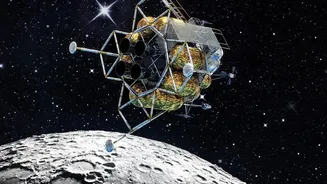
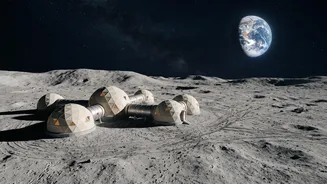
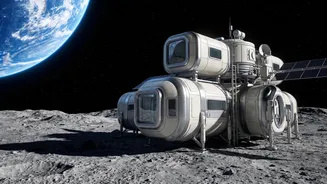
These water ice maps are fundamental to the plans for NASA's Artemis program, which aims to establish a sustainable human presence on the Moon. Knowing where the water is allows mission planners to select the best landing sites for future astronauts and, eventually, a permanent lunar base. The south pole of the Moon is a key target for both NASA and China's space program precisely because its permanently shadowed regions are believed to hold vast quantities of water ice. Upcoming robotic missions, like NASA's VIPER rover, are specifically designed to prospect these areas, drill into the surface, and confirm the concentration and purity of the ice. Success in these endeavors will not only support government missions but also fuel a budding commercial lunar economy, with private companies eager to provide mining, processing, and refueling services.
Challenges on the Lunar Frontier
While the promise is immense, the path to a lunar fuel depot is paved with challenges. The permanently shadowed craters where the ice is most abundant are among the coldest places in the solar system, posing a severe threat to robotic and human explorers. Mining in a near-vacuum, with abrasive lunar dust and extreme temperatures, will require incredibly robust and reliable machinery. Furthermore, while maps show where ice is likely to be, the exact quantity and accessibility are still unknown and need to be verified on the ground. There are also geopolitical questions to consider, as nations and private entities race to the Moon's most resource-rich areas, raising concerns about ownership and the right to exploit lunar resources.