
The allure of vintage glamour never truly fades. A key element of this timeless appeal lies in the artfully sculpted waves that defined entire eras. From the sleek styles of the Roaring Twenties to the soft romance of Old Hollywood, let's explore.
Finger Waves: The Roaring Twenties
Arguably
the most iconic vintage wave, the finger wave is synonymous with the Jazz Age and flapper style of the 1920s and '30s. This look was created on wet hair, using a comb and fingers to meticulously push the hair into a continuous 'S' shape that sits close to the scalp. The result is a sharp, sculptural, and highly defined wave pattern. It was originally developed as a way to soften the look of the then-fashionable short bob haircuts. While it requires considerable skill, the dramatic and polished finish is unparalleled, making it a statement look that evokes an era of rebellion and glamour.
Marcel Waves: The Original Hot Iron Style
Before finger waves became a wet-setting technique, there was the Marcel wave. Invented in the 1870s by French hairstylist François Marcel Grateau, this style used a heated curling iron, or 'tongs', to create a similar deep, ridged wave pattern. The key difference lies in the method; Marcel waves are created on dry hair with heat, while finger waves are sculpted on wet hair with gel and a comb. The invention of Marcel's tongs revolutionised hairstyling and made waves accessible to more women, dominating hair fashion for over 50 years.
Hollywood Waves: The Glamour of the Silver Screen
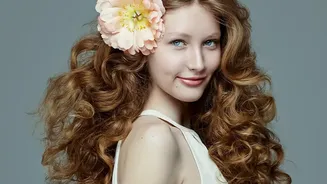
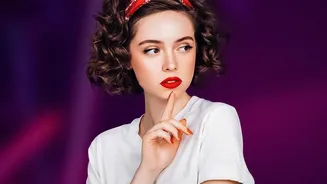
When you picture the ultimate silver screen siren from the 1940s or '50s, you're likely imagining Hollywood waves. Popularised by stars like Veronica Lake, Rita Hayworth, and Marilyn Monroe, this style is softer, fuller, and more romantic than its 1920s counterparts. It's characterised by a deep side part and uniform, cascading waves that are brushed out to create a seamless, polished flow. Unlike the tight structure of finger waves, Hollywood waves are about creating soft, touchable glamour with plenty of bounce and shine, a look that continues to be a red-carpet and bridal favourite today.
Victory Rolls: The 1940s Updo
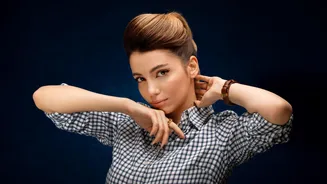
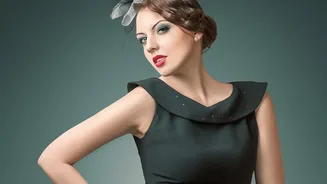
While not a wave in the traditional sense, Victory Rolls are a quintessential 1940s hairstyle often paired with waved sections. This distinctive look involves rolling large sections of hair at the front or top of the head into voluminous, sculptural tubes pinned in place. The name is believed to be a patriotic nod to the aerobatic manoeuvres of fighter planes during World War II. This style was a practical way for women working in factories to keep their hair safely away from their face, while still maintaining a touch of glamour. Today, it’s a bold vintage statement that adds height and drama to any look.
Pin Curls: The Foundation for Waves
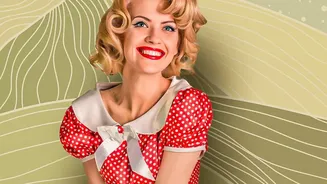
The secret behind many of the softer, fuller waves of the 1930s, '40s, and '50s was the pin curl set. This technique involves taking small sections of wet or dry hair, rolling them into flat or standing curls, and pinning them against the scalp to set. Once the hair is dry, the curls are brushed out to form a soft, cohesive wave pattern. The direction and placement of the pin curls determine the final shape of the wave, allowing for a variety of looks from the sleek waves of Rita Hayworth to the bouncier styles of the 1950s. It was a versatile method used by millions of women to achieve salon-worthy styles at home.