









The Familiar Story of Risk
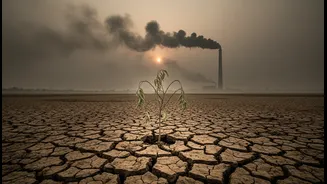
The 2026 report does not shy away from the immense pressures India's environment is under. It documents a year, 2025, where the country experienced extreme weather events on over 90% of its days, from devastating floods to searing heatwaves. These events caused
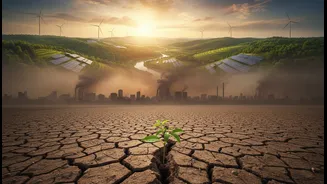
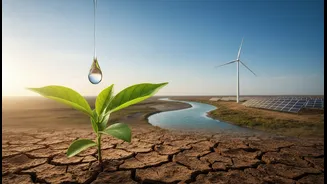
thousands of deaths and affected millions of hectares of cropland, highlighting the tangible human and agricultural costs of a changing climate. The report also points to familiar, persistent challenges: the majority of India's population lives far from any air quality monitoring stations, especially in industrial belts, leaving them exposed to unknown levels of pollution. Furthermore, it highlights the increasing human-wildlife conflict, such as with tigers, driven by habitat loss and ecological degradation. This is the risk side of the ledger, a stark reminder of the environmental debt we have accumulated.
The Emerging Narrative of Utility
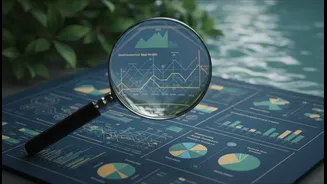
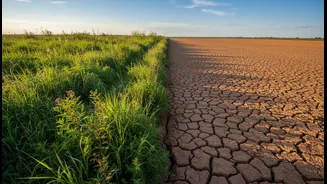
Where the 2026 report pivots is in its framing. Beyond the catalogue of crises, it champions a narrative of utility. This perspective argues for a fundamental shift: instead of viewing the environment solely as a fragile entity to be protected, we must also see it as a valuable asset whose services are essential for economic and social well-being. The report suggests that by accounting for our 'natural capital'—the stock of forests, rivers, soils, and minerals—we can make smarter development choices. This isn't about putting a price tag on nature, but about recognizing the immense, often invisible, economic functions it performs, from providing clean water and air to protecting communities from floods. The report pushes for this thinking to be integrated into our national accounts, moving beyond GDP as the sole measure of progress.
Waste as a Resource: The Circular Economy
A key part of the 'utility' story is the concept of a circular economy, a model that aims to eliminate waste by design. For decades, India's growth has followed a linear 'take-make-dispose' model, leading to overflowing landfills and widespread pollution. The 2026 report highlights the enormous opportunity in shifting this paradigm. By treating waste not as a liability but as a resource, India can unlock significant economic value. Studies suggest a circular economy could be worth trillions of rupees to India by 2050, creating millions of jobs in recycling, repair, and regeneration sectors. This is already happening in pockets across the country: construction debris is being turned into new building materials, e-waste is being mined for precious metals, and agricultural residue is becoming biofuel. Policy measures like Extended Producer Responsibility (EPR) are further pushing industries to innovate.
Nature-Based Solutions and Green Finance
The report also champions 'Nature-Based Solutions' as a practical application of the utility mindset. Instead of relying solely on expensive engineered infrastructure, this approach uses natural systems to solve problems. This includes restoring wetlands to mitigate floods, regenerating forests to ensure clean water supply, and promoting agroforestry to improve soil health and farmer incomes. The bigger story here is that investing in nature is not an expense but a strategic investment. However, achieving this requires significant financial innovation. The report calls for mainstreaming biodiversity into public schemes like MGNREGS, unlocking private capital through corporate social responsibility, and developing new instruments like green bonds to fund conservation. India has made progress in this area, but bridging the biodiversity finance gap remains a critical challenge to turning the idea of utility into a reality on the ground.