




The Foundation: Pack Smarter, Not Less
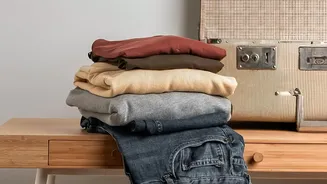
Before a single item is folded, the key to a light carry-on is a well-planned wardrobe. The goal for a four-day trip is not to bring four distinct, non-repeating outfits, but to pack versatile pieces that can be mixed and matched. Think in terms of a capsule
wardrobe: two pairs of bottoms (like jeans and a versatile trouser) and three to four tops that work with both. By sticking to a complementary colour palette, you can create multiple outfits from just a few articles of clothing. Opt for lightweight, wrinkle-resistant fabrics like merino wool or synthetic blends. Finally, always wear your bulkiest items—like a jacket, sweater, or boots—on the plane to free up precious real estate inside your bag.
Master the Ranger Roll for Maximum Compression
One of the most effective space-saving techniques is the Ranger Roll, a method used by the military to keep clothing compact and tidy. This technique works best for soft, flexible items like t-shirts, leggings, casual trousers, and pyjamas. To start, lay the garment flat and fold the bottom hem up by a few inches, creating a small cuff. Next, fold the sleeves and sides inward to create a uniform rectangle. Then, roll the item as tightly as you can, starting from the collar and moving down towards the cuffed end. Once the roll is complete, use the cuff you created at the beginning to wrap around the roll, securing it like a small, tight burrito. This not only compresses the clothing but also prevents it from unravelling in your suitcase, keeping everything organised and easy to find.
The Art of Bundle Wrapping to Avoid Wrinkles
For items more prone to wrinkling, like button-down shirts, blazers, or dresses, the bundle wrapping method is a superior choice. This technique avoids hard folds, which are the primary cause of creases. The process involves wrapping your clothes layer by layer around a central core. Start by creating a core with your softest, most wrinkle-resistant items like underwear and socks, often placed inside a small pouch. Then, on a flat surface like a bed, lay out your most delicate items first, such as a jacket face down, followed by shirts and trousers layered on top. Place your core in the centre and begin wrapping each garment around it one at a time, smoothing out the fabric as you go. Sleeves and pant legs should be wrapped across the bundle. The result is a single, large bundle that is anchored in your suitcase, preventing the contents from shifting and wrinkling.
Use Packing Cubes for Ultimate Organisation
Packing cubes are essential for compartmentalising your suitcase and adding a layer of compression. Think of them as portable drawers for your luggage. You can organise by category—one cube for tops, one for bottoms, one for underwear—or by outfit. For travellers truly looking to maximise every inch, compression packing cubes are a game-changer. These cubes feature a second zipper that squeezes out excess air, significantly reducing the volume of soft items like sweaters and t-shirts. This organisation not only makes it easier to find what you need without rummaging through your entire bag but also helps create structure and eliminate the dead space that often occurs in a loosely packed suitcase. For best results, combine methods: roll your clothes first, then arrange them neatly inside the cubes.
Fill Every Last Gap
Once your main clothing items are rolled, bundled, and cubed, it’s time to think like a Tetris master. Your suitcase is full of small, awkward spaces that can be put to good use. The most common trick is to stuff smaller items like socks, underwear, or charging cables inside your shoes. This not only saves space but also helps your shoes maintain their shape. Look for other gaps along the sides of your suitcase or between packing cubes. These are perfect spots for belts, which can be coiled, or other small accessories. By strategically filling these empty pockets, you ensure that no space is wasted and that all your belongings are packed snugly, reducing movement and potential wrinkling during transit.