




From Shortcut to Study Buddy
Not long ago, the use of AI in schoolwork was synonymous with academic dishonesty. Today, the dynamic is changing rapidly. For a growing number of university students, AI tools like ChatGPT are less of a shortcut and more of a partner in the academic process.
They are integrating these tools into their workflows for brainstorming topics, creating outlines, summarizing complex articles, and refining their arguments. This marks a significant evolution from viewing AI as a plagiarism machine to embracing it as a legitimate assistant that can enhance, rather than replace, their own intellectual efforts. The key distinction is using AI to support learning, not to bypass it.
The Ultimate 24/7 Proofreader
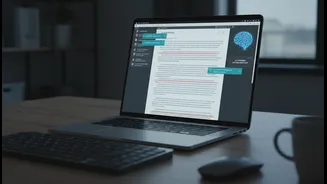
One of the most practical applications for students is using AI as an advanced proofreading tool. Writing assistants can review spelling, grammar, punctuation, and style in real-time. This function is particularly beneficial for non-native English speakers, helping them produce clearer and more professional prose. A recent survey found that 57% of students in the U.S. are already using AI to proofread their academic papers. Unlike older grammar checkers, modern AI can suggest ways to rephrase confusing sentences and improve the overall flow of a document, acting as an on-demand writing tutor that helps polish a final draft.
A Research Assistant That Never Sleeps
Beyond cleaning up text, AI is proving invaluable during the research phase. Students are using these tools to make sense of dense academic texts by generating summaries or outlining key points. This allows them to process a broader range of sources more efficiently. AI can help identify gaps in existing literature, find relevant publications, and even help a student consider multiple sides of an issue, pushing them beyond their initial assumptions. Instead of replacing the hard work of research, AI can accelerate it, automating some of the more tedious tasks and freeing up students to focus on critical thinking and analysis.
Navigating the New Rules of Academia
This evolving partnership is not without its challenges. Universities, initially focused on banning AI and detecting its use, are now shifting their approach. The conversation has moved from "don't use it" to "use it responsibly." Many institutions are developing clear policies that distinguish between ethical use, such as brainstorming and proofreading, and unethical use, like having AI write an entire essay. Faculty members are also learning alongside their students, redesigning assignments to require critical thinking that AI cannot replicate and even teaching students how to use the tools effectively and ethically. The core message is that students remain responsible for their final work and must verify any information AI provides, as these tools can be inaccurate.
Building Skills for a Future Workplace
A key motivator for students is the belief that AI literacy is crucial for their future careers. Nearly 70% of students feel that understanding AI is important for workplace success, but few report that their universities are actively teaching them how to use it. By using AI as a research and proofreading partner, students are not just trying to get better grades; they are also developing skills they believe will be essential after graduation. This hands-on experience helps them understand both the capabilities and limitations of AI, preparing them for a professional world where these tools are becoming increasingly common.