


The Current Battery Bottleneck
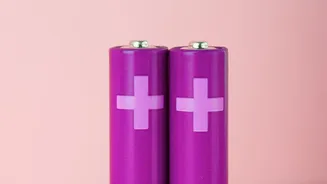
At the heart of every electric vehicle is its battery, and for years, that has meant lithium-ion. This technology powers everything from our phones to our scooters, but it has its limits. The primary components, including lithium, cobalt, and nickel,
can be expensive and have volatile supply chains. More importantly, these batteries use a flammable liquid electrolyte to function. This liquid adds weight, requires complex cooling and safety systems to prevent overheating, and is the reason you hear about rare but serious EV battery fires. For a price-sensitive market like India, where two-wheelers are the backbone of urban mobility, the high cost and perceived safety risks of lithium-ion batteries have slowed mass adoption.
Enter Solid-State: A Fundamental Shift
Solid-state batteries are exactly what they sound like: a battery that uses a solid material instead of a flammable liquid as its electrolyte. This single change is a game-changer. By replacing the liquid, engineers can eliminate the heavy and costly cooling and containment systems required in today's battery packs. The solid electrolyte—often a ceramic, polymer, or sulfide compound—is non-flammable, drastically improving safety. This fundamental redesign opens the door to using more energy-dense materials, like a pure lithium metal anode, which is unsafe to use with liquid electrolytes but offers a massive performance boost.
How 'Solid' Translates to 'Cheaper'
The path to a lower price tag is multi-faceted. Firstly, solid-state designs are simpler and can be more compact, requiring fewer materials overall. By removing the bulky components associated with thermal management, the entire battery pack becomes lighter and less complex to manufacture. Secondly, while early versions may be expensive, the long-term goal is to use more abundant and cheaper materials, potentially reducing reliance on costly cobalt and even lithium in some future designs. The biggest cost saving, however, comes from increased energy density. Solid-state batteries promise to store much more energy in the same amount of space—or provide the same range from a much smaller, lighter, and therefore cheaper, battery pack. Some projections see energy density doubling from today's 250 Wh/kg to nearly 500 Wh/kg.
More Than Just Price: The Performance Leap
While a lower cost is the headline grabber, solid-state technology promises a suite of improvements perfect for the urban rider. The higher energy density means a typical electric scooter could see its range significantly extended without needing a bigger battery. Charging times could also be slashed dramatically, with some developers targeting an 80% charge in as little as 10-15 minutes. Furthermore, these batteries are more resilient to extreme temperatures, performing more reliably in both the sweltering heat of an Indian summer and the cold of winter. For a daily commuter, this combination of longer range, faster charging, and superior safety is a powerful proposition.
The Road to Reality in India
So, when can you buy an electric scooter with a solid-state battery? The technology is moving faster than expected. Semi-solid batteries are already appearing in some high-end vehicles, and the first electric motorcycle with a fully solid-state battery began shipping in early 2026. However, mass-market adoption is still a few years away. Experts point to 2027-2028 for initial, small-scale production from major players, with widespread availability and affordability likely arriving closer to 2030. For India, which has a burgeoning EV market and government incentives for local manufacturing, this timeline aligns perfectly. As global production scales up, the cost reductions will make this technology ideal for the country's dominant two-wheeler segment, potentially unlocking a new wave of EV adoption.