





A New Kind of Study Partner
In universities across India, students are navigating the high-stakes world of academic publishing and coursework. The traditional process of getting feedback—sharing a draft with peers or waiting for a professor's limited time—can be fraught with anxiety
and delays. In response, a growing number of students are turning to a new generation of artificial intelligence tools. These are not the controversial AI chatbots that write essays from scratch, but specialized platforms designed to act as a personal, on-demand writing assistant. Tools like Paperpal, Trinka, and Grammarly Premium are being used to refine arguments, check for academic tone, and polish drafts before they ever reach a human reviewer. This marks a significant shift in how AI is perceived in education: from a potential threat to academic integrity to a valuable tool for learning and improvement.
What Does 'Safer' Feedback Mean?
The word 'safer' in the context of AI reviews points to several student anxieties. Firstly, it means psychological safety. Peer reviews, while valuable, can sometimes be unstructured, unhelpful, or even harsh, which can be discouraging. An AI tool provides objective, non-judgmental feedback instantly, 24/7. Secondly, it relates to privacy. Many students feel uncomfortable sharing unfinished work. AI review tools offer a confidential space to experiment and make mistakes. This privacy-first approach allows students to get detailed critiques on everything from grammar to sentence structure without the fear of judgment. It’s a low-stakes environment to test out arguments and improve writing, which can be particularly helpful for students who are not confident in their writing skills or for whom English is a second language.
Beyond Simple Spell-Check
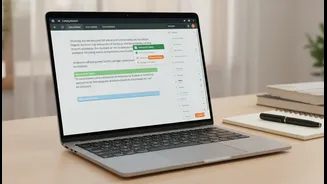
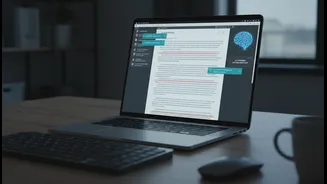
Modern AI writing assistants go far beyond the basic spell-checkers of the past. Trained on vast databases of academic papers, these tools can analyze a document for clarity, conciseness, and adherence to a formal, academic tone. For instance, platforms like Trinka are specifically designed for academic and technical writing, helping to correct complex grammatical structures and ensure stylistic consistency. Others, such as Paperpal, offer a comprehensive suite of features including a plagiarism checker, a paraphrasing tool to improve sentence variety, and even a journal submission readiness check. These tools can identify vague phrasing, suggest more powerful vocabulary, and ensure that the paper flows logically. The feedback provided is often detailed, explaining why a change is recommended, which helps students learn and improve their writing skills over time.
The Student's Advantage
For students, the primary advantage is empowerment. These tools act as a personal tutor, helping to build confidence by allowing them to submit a more polished and coherent draft. This can lead to better grades and a more positive relationship with academic writing. For many Indian students facing intense academic pressure and anxiety, this support can be crucial. AI assistants can help level the playing field, offering high-quality language support to those who may not have access to expensive editing services. The ability to get instant, actionable feedback helps students learn at their own pace and identify recurring weaknesses in their writing. Some tools even offer features to help brainstorm research questions and discover relevant academic papers, assisting with the entire research lifecycle.
Navigating the Risks and University Rules
Despite the benefits, the use of AI in academia is not without its risks and ethical questions. A major concern is over-reliance. If a student uses an AI tool to simply paraphrase or rewrite their work without understanding the suggestions, it can hinder the development of their own critical thinking and writing skills. Furthermore, universities are still developing clear policies on what constitutes acceptable AI use. While using AI for grammar checks is widely accepted, using it to generate ideas or rephrase large sections of text can enter a grey area. Students must remain the authors of their work. The key is to use these platforms as a tool for feedback and learning, not as a ghostwriter. Ultimately, the student is responsible for the final submission, including any errors or inaccuracies the AI might have introduced.