





OpenAI is making a significant strategic pivot towards India, recognising that the nation's next wave of internet users will interact with technology through voice, not text. Its October update is more than a new feature; it's a foundational play.
The October Voice Update Explained
In mid-October
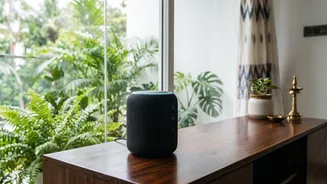
2026, OpenAI rolled out GPT-Live-1.1, a significant update to its voice model. The key enhancement for India was the introduction of two new, natural-sounding Hindi voices, named Neer and Leher. This update enables ChatGPT to hold more natural two-way conversations in Hindi. Beyond just adding voices, the new model is better tuned to understand Indian accents and the common behaviour of 'code-switching', where users mix Hindi and English in the same sentence. Company executives stressed that this move is a direct response to user behaviour in India, which they describe as an 'audio-first market'. The goal is to make interactions smoother, reduce latency, and ensure the AI is reliable even with intermittent internet connectivity, a common issue in many parts of the country.
Why Voice Is The Key To India
OpenAI's focus on voice and regional languages is a calculated business decision rooted in India's unique digital landscape. India is already ChatGPT's largest consumer market by user numbers, and the company sees a massive opportunity for growth. However, reaching the next several hundred million users requires moving beyond English and text-based interfaces. A large portion of India's population is more comfortable speaking their native language than typing on a keyboard. Recognising this, OpenAI's India MD, Prabhjeet Singh, stated that the company's focus is squarely on Hindi and other vernacular languages to widen access. This strategy also acknowledges that India is an 'Android-first' market, which requires building robust experiences for a wide range of devices, not just high-end smartphones.
A Crowded and Competitive Arena
OpenAI is not entering an empty field. The Indian voice AI market is a hotbed of activity, with homegrown startups and global tech giants vying for dominance. The sector has attracted significant venture capital, with a cumulative funding of $449 million as of August 2026. Local players like Sarvam AI, Gnani, and Verloop.io have been building foundational models and enterprise solutions specifically for Indian languages and business needs. These companies are often better attuned to the nuances of local dialects and business workflows, such as customer support in the banking and insurance sectors. Meanwhile, Google's Assistant and Amazon's Alexa have already established a strong presence in Indian households. OpenAI's strategy is to differentiate by offering more powerful, conversational AI, but it faces stiff competition from incumbents who have a head start in market penetration and local data.
Beyond a Simple Chat: The Broader Vision
The ambition extends far beyond just answering queries. By strengthening its voice capabilities in Indian languages, OpenAI is laying the groundwork for a host of new applications. Executives have pointed to enterprise use cases like customer support voice agents and integrations with streaming services for voice-activated search and control. Partnerships with entities like JioHotstar and the BCCI signal a move towards integrating AI into entertainment and live sports. For small businesses, the technology offers the potential to automate tasks like marketing and inventory management, which were previously accessible only to larger companies. The company has also made pricing more accessible in India, introducing a lower_cost 'ChatGPT Go' plan and piloting UPI payments to lower the barrier to entry for paid features. This multi_pronged approach—improving the core technology, fostering partnerships, and localising the business model—is designed to embed ChatGPT deeply into India's digital economy.
The Road Ahead: Challenges and Opportunities
Despite the promising strategy, significant challenges remain. India's linguistic diversity is immense, with 22 scheduled languages and hundreds of dialects. Training models to accurately understand and respond to this variety requires vast amounts of high_quality, properly licensed data, which can be difficult to obtain. Ensuring reliability on lower_end Android devices and in areas with poor internet is another critical hurdle. Furthermore, as OpenAI engages more deeply with government and enterprise clients, navigating India's data protection laws and cybersecurity concerns will be paramount. However, if OpenAI can successfully navigate these complexities, the reward is substantial. By building an AI that truly understands and speaks the languages of India, the company could unlock a massive market and play a pivotal role in the country's technological future, setting a new standard for digital inclusion.