






A Gift from Halley's Comet
So, what exactly are you looking at? A shooting star isn’t a star at all. The Orionids are tiny fragments—some no bigger than a grain of sand—shed by Halley's Comet on its long journey around the sun. Each October, Earth’s orbit crosses this stream of cosmic
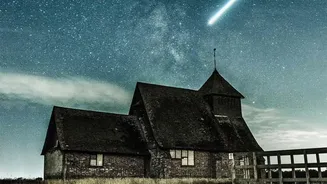
debris. As these particles slam into our atmosphere at an incredible speed of about 66 kilometres per second, they burn up, creating the brilliant streaks of light we call meteors. The Orionids are renowned for their speed and brightness. They are famous for leaving behind glowing “trains” that can linger in the sky for several seconds, and they occasionally produce exceptionally bright fireballs, which are brilliant enough to be seen even from less-than-ideal locations.
Mark Your 2026 Calendar
Timing is everything. The Orionid meteor shower is active from early October to early November, but the best time to watch in 2026 will be during its peak on the night of October 21-22. This year, there’s a slight challenge: a bright waxing gibbous Moon will be in the sky for much of the night, washing out fainter meteors. But there is a perfect window of opportunity. The Moon is expected to set around 3 a.m. local time, leaving the sky dark for the crucial pre-dawn hours. This period between moonset and sunrise is your prime time for viewing, when the shower's radiant point in the constellation Orion is high in the sky. Under perfect, dark-sky conditions, you might see 15 to 20 meteors per hour, but the key is to be patient.
The Urban Stargazer's Reality
Can you really see a meteor shower from a city rooftop in places like Mumbai, Delhi, or Bengaluru? The answer is a qualified yes. You won’t get the full, jaw-dropping spectacle you’d find in the Himalayas or the Rann of Kutch. Light pollution is a major hurdle, and it will hide all but the brightest meteors. Instead of 20 meteors an hour, you might only catch a few—perhaps two to five of the most brilliant fireballs. But don’t let that discourage you. The good news for Indian viewers is that the October sky is often exceptionally clear after the monsoon rains have washed dust and pollutants from the atmosphere, improving visibility even in urban areas. Seeing a piece of Halley’s Comet blaze across the sky above your building is an unforgettable experience.
Your Guide to Rooftop Viewing
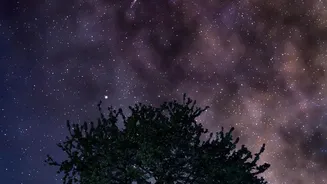
To maximise your chances, you need a plan. First, find the darkest spot you can. This could be a terrace, a local park, or even a balcony, as long as it has a wide, open view of the sky and is shielded from direct streetlights. Use buildings or trees as natural barriers to block ambient light. Second, and this is crucial, give your eyes at least 20 to 30 minutes to fully adapt to the darkness. Don’t look at your phone during this time; its bright screen will instantly ruin your night vision. If you need a light, use a torch with a red filter. Lastly, you don’t need any equipment. Telescopes and binoculars actually narrow your field of view, making you more likely to miss the show. Just lie back on a comfortable chair or blanket, and look up.
Where to Look in the Sky
The meteors are called Orionids because they appear to radiate from the constellation Orion the Hunter. You can easily find it using a free stargazing app like Stellarium or Sky Guide. However, you shouldn’t stare directly at Orion. The meteors will appear brightest and have the longest trails when they are about 45 degrees away from their radiant point. So, find Orion, then shift your gaze to a neighbouring patch of dark sky. The meteors can appear anywhere and everywhere, so the best strategy is to take in as much of the sky as you can. Pack some tea or coffee, get comfortable, and be prepared to wait. The universe rewards patience.