


A Hunter’s Instinct in a Modern Home
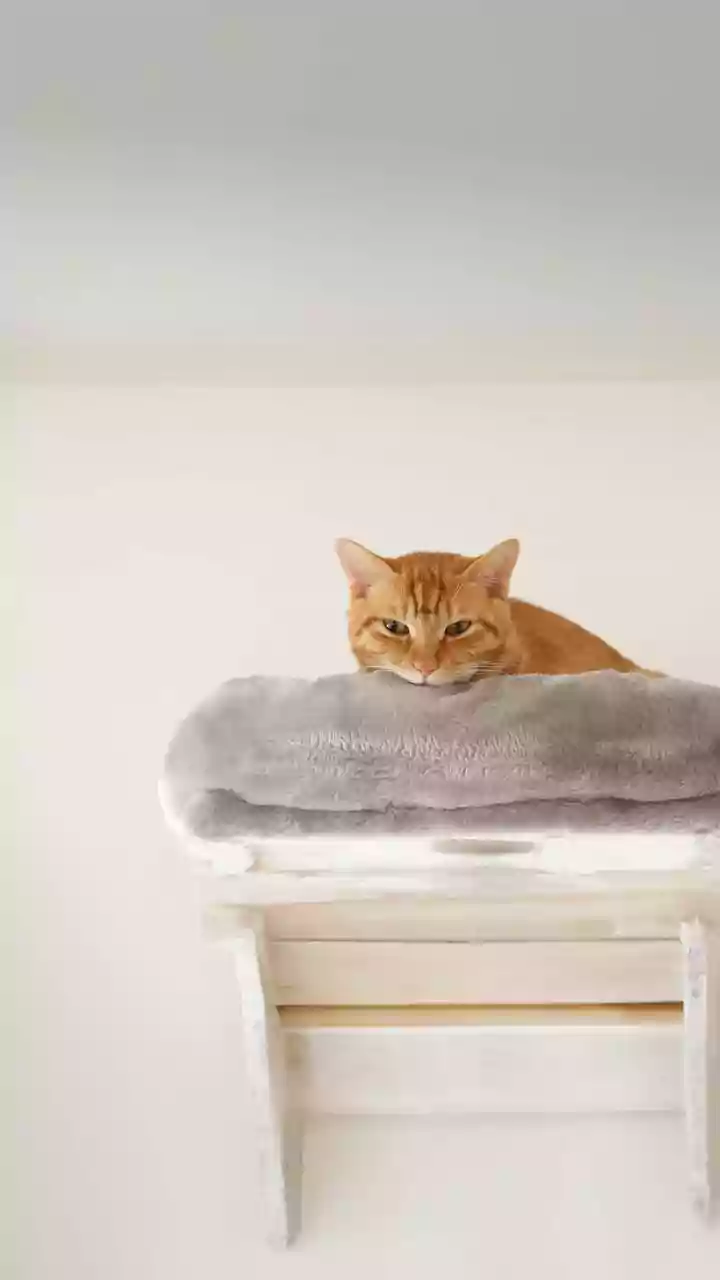
Your cat may look like a pampered fluffball napping on the sofa, but genetically, they are just a whisker away from their wild ancestors. In nature, cats are both predator and prey. Climbing high serves a dual purpose: it provides a superior vantage point
to survey their territory for potential meals (or toys) and offers a safe retreat from perceived threats on the ground. A high perch is a position of power and security. This instinct doesn't disappear just because they live on the 15th floor with a steady supply of kibble. They still feel the primal urge to get up high, survey their domain, and feel safe from the goings-on below, whether it's the vacuum cleaner, a toddler, or another pet.
Thinking in Three Dimensions
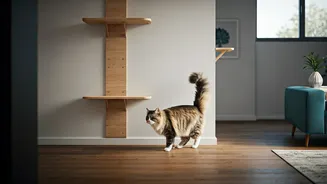
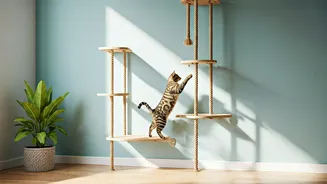
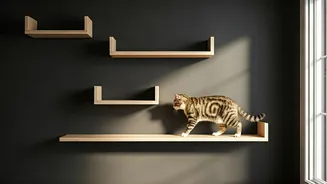
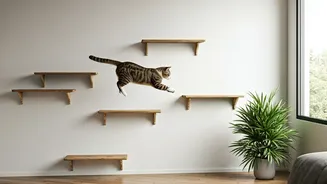
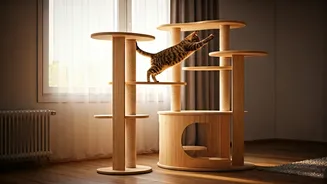
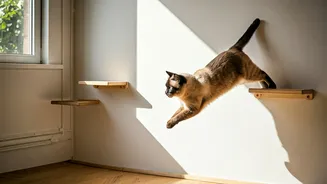
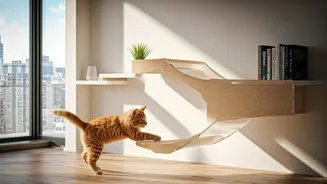
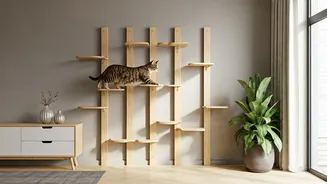
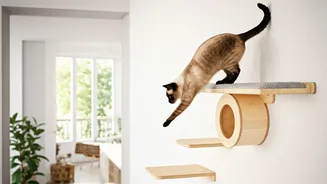
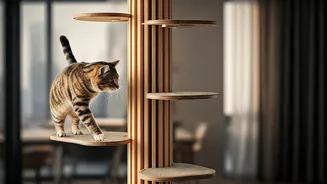
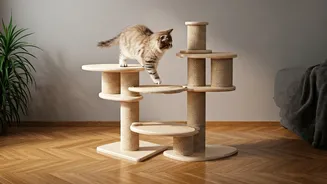
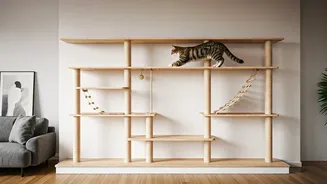
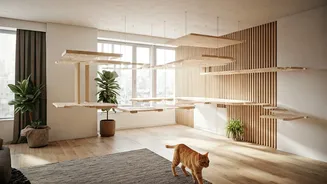
Humans are largely two-dimensional creatures. We live and move across floors. For a cat, territory is three-dimensional. They don't just calculate square footage; they see the world in cubic feet. The space from the floor to the ceiling is just as important as the space from wall to wall. In a compact urban apartment, this is a crucial concept. When you provide vertical options—like sturdy wooden steps, wall-mounted shelves, or tall cat trees—you are effectively multiplying your cat’s usable living space without adding a single square foot to your home. You are giving them new paths, new napping spots, and new areas to claim as their own, enriching their world immeasurably.
Combating High-Rise Stress and Boredom
A cat that cannot express its natural behaviours is a stressed cat. In a high-rise setting, boredom and anxiety are common. This can manifest in destructive behaviours like scratching furniture, over-grooming, or aggression. Without the stimulation of a complex outdoor environment, they need an indoor equivalent. Vertical structures act as an essential outlet. The physical act of climbing, jumping, and balancing is excellent exercise, keeping their muscles toned and their joints healthy. Mentally, it provides the stimulation they crave. A path of wall shelves leading to a window perch becomes a 'cat superhighway'—a fun, engaging puzzle they can solve every day.
Why Wood and Sturdiness Matter
While any vertical space is good, the mention of 'wooden steps' in the headline points to an important factor: stability and texture. Cats are cautious creatures; if a perch wobbles or feels insecure, they won't use it. Wood provides a solid, stable foundation that inspires confidence. Furthermore, the texture of natural wood or wood covered in sisal rope is ideal for their claws. It allows them to get a good grip for climbing and serves as an appropriate scratching surface, potentially saving your sofa. Unlike flimsy plastic or wobbly, lightweight structures, well-anchored wooden steps or a heavy-based wooden cat tree are an investment in your cat’s safety and willingness to use the equipment.
Keeping the Peace in Multi-Cat Homes
In homes with more than one cat, vertical space isn't just a luxury; it's a critical tool for conflict resolution. Cats often establish a social hierarchy, and high-status spots are highly prized. By providing multiple perches at different levels, you allow cats to negotiate space and status without resorting to ground-level scuffles. A more timid cat can retreat to a high shelf to feel safe, while a more dominant cat can claim the highest point of the cat tree. This vertical separation helps maintain harmony by allowing them to share a territory without constantly being in each other's faces.