

First, What Is Push-Pull?
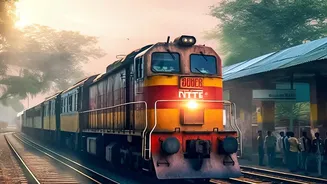
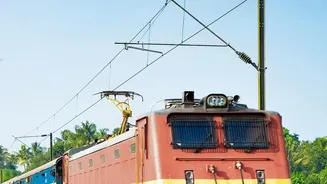
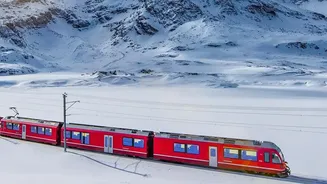
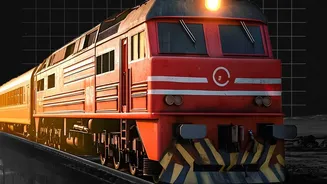
At its core, the concept is simple. Instead of a single locomotive at the front pulling the entire train, push-pull configuration places a locomotive at each end. The front engine pulls while the rear engine pushes simultaneously. This seemingly small
change has significant effects. The distributed power allows the train to accelerate and decelerate much faster, shaving valuable time off journeys, especially on routes with frequent stops or speed restrictions. Another key benefit is operational efficiency. At a terminal station, a conventional train needs its locomotive to be detached and moved to the other end, a time-consuming process called shunting. A push-pull train is ready to go in the opposite direction almost immediately, saving time and reducing platform congestion.
The Amrit Bharat Express: For the Aam Aadmi
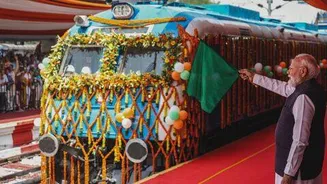
The most prominent example of this technology in action is the Amrit Bharat Express. Launched as a non-air-conditioned train with sleeper and unreserved coaches, it is designed for the common person and long-distance travel. This is where the 'push-pull' advantage truly shines. By using this technology, the Amrit Bharat trains offer a significantly improved experience over older trains. The semi-permanent couplers between coaches drastically reduce the notorious jerks during starting and stopping, leading to a much smoother ride. With the ability to reach speeds of up to 130 kmph, these trains are designed to connect distant parts of the country more efficiently and affordably. This focus addresses a core need: upgrading the travel experience for the millions who rely on budget-friendly train services.
A Tale of Two Modernisation Efforts
Here is where the 'pulling in different directions' comes into play. The Amrit Bharat represents one major strategic direction: providing modern, comfortable, and faster travel for the masses at an affordable price point. In stark contrast is its famous cousin, the Vande Bharat Express. The Vande Bharat is a self-propelled trainset—more like a metro train where power is distributed under several coaches—and is focused on the premium, semi-high-speed segment. With AC chair cars, automatic doors, and a top speed of 160-180 kmph, it caters to business and leisure travellers on shorter, daytime routes, directly competing with airlines. So, on one hand, Indian Railways is 'pushing' toward premium, high-speed travel to capture a new market. On the other, it is 'pulling' along its traditional, massive passenger base by modernising their travel experience with trains like the Amrit Bharat.
The Bigger Strategic Picture
This dual approach is not a sign of confusion, but a deliberate, multi-pronged strategy for a railway system of immense scale and diversity. One cannot simply replace the entire network with high-end trains; the demand for affordable long-distance travel is immense and crucial to the nation's economy and social fabric. Therefore, the push-pull technology deployed in the Amrit Bharat trains is a masterful stroke. It allows Indian Railways to significantly upgrade a large portion of its services using existing coach and locomotive technology, albeit in a new configuration. This strategy runs parallel to the more capital-intensive development of high-speed corridors and premium trainsets like the Vande Bharat. Together, they form a comprehensive plan to increase network capacity, reduce travel times across all passenger segments, and improve safety and comfort.