




The Golden Orb of the Monsoon
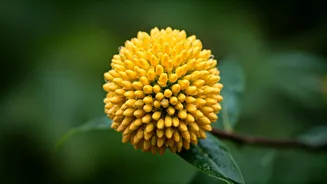
It arrives unannounced, yet its presence is unmistakable. The flower in question is the Kadamba (Neolamarckia cadamba), also known as the Burflower tree. As the monsoon clouds gather, this magnificent tree bursts forth with extraordinary blooms: perfectly
spherical golden orbs covered in tiny, creamy-white florets. They look less like flowers and more like celestial bodies that have fallen to Earth, dotting the lush green canopy with their otherworldly glow. But the Kadamba’s true allure is its fragrance. It is a scent that defies simple description—a heady, sweet perfume that is both intoxicating and deeply comforting. It doesn’t just scent the air; it saturates it. The fragrance is most potent in the late evening, a fragrant announcement that the monsoon is truly here. A single Kadamba tree in bloom can perfume an entire neighbourhood, drawing people out of their homes just to breathe in its divine aroma. This sensory experience is what makes it the most anticipated botanical event of the season.
A Flower Steeped in Mythology
The Kadamba is not just a natural wonder; it is a cultural and spiritual icon, deeply woven into the fabric of Indian mythology. Its most famous association is with Lord Krishna. Ancient texts and folklore are filled with stories of a young Krishna playing his enchanting flute under the shade of a Kadamba tree in Vrindavan, its fragrant branches sheltering him and his beloved Radha. The spherical flower is often seen as a symbol of their divine love and playful romance. This connection has immortalised the Kadamba in poetry, song, and religious ceremonies. The Bhagavata Purana describes how the Gopis, mesmerised by Krishna’s music, would adorn themselves with Kadamba flowers. The tree itself is considered sacred, a symbol of auspiciousness and celebration. During festivals like Janmashtami, the flower becomes a key decorative element, a living link to the timeless tales of Krishna. To want a Kadamba flower is to desire a piece of this sacred narrative, a tangible connection to divinity and folklore.
Beauty in a Heartbeat
Part of the Kadamba’s immense appeal lies in its fleeting nature. Unlike other blossoms that linger for weeks, the Kadamba flower lives a very short life. It blooms quickly, often overnight, reaches its peak of fragrance and beauty within a day, and then, just as suddenly, begins to fade. The golden orb wilts, and the florets fall to the ground, creating a fragrant carpet beneath the tree. This ephemerality makes it all the more precious. You cannot take its presence for granted. To experience the Kadamba in full bloom is a lesson in mindfulness, a reminder to appreciate beauty in the present moment. Its short lifespan mirrors the intensity of the monsoon itself—a brief but powerful season of transformation and renewal. The urgency to see it, smell it, and possess it for a fleeting moment is heightened by the knowledge that it will be gone by sunrise, leaving behind only a fragrant memory.
More Than Just a Bloom
While its mythological and sensory qualities are paramount, the Kadamba’s significance extends further. In many rural communities, the blooming of the Kadamba tree is a reliable natural calendar, signalling the peak of the monsoon and the ideal time for certain agricultural activities. Though less common now, its flowers were historically used to make attar (perfume) and garlands, capturing its essence for a slightly longer enjoyment. Beyond its fragrance, various parts of the Kadamba tree have been used in traditional Ayurvedic medicine for centuries, valued for a range of therapeutic properties. But for the average person, its value is simpler and more profound. It is a symbol of hope, romance, and the joyful melancholy that the Indian monsoon evokes. It’s the flower that appears in romantic poems and the one that children eagerly collect from the wet ground after a night of rain.