




A Glimpse of a Cosmic Building Site
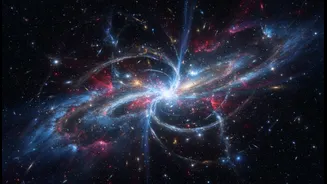
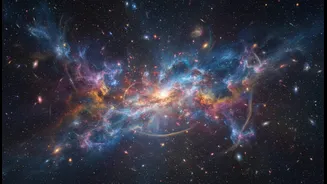
Thanks to the incredible power of the James Webb Space Telescope (JWST), astronomers have captured a breathtaking image of MACS J0553.4-3342. Located in the constellation Columba, this isn't just a serene snapshot of the cosmos; it's a visit to an active
construction site. We are seeing this galaxy cluster as it was 4.4 billion years ago, a time when it was still in its turbulent youth. Unlike the calm, majestic galaxies we often picture, MACS J0553 is a dynamic, messy, and evolving system. The image reveals two massive galaxy sub-clusters in the process of merging into one colossal entity. Scientists describe the scene as a messy process, filled with superheated gas that radiates powerful X-rays, painting a picture of cosmic violence and creation happening on a scale that is difficult to comprehend.
An Epic Gravitational Dance
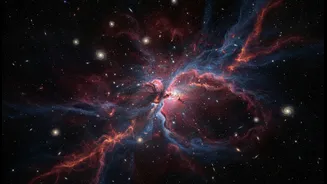
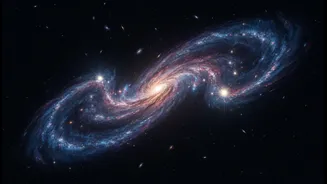
The story of MACS J0553 is one of a dramatic, ongoing interaction. The two sub-clusters, each anchored by an enormous central galaxy, have already slammed through each other. After this initial pass, they travelled more than a million light-years apart. But the relentless pull of gravity ensures their dance is far from over. They are destined to fall back toward each other again and again, in a cosmic cycle of collision and recoil that will continue until they finally settle and merge into a single, massive galaxy cluster. This isn’t a quick or clean process. It’s a protracted, chaotic saga spanning millions of years. This slow, powerful, and somewhat clumsy process of coming together feels less like sterile physics and more like a universal story of formation—a reminder that even on a galactic scale, creation is not always a gentle act.
A Funhouse Mirror to the Early Universe
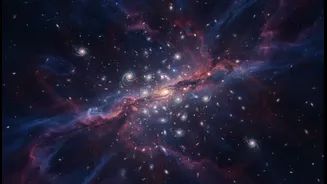
One of the most fascinating aspects of MACS J0553 is its immense gravitational power. The cluster’s concentrated mass is so great that it visibly bends the fabric of spacetime, acting like a giant cosmic lens. This phenomenon, known as gravitational lensing, warps and magnifies the light from even more distant galaxies located far behind it. In the new Webb image, this effect is stunningly clear. We can see prominent orange arcs and stretched-out lines of light scattered around the cluster. These aren't strange celestial objects; they are distorted images of background galaxies. In one remarkable instance, three distinct bright spots seen in an arc are actually three separate images of a single, faraway galaxy. MACS J0553 provides a natural telescope, offering astronomers a magnified, if warped, view into the universe's deeper past.
The Human Story of Discovery
The revelation of MACS J0553's nature didn't happen overnight. It is a story built on decades of human curiosity and technological advancement. Before Webb gave us this new, detailed view, the cluster was studied by other powerful observatories like the Hubble Space Telescope and the Chandra X-ray Observatory. Each instrument added a new layer to our understanding. This collaborative, multi-generational effort is the essence of modern science. It’s also telling that astronomers use such human-centric language to describe what they see. They talk about “messy” construction, a merger-driven “cold front,” and a “shock front,” using terrestrial concepts to make sense of cosmic events. This instinct to find the familiar in the alien is a deeply human trait, bridging the gap between our daily lives and the universe's grandest spectacles.