







The Official Deep Freeze
Formal trade relations between India and Pakistan have been suspended since 2019, following the Pulwama attack which led India to revoke Pakistan's 'Most Favoured Nation' (MFN) status and impose heavy tariffs. Pakistan responded by suspending all bilateral
trade. This diplomatic deep freeze effectively shut down direct commerce, including through the key Wagah-Attari land border, bringing official trade to a near standstill. The stated position, particularly from the Indian side, has been that terror and trade cannot go together. Both governments have since maintained strict prohibitions on direct or indirect trade, creating a challenging environment for businesses on both sides.
The Unofficial Thaw
Despite the formal bans, the economic realities tell a different story. Data from Pakistan's central bank reveals a significant and growing volume of imports from India. In the first quarter of the 2026-27 fiscal year, Pakistan recorded payments of $61.7 million for Indian goods, a 69% increase from the same period the previous year. This figure points to a persistent, and even rising, demand for Indian products within Pakistan that the official political stance cannot erase. This 'unofficial thaw' is not a sign of diplomatic rapprochement but a testament to how deeply intertwined the two economies are, especially in specific sectors.
The Dubai Detour
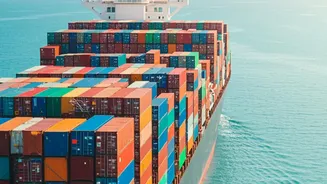
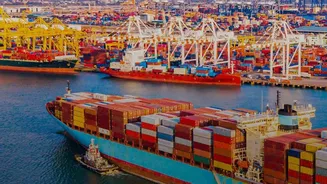
So, how do these goods cross the border? The primary mechanism is indirect trade through third countries, with the United Arab Emirates (UAE), particularly Dubai, serving as a major hub. Indian goods are shipped to ports like Jebel Ali in Dubai, Singapore, or Colombo. There, in bonded warehouses, the goods can be re-documented, with labels and certificates of origin altered to show the UAE or another country as the source. From there, they are re-exported to Pakistan. While not always strictly illegal, this 'grey-zone' trading allows commerce to continue discreetly. This logistical manoeuvre adds costs and complexity, but for many Pakistani businesses, it remains the only viable option for securing essential supplies.
Essentials and Economic Realities
The trade is not for luxury items but for essentials, driven by clear economic logic. Pharmaceuticals and organic chemicals make up the vast majority—over 96%—of Pakistan's recorded imports from India. Pakistan's pharmaceutical industry has a significant dependence on Indian-made active pharmaceutical ingredients (APIs) due to competitive pricing, quality, and proximity. Sourcing these from more distant markets would drastically increase costs. Beyond pharma, the trade suspension has inflated costs for Pakistan's textile industry (importing cotton), and other sectors that need sugar, cement, and machinery. Business groups in Pakistan estimate the economic loss from the trade suspension to be as high as $40 billion, highlighting the severe domestic impact.
A Silent Acknowledgment?
The persistence of this indirect trade represents a silent acknowledgment by both sides that complete economic separation is impractical and damaging, particularly for Pakistan. For Pakistan, whose economy is significantly smaller than India's, access to the large and geographically close Indian market for affordable raw materials is crucial. The additional freight and transportation costs incurred by sourcing goods from faraway markets like Brazil or China place a heavy burden on its industries and consumers. While India's economy is diversified enough to absorb the impact of the trade ban, the flow of goods via third countries underscores a commercial necessity that transcends political rhetoric, raising questions about the long-term sustainability of the current trade freeze.