





The Problem with Hangers
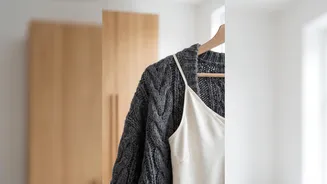
It might seem convenient, but hanging is the number one enemy of heavy knitwear. Unlike woven fabrics, knits are made of interconnected loops. Gravity is relentless, and when a heavy sweater hangs, its own weight pulls down on these loops. This force
is concentrated on the hanger points, causing the shoulders to stretch into those dreaded 'hanger bumps' and distorting the neckline. Over a season in the closet, this slow, cumulative process can permanently alter the garment’s shape, leaving your once-perfectly-fitted sweater looking saggy and misshapen. Fibres like wool, cashmere, and cotton blends are particularly susceptible to this kind of damage.
Preparation Is Everything
Before a single fold is made, your woollens must be clean and completely dry. Even if a garment looks clean, invisible body oils, sweat, and tiny food particles can linger in the fibres. Over time, these residues can cause discolouration and, more importantly, attract pests like moths, whose larvae feed on protein fibres like wool. Wash your knitwear according to its care label, typically using a mild, wool-safe detergent in cool water. Avoid harsh scrubbing or wringing, which can damage the fibres. Most importantly, ensure the garment is 100% dry before storing it. Dampness trapped in the fibres can lead to mildew and musty smells, so it's worth letting it air dry flat for an extra day just to be sure.
The Art of the Perfect Fold
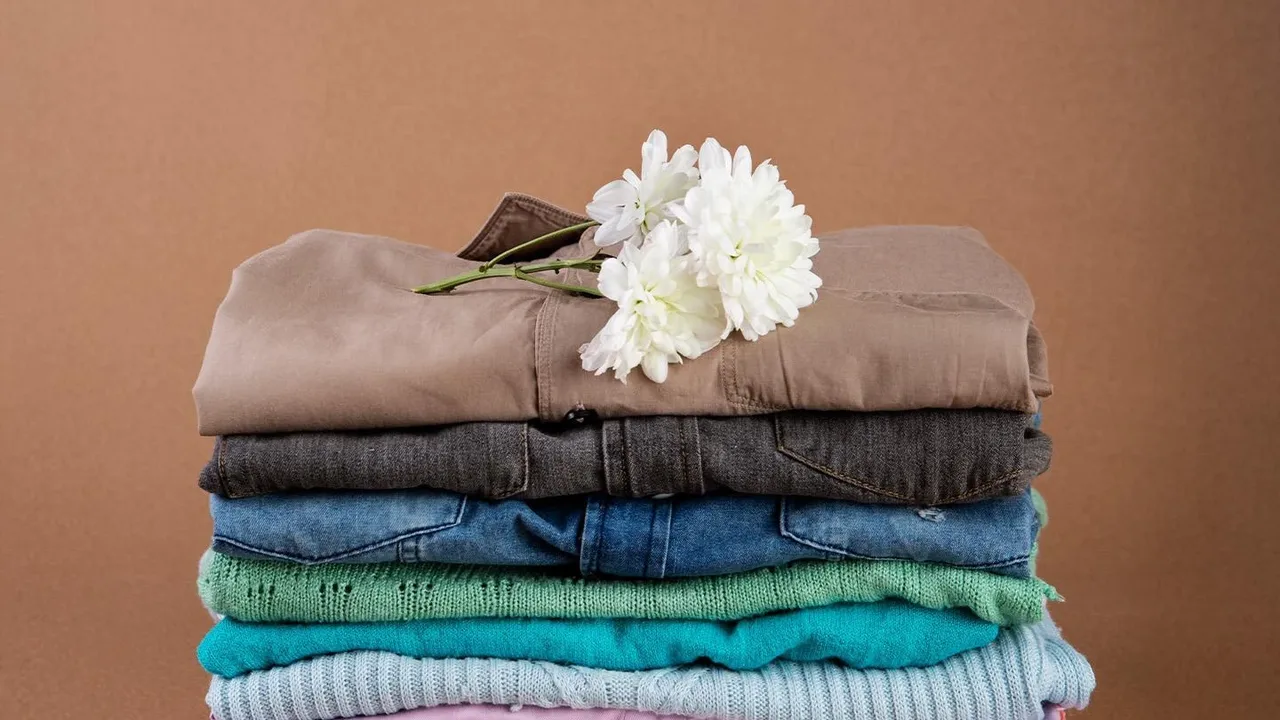
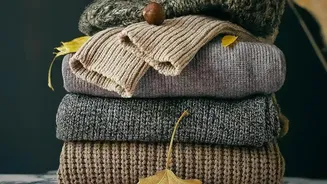
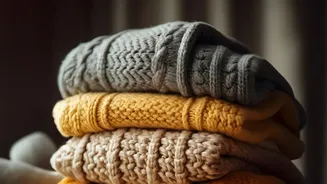
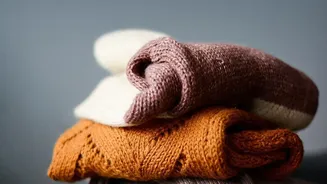
Folding distributes a sweater's weight evenly, preventing the stress that causes stretching. A simple, effective method ensures your knitwear stays compact and crease-free. First, lay the sweater face down on a flat, clean surface and smooth out any wrinkles. Fold one arm straight across the back. Then, fold the other arm over the first, creating a long rectangle. Finally, fold the bottom half of the rectangle up toward the shoulders. For particularly bulky sweaters, you might fold it into thirds instead. The goal is to create a neat, self-contained package that can be stored without putting pressure on any single point.
Smart Storage Solutions
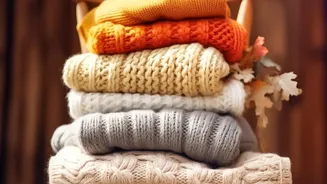
Once folded, your sweaters need a proper home. The ideal environment is cool, dry, and dark. Avoid airtight plastic containers or bags for long-term storage. While they keep pests out, they can also trap residual moisture, which is harmful to natural fibres. Breathable cotton or canvas storage bags are a far better choice, as they allow air to circulate. For drawer or shelf storage, place heavier knits at the bottom of a stack, but avoid stacking too high; the weight can still compress the sweaters at the bottom. A great alternative is to file-fold them vertically in a drawer, as popularised by Marie Kondo, which prevents compression and keeps every sweater visible. To deter moths, add natural repellents like cedar blocks or lavender sachets to your storage area.